Fjorårets "Sommerprat" ble en suksess med mange gode historier. Vi ble litt kjent med både frivillige, ansatte og gjester, og lesningen var til glede for mange av våre medlemmer og følgere.
Vi drar nå i gang en ny runde med intervjuer, på lik linje som i fjor vil vi publisere enkeltintervjuene på sosiale medier og etterhvert samle alle i denne artikkelen.
God lesning!
Publisert: 04. juli 2026 Skrevet av:
Harald Oppedal
Nyheter
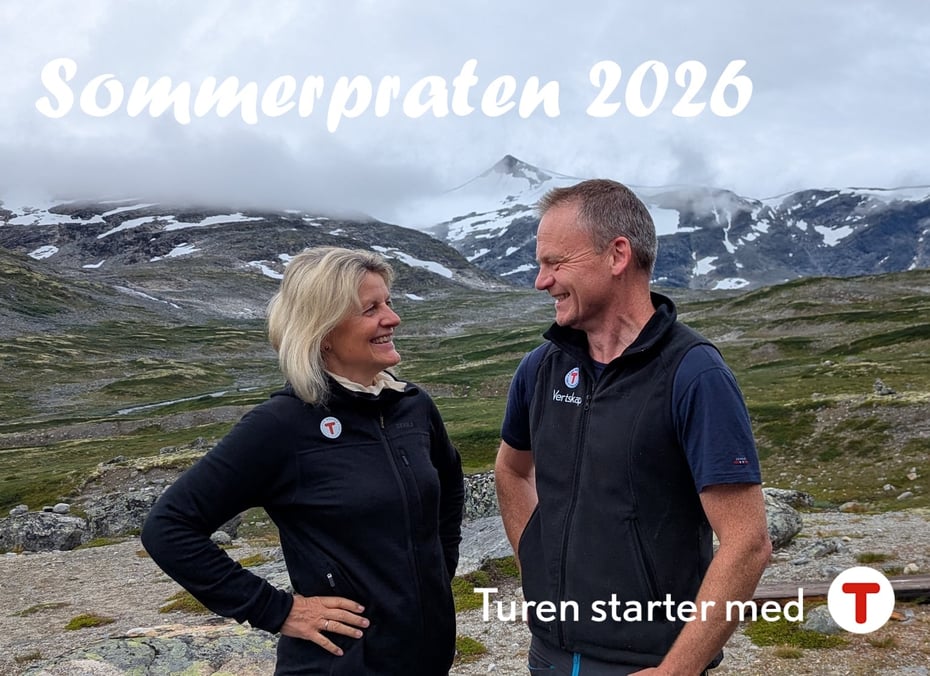
Harald er i gang med mer sommerpratFoto: Harald Oppedal
15. august
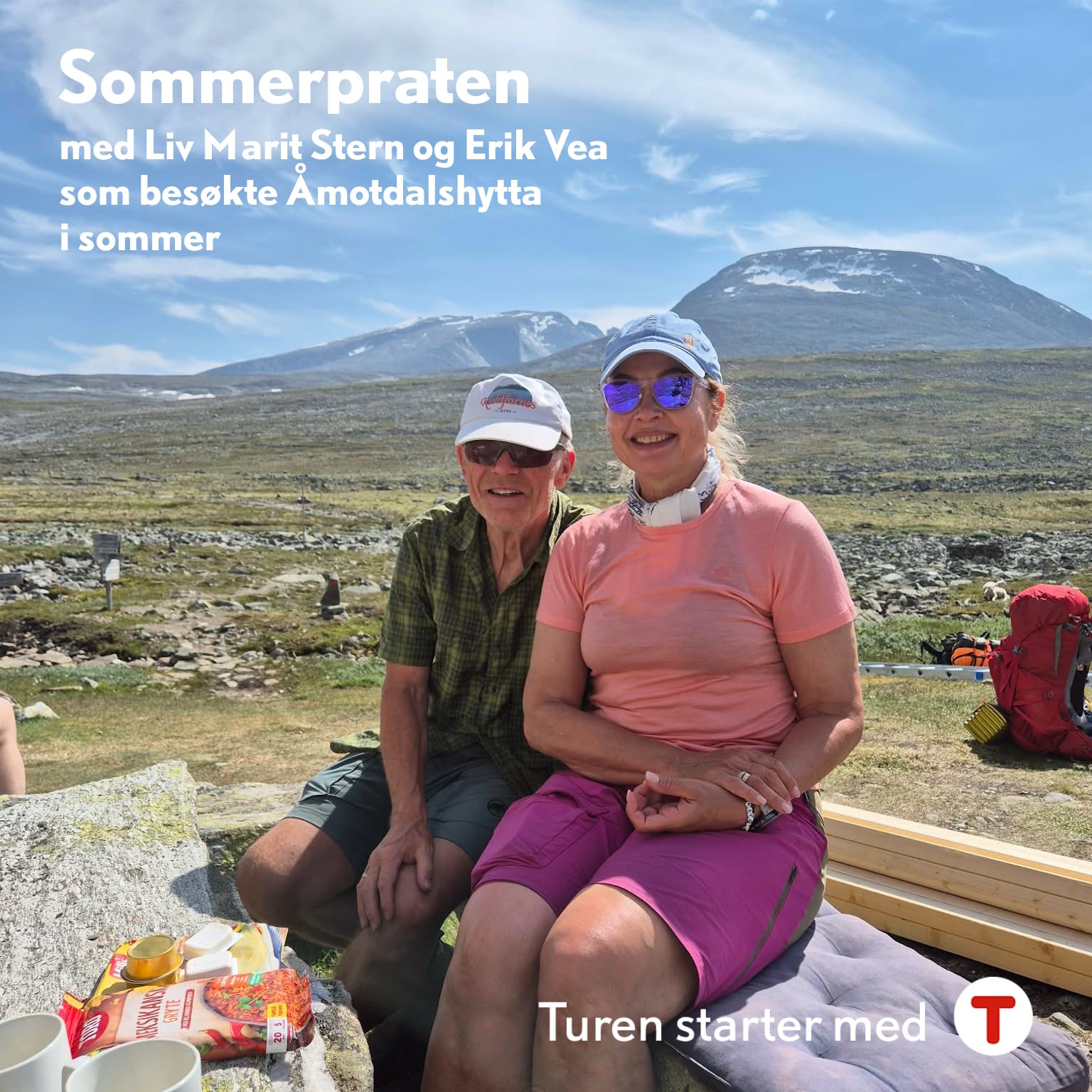
Foreningen er i gang med et stort dugnadsarbeid på Åmotdalshytta, vi har gjort mye i sommer og vil fortsette jobben neste år. Hytta har vært åpen for gjester også under arbeidet som har foregått, og vi har tatt en prat med et par av gjestene som har vært "midt oppe i kaoset"
Hei, aller først vil vi gjerne høre litt hvem dere er! Erik Vea er pensjonist og bosatt på Frogner. Han har fire barn og ti barnebarn. Friluftsliv har alltid vært en viktig del av livet hans, sammen med interesser som skøyter og sykling. Liv Marit Stern er HR-direktør i DHL Express og har vært gift med Erik siden 2007. Jeg har tvillinger, en sønn og en datter på 31 år. Friluftsliv er også min store interesse. Til daglig trives jeg best på tur i skog og fjell, men som voksen har jeg utviklet en forkjærlighet for høye fjell og kalde skiekspedisjoner. Jeg har blant annet besteget Aconcagua, Kilimanjaro (sammen med Erik), Elbrus, forsøkt meg på Denali og gått Last Degree til Sydpolen på ski i 2022.
Dere har nylig vært innom Åmotdalshytta hvor vi i år har en stor dugnad, hvordan var det å komme dit "midt i kaoset"? Vi opplevde aldri at det var kaotisk på Åmotdalshytta. Tvert imot ble vi møtt med varme og omtanke av dugnadsansvarlig og de andre som jobbet der. Dette fikk vi virkelig kjenne på da vi kom svært sent tilbake etter turen til Snøhetta. Klokken var 01.30 om natten, og vi fikk vite at folk hadde fulgt med på hvor vi var og beregnet når vi burde være tilbake etter at vi hadde valgt en annen rute enn planlagt. Vi følte oss oppriktig ivaretatt. Som en ekstra hyggelig overraskelse fikk vi til og med nystekte boller fra vedovnen dagen etter vår lange topptur.
Siden dere var på tur til en av våre hytter langt inne i fjellet, så regner jeg med at dere har en forholdvis stor friluftsinteresse. Hvordan har denne blitt til? Erik er utdannet innen friluftsliv fra Norges idrettshøgskole, og denne interessen har nok smittet over på meg. Sammen tilbringer vi mye tid ute, både på DNT-hytter og i telt. I fjor gikk vi Trekanten i Trollheimen, og i år var planen å gå Trekanten i Dovrefjell. Vi rakk ikke hele runden slik vi opprinnelig hadde tenkt, fordi hver etappe tok lengre tid enn forventet. Likevel storkoste vi oss. På Ut.no ble ruten beskrevet som «lettgått», men det stemte ikke helt med vår opplevelse.
Å vandre i fjellet i flere dager er jo noe mange av oss synes er flott, men vi har gjerne andre interesser knyttet til friluftsliv også. Hvordan er det med dere? Vi har også en stor interesse for båtliv gjennom seilbåten vår, Zin7, en treskøyte av Colin Archer-type. Akkurat nå er vi på tur med båten, og i skrivende stund befinner vi oss i Horten. Til vanlig ligger båten i Sandtaket på Storsand i Hurum. I 2020 seilte Erik båten helt til Bodø og Senja. Der overvintret den ett år i Bodø havn og ett år på Kjerringøy. Dette ga oss mange flotte muligheter til fjellvandring i Nordland og Troms.
Kan dere si litt mer om årets tur, var dere på en lengre vandring og besøkte dere flere hytter/områder? Årets plan var å gå Trekanten: Gammelsetra, Loennechenbua, Åmotdalshytta, Grøvudalshytta og tilbake til Gammelsetra. Forslaget på Ut.no gikk direkte fra Gammelsetra til Åmotdalshytta, men vi valgte å legge inn en overnatting ved Loennechenbua. Der traff vi blant annet den hyggelige Bodil. Vi opplevde naturen som vill og vakker, med et rikt plante- og fugleliv. Turen opp mot Snøhetta fra Åmotdalshytta var både krevende og fantastisk flott. Faktisk så krevende at vi valgte å returnere via Reinheim og rundt tilbake til Åmotdalshytta i stedet for å gå samme vei ned. Underveis nøt vi de mange flotte fjellvannene og tok flere forfriskende bad.
Hva gjorde at valget falt på dette/disse områdene, og hvor har dere funnet informasjon for å planlegge turen? Vi valgte dette området fordi vi aldri tidligere hadde gått hytte-til-hytte-tur i Dovrefjell. Planleggingen ble nok gjort litt for raskt, og vi støttet oss hovedsakelig på Ut.no. Hadde vi lest mer på DNTs egne sider, ville vi sannsynligvis fått en bedre forståelse av vanskelighetsgraden på enkelte av etappene. Etter en fantastisk opplevelse i Trollheimen i fjor ønsket vi å utforske Dovrefjell, som ligger i samme region.
Vi i KNT har et sterkt fokus på hyttene og er opptatt av hvordan de oppleves. Kan dere si litt om hvordan deres opplevelser har vært? Både Gammelsetra, Loennechenbua og Åmotdalshytta har fantastisk beliggenhet. Loennechenbua er en liten kuriositet – svært beskjeden i størrelse, men utrolig sjarmerende. Gammelsetra fremsto som et sted som blir tatt godt vare på, og Åmotdalshytta er midt i en omfattende oppgradering. Alle tre hyttene ga oss gode opplevelser.
Den Norske Turistforening (DNT) har jo et veldig godt tilbud rundt om i Norge, har dere noen reiseanbefalinger til andre steder? Har dere kanskje en favoritt DNT-hytte, eller et spesielt vakkert område som dere kan fortelle oss litt om? Favoritt-DNT-hytta vår er uten tvil Finsehytta. Der trives vi svært godt, og vi har bodd der flere ganger i forbindelse med Skarverennet og andre skiturer i området. I hverdagen er Kobberhaughytta en stor favoritt. Den føles som DNTs storstue i Nordmarka, og dit tar vi ofte turen. Vi vil også trekke frem Hardangervidda som et fantastisk turområde, både sommer og vinter. Jeg har tidligere gått Trekanten i Rondane, hvor særlig Bjørnhollia gjorde inntrykk, og jeg har også gått mellom DNT-hytter i Jotunheimen. Hver tur har sin egen karakter, men felles for dem alle er følelsen av å komme fram til en DNT-hytte. Enten den er betjent eller selvbetjent, oppleves den som samlende, hyggelig og trygg.
Hvordan ble dere kjent med DNT, og kjenner dere andre tilbud som organisasjonen driver med? Vi ble først kjent med de flotte DNT-stiene og den gode stimerkingen før vi ble aktive i selve DNT. Vi meldte oss inn for mange år siden. Sammen med venninner har jeg også deltatt på flere søndagsturer i regi av DNT, både på merkede og umerkede stier i nærområdet. Det er et fantastisk tilbud.
Som avslutning på sommerpraten vil vi gjerne vite en spesiell ting som dere alltid har med i sekken på tur? Liv Marit har alltid med myggnetting som kan trekkes over hodet. I Dovrefjell kom den virkelig til nytte. Erik har alltid med Compeed-plaster.
Takk for en god prat og velkommen tilbake til våre hytter på senere turer
En liten funfact til slutt: Navnet Erik Vea vekker kanskje noen assosiasjoner for enkelte, og ja; det er han som er skøyteløperen Jo Nesbø og Di Derre synger om i sin sang "Erik Vea"
-----
10. august
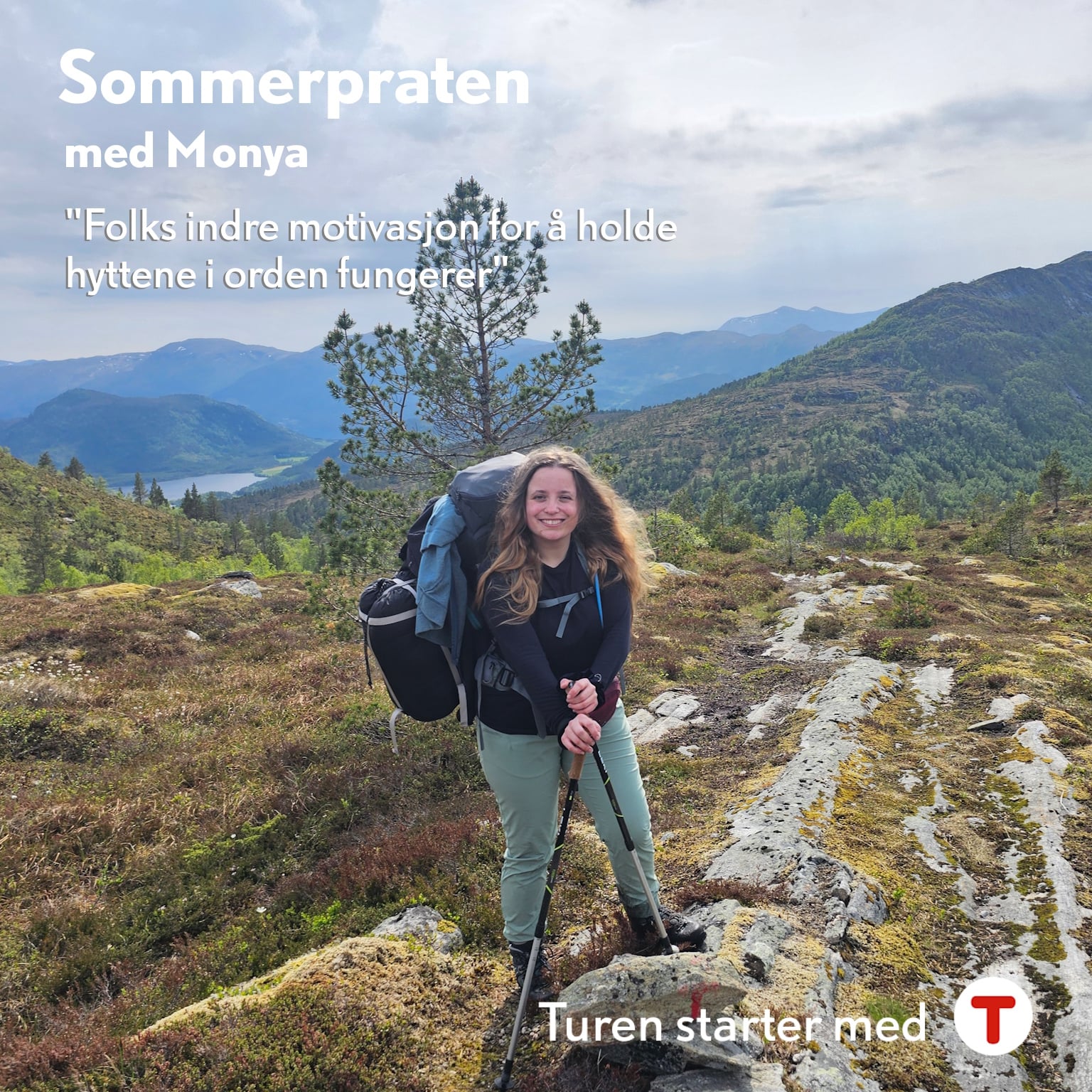
Monya og kjæresten hadde en hviledag på Tverrlihytta da vi møttes, ho hadde gjennomført en del av Fjordruta og skulle avslutte fjellturen påfølgende dag. Vi snakket litt om løst og fast, ga noen råd om transport og andre turmuligheter, og vi pratet en del om hvordan deres tur hadde vært. Originalversjon (engelsk) ble publisert på facebook, vi deler en oversatt utgave her:
Først og fremst vil vi gjerne bli litt bedre kjent med deg. Kan du fortelle litt om deg selv? Hei, jeg heter Monya og er 29 år. Jeg bor sammen med kjæresten min i Berlin. Jeg jobber med kundeservice og tilbringer mesteparten av fritiden min med fosterhundene mine. Jeg tar hunder ut fra dyrebeskyttelsen og gir dem et midlertidig hjem, slik at de kan bli vant til å bo sammen med mennesker. På den måten blir jeg også bedre kjent med dem, noe som gjør det lettere å finne et nytt hjem til dem. For øyeblikket består familien min av bestemoren min og onkelen min, som bor ti minutter unna meg. For meg er det viktigste i livet at de jeg er glad i, er friske og lykkelige.
Siden vi møttes på en DNT-hytte, går jeg ut fra at du er ganske interessert i friluftsliv. Hvordan utviklet denne interessen seg? Jeg tror interessen min for å være omgitt av natur utviklet seg for ti år siden, da jeg var på et «work & travel»-år i New Zealand og Australia. Det var også der jeg møtte kjæresten min. På den tiden visste jeg ikke at jeg likte å gå på tur, så jeg gjorde egentlig ikke så mye av det der. Da vi kom tilbake til Berlin, ønsket kjæresten min og jeg å tilbringe mer tid i naturen, og vi fikk ideen om å reise til Norge. Første gang vi reiste til Norge sammen var i 2018, og siden da har vi vært forelsket i landet. Etter det reiste jeg alene til Lofoten i 2019. I 2022 dro vi tilbake, denne gangen sammen med hunden vår. Dessverre ble hun plutselig veldig syk, og på den tredje dagen mistet vi henne og reiste tilbake til Berlin. I 2025 kom vi tilbake og oppdaget DNT-hyttene for første gang. Da bestemte vi oss for å planlegge en hytte-til-hytte-tur i 2026!
Mange av oss liker å tilbringe flere dager på tur i fjellet, men vi har ofte andre friluftsinteresser også. Hva med deg? Hvilke andre friluftsaktiviteter liker du? Tidligere pleide jeg å stå på ski hvert år, men akkurat nå er det ikke så mange andre friluftsaktiviteter jeg driver med.
Du gikk en lengre del av Fjordruta – vår DNT SignaTUR-rute mellom Kristiansund og Halsa. Kan du fortelle litt om turen? Vi startet turen vår i Aure, og den første hytta vi kom til var Rovangen. Deretter gikk vi videre til Storfiskhytta, Sollia, Storlisetra, Grytbakksetra (vi overnattet ikke der, men fortsatte turen og overnattet ute den natten), Hardbakkhytta, og siste stopp var Tverrlihytta.Vi hadde veldig godt vær hver dag, bortsett fra på turen mellom Rovangen og Storfiskhytta. Da var det veldig tåkete, så vi kunne ikke se noe rundt oss. Favoritthytta mi var Storlisetra, fordi det var et så koselig sted inne i skogen. Kjæresten min likte Tverrlihytta best, fordi han fikk fiske for første gang. På hele turen møtte vi bare andre turgåere én gang, på vei fra Aure til Rovangen. Bortsett fra på Storfiskhytta og Tverrlihytta, var vi alene på alle hyttene.
Hvilke råd vil du gi til noen som vurderer å gå hele eller deler av Fjordruta for første gang? Absolutt – gjør det! Og sørg for å sette av nok tid, slik at dere ikke trenger å stresse. Målet er ikke å komme frem, men å nyte turene og hyttene på slutten av hver dag! Hvis du er interessert i fiske, har Rovangen og Storfiskhytta vann rett foran hyttene, og på Tverrlihytta var det til og med en fungerende fiskestang.
DNTs hytter har vært et viktig satsingsområde for foreningen i mange år. Nå som du har bodd på flere av dem, kan du fortelle litt om erfaringene dine med å bruke hyttene? Og hvordan opplevde du stiene mellom dem? Vi opplevde alle hyttene som veldig koselige og trygge steder å hvile etter en lang tur. Det er alltid fascinerende å lese historiene til andre som har vært der i hyttebøkene, og enda mer imponerende er det at noen av innleggene er skrevet for mange år siden. Alle hyttene hadde alt man trengte for å hvile, lage mat og samle krefter til neste dag. Det var også veldig imponerende å se at alle forlot hyttene rene og ryddige. Som regel gjør folk bare det når det får konsekvenser hvis de lar være, men her er alt frivillig – og det ser ut til å fungere enda bedre fordi motivasjonen kommer innenfra. Det var alltid nok mat og ved på hyttene, så det var aldri behov for å ha med noe ekstra. Det var også hyggelig å se hvor mye omtanke og sans for detaljer som var lagt i alt, for eksempel håndtaket til toalettpapiret, eller rommene med de små teppene og speilene. Det var også bøker med bilder som viste historien og prosessen bak byggingen av hyttene, og det var hyggelig å bla gjennom dem. Og igjen – alt var gjort på frivillig basis. Det var rett og slett fint å se at mennesker kan legge så mye innsats i noe som skal komme andre til gode i fremtiden. Turene hadde akkurat passe lengde for oss: De var overkommelige uten at vi ble helt utslitte, men samtidig lange nok til at vi var veldig glade for å endelig komme frem. Det eneste unntaket var turen mellom Grytbakksetra og Hardbakkhytta. Vi måtte dele den opp i to dager, og selv den andre dagen var personlig for krevende for meg. Jeg trengte derfor flere timer etter at vi kom frem for å hente meg inn igjen. Stiene var godt merket. Én gang mistet vi stien fordi noen av stikkene sannsynligvis hadde falt over på grunn av det våte underlaget, men stort sett var det alltid lett å se hvor vi skulle gå videre.
Den Norske Turistforening (DNT) tilbyr fantastiske muligheter over hele Norge. Har du noen anbefalinger til andre turmål? Kanskje en favoritthytte eller et spesielt vakkert område du har lyst til å fortelle om? Vi har ikke besøkt så mange andre DNT-hytter ennå, men i fjor besøkte vi Snøheim, Reinheim, Åmotdalshytta, Loennechenbua og Gammelsetra i Dovrefjell nasjonalpark. Disse turene var veldig, veldig krevende, og jeg vil bare anbefale dem til personer som er i god fysisk form og føler seg trygge i ulendt terreng (noe jeg ikke gjorde på den tiden), på grunn av de store mengdene med stein og ur.
Hvordan ble du først kjent med DNT, og kjenner du til noen av de andre aktivitetene og tilbudene organisasjonen har? Vi kom tilfeldigvis over vår første DNT-hytte på vår forrige ferie i Norge. Vi hørte at DNT har mye mer å tilby når det gjelder friluftsaktiviteter, men vi har ikke satt oss inn i dette ennå.
Har du noen andre planer for denne sommeren? Nei, Norge var faktisk den viktigste – og eneste – ferien vår denne sommeren. Men vi gleder oss allerede til neste år!
For å avslutte sommerpraten vår vil vi gjerne vite: Hva er én ting du alltid tar med deg på tur? En liten termos/kaffemaskin som jeg kan lage en fersk espresso med om morgenen.
-----
7. august
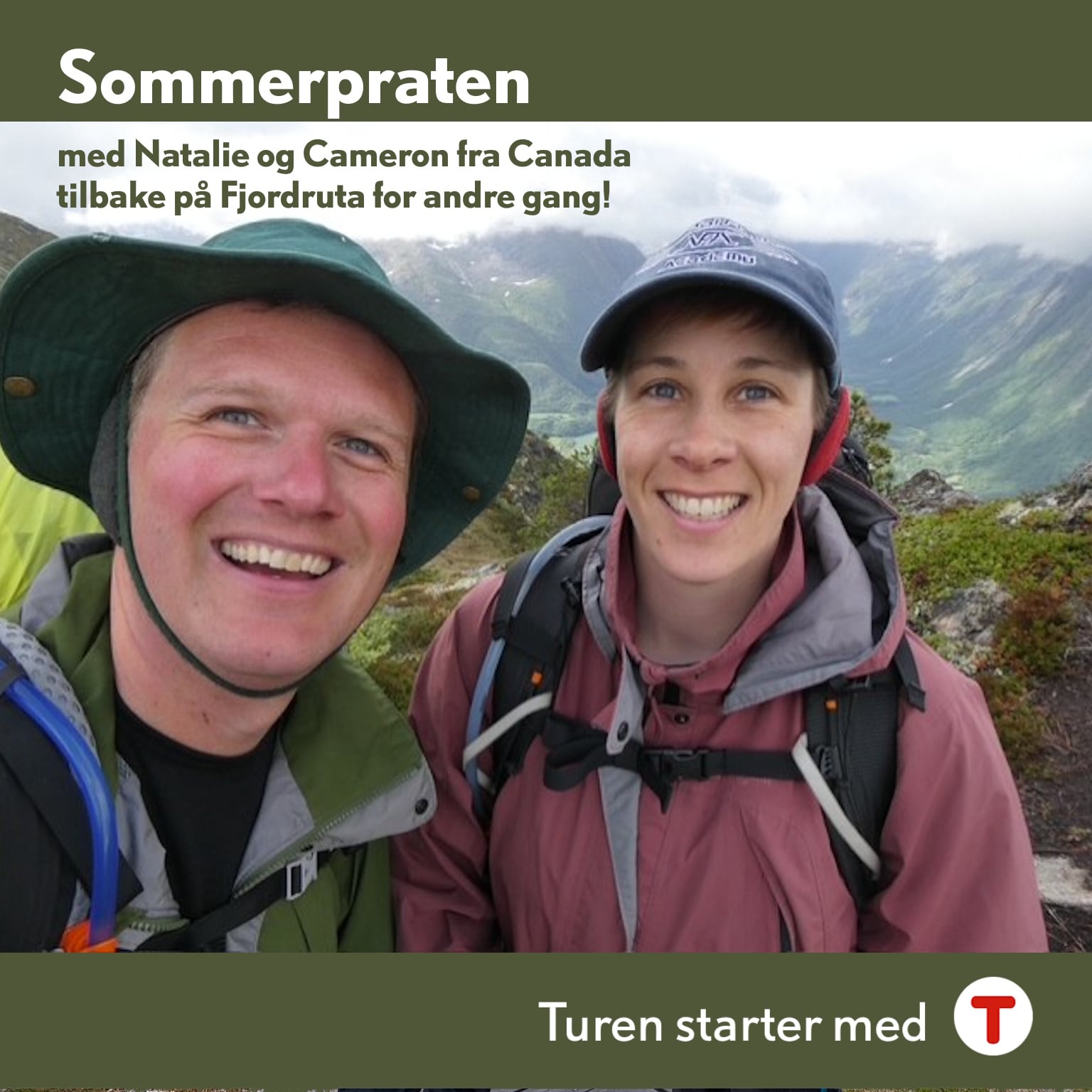
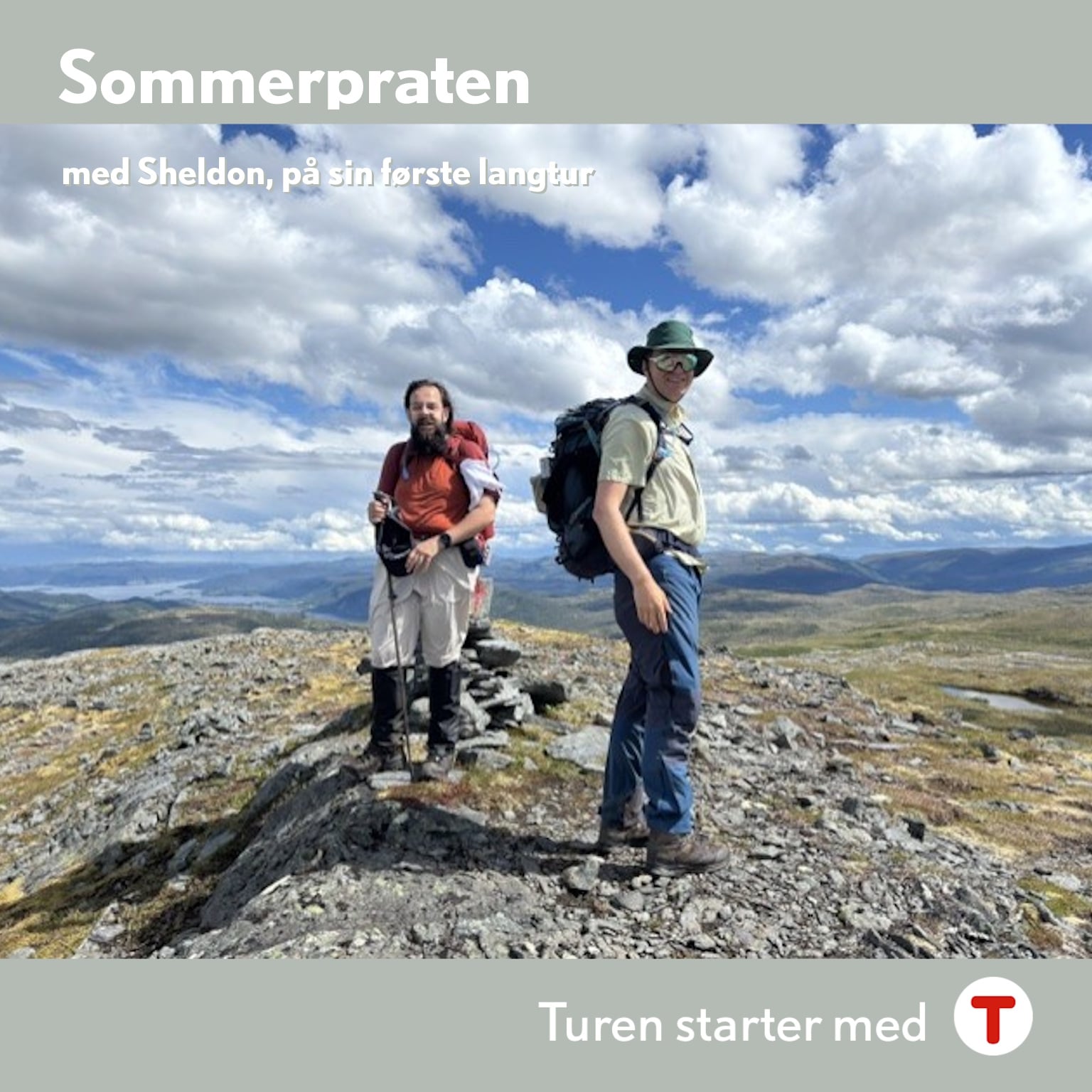
Vi synes det er spennende å høre hvordan våre gjester fra utlandet opplever tilbudet vi har, og i denne sommerpraten møter vi Natalie og Cameron som har reist fra Canada for å gå Fjordruta. De var på tur i et følge på tre, og vi fikk også et intervju med deres turkamerat Sheldon. På Facebook ble disse delt i to intervjuer og oversatt til norsk. Her kommer originalversjonen med svar fra både Natalie, Cameron og Sheldon.
First of all, we’d like to get to know you a little better. Could you tell us a bit about yourself? * N&C: A little about us. We are Natalie Francis and Cameron Redsell-Montgomerie from Canada, 42 & 43, Math Textbook editor and a Statistics professor at a College. We do a lot of outdoors; hiking, canoeing and like to travel. *S: About me: I'm 29 years old and I live with my family in Hamilton, Canada. I work in post-secondary technology at Mohawk College of Applied Arts and Technology, which is also in Hamilton. Hobbies are kinda covered below.
Since we met at a DNT cabin, I assume you have a fairly strong interest in outdoor life. How did that interest develop? *N&C; I think we were both raised outdoors. Summers canoeing, Scouts and generally camping. We like the quiet of nature more than life in the city. *S: How my outdoor interest developed: This was actually my first big section hike! Cam and Fran convinced me to go, and I am now thoroughly hooked. I have some prior experience hiking in the flat areas back home and camping as a child, but this trip really set my expectations.
Many of us enjoy spending several days hiking in the mountains, but we often have other outdoor interests as well. How about you? What other outdoor activities do you enjoy? *N&C: Canoeing and tent camping is a lot of it. In Canada finding places to camp is both difficult and expensive. Since the pandemic, outdoor tourism has exploded and most campsites are booked months in advance now, and since we cannot camp anywhere we want here it limits our choice. Few people want to portage long distances into our Algonquin (our largest provincial park) though, so we’ve found an option there. *S: Other outdoor activities: While hiking is my main outdoor activity now, I am very passionate about technology, especially home automation and the mission of the Open Home Foundation. I am an avid homelabber and regularly enjoy setting up technology scenarios and apps for my own testing or family use.
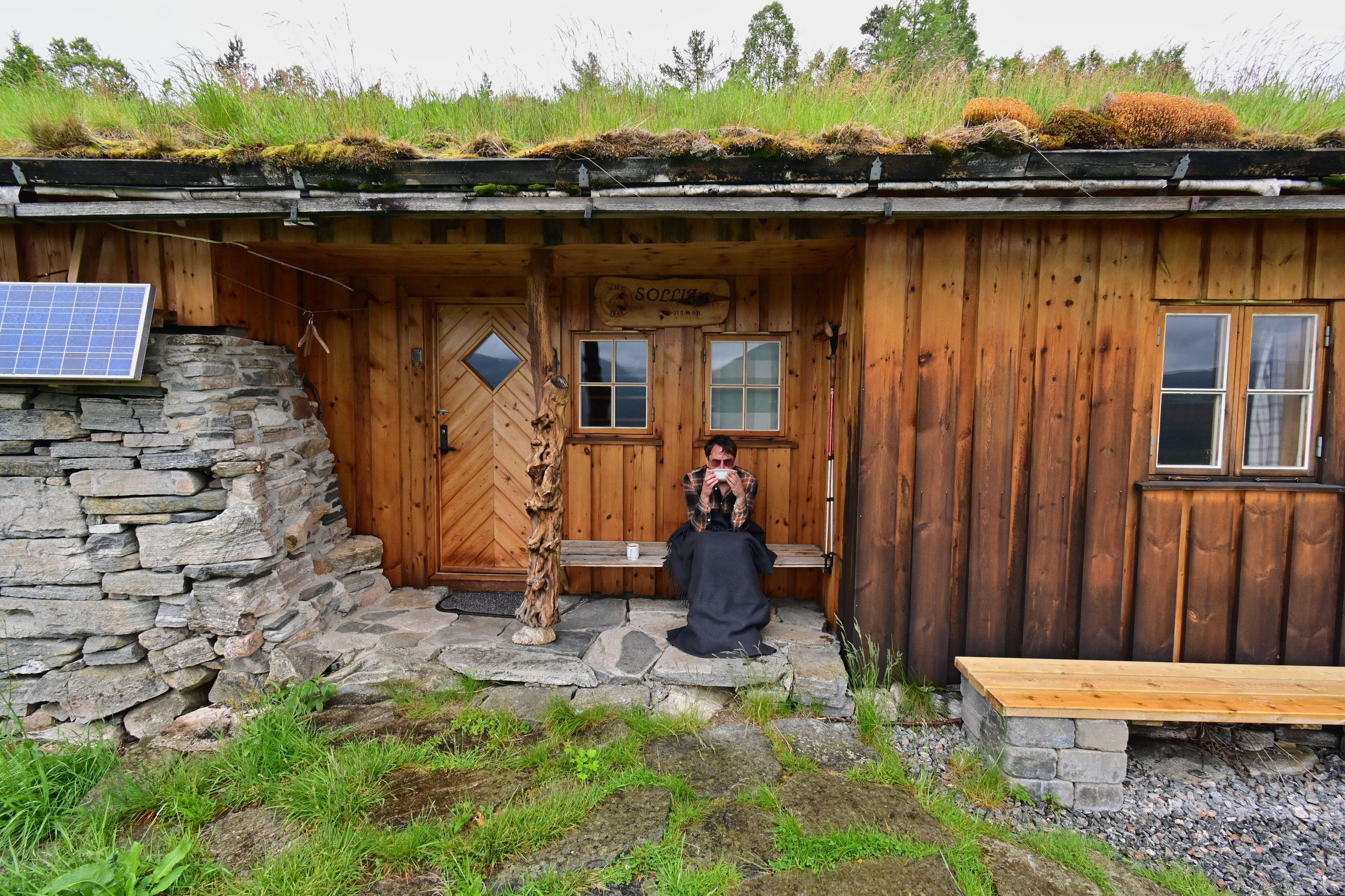
You hiked a longer section of Fjordruta – our DNT SignaTUR route between Kristiansund and Halsa. Could you tell us a bit about the trip? *N&C: We did slightly change our plans and went south rather than fully finishing the Fjordruta this year. We were going a little more slowly than planned, and needed/wanted to complete our planned Trollhiem section. So our Final route was: Rovangen to Grytbakksetra, then Hermannhytta, Sætersetra, Vindølbu, Trollheimshytta, Vassendsetra, then arriving in Gjevilvasshytta for their season opening, a wonderful way to end a trip. Some highlights were: Staying in Sætersetra as we were apparently in the first 10 people visiting it this year (including the stewards visits). A rather unique and cute cabin, with some questionable food stores. Sollia was also truly amazing, from the near impossibility to see it coming in over the mountain, until we were right on top of it, to the amazing views. Also, special for us was that for almost the entire hike we had the entire cabin to ourselves every night. We did the beginning of the Fjordruta, from Kristiansund to Aure a few years ago and have been looking for a reason to do more of it. We thought it would be a good route for the friend we brought this year. It has a little bit of every kind of terrain, including amazing views, and the distances between cabins are reasonable for someone new to cabin to cabin hiking. One thing of note from our trip, was that almost no cabin had salt! There was one, maybe Sollia, that was fully stocked, but almost every cabin lacked any form of salt. Not something we usually carry, but maybe we should in the future. With the heat this year we needed a little extra salt in our diet to keep moving. We noticed most cabins had a “you must sign in to use the cabin” sign, but it was almost always in Norwegian, I’m not sure if the tourists read it. Some more signage for first time users would be good, since the Fjordruta is such an excellent place to start in Norway and my recommendation always. Some cabins also wrote prices on items not in the app, and that was super helpful. *S: Our trip on Fjordruta: We started in Aure and finished at Gjevilsvasshytta. We chose this route for the self-serve experience and the ease it offered for a first-timer, as the gaps between each day were very manageable. My absolute favorite cabins were Sollia, Vinjeøra, and Vassendsetra. I also think ending the trip at Gjevilsvasshytta with the full-service experience was a fantastic way to finish.
What advice would you give to someone who is thinking about hiking all or part of the Fjordruta for the first time? *N&C: Waterproof boots, non-negotiable especially in the Fjordruta area. And even then you might get wet feet. Otherwise it’s the best place to start cabin-to-cabin in Norway with shorter distances between cabins, some of the best stocked cabins, and bonus you don’t need a key (although you should probably become a member and get one anyway, they’re cool). *S: Advice for first-timers: Pick your gear carefully and lean on the experience of others. Weight adds up very quickly on your back! Also, don't overstress your body. Overuse injuries can creep up on you even if you don't feel them right away.
KNT’s cabins have been a key focus area for the association for many years. Now that you have stayed in several of them, could you share your experience of using the cabins? And how did you find the trails between them? *N&C: Great, really no complaints. There are some sections of the trails that are really well marked, and a few that are not, but it’s pretty hard to get lost. The cabins are like nothing else in the world. The first cabin you stay is a life changing moment that will stay with you. *S: Experience with the cabins and trails: The trails were very good. We could always see the next marker. I personally liked the rocks painted with the T much more than the red dipped posts!
The Norwegian Trekking Association (DNT) offers fantastic opportunities all across Norway. Do you have any recommendations for other destinations? Perhaps a favourite DNT cabin or a particularly beautiful area that you would like to tell us about? *N&C: Many. Rondane national park was incredible, and anything in Jotunheimen is amazing, one of our favourite regions. Last year we completed the MASSIV and got to spend some serious time in the mountains, and now we just want to go back. Skålabu was our first cabin, and is special in so many ways. Imarbu was our favourite cabin on the first leg of Fjordruta a few years ago, and we’d love to go back there too. We have such a long list of other places and cabins we want to visit, including joining one of the guided DNT ski trips and volunteering some day *S: The cabins were awesome overall. One small piece of constructive feedback for the self-serve cabins: it would be great to keep a closer eye on provisions. We ran into a few instances of expired foods, and running out of salt at a few cabins was surprisingly brutal Other DNT recommendations: Since this was my first trip to Norway and my first time using DNT, I don't have other specific destination recommendations just yet
How did you first become familiar with DNT, and are you aware of any of the other activities and services the organisation offers? *N&C: In 2019 we visited a few countries, and completed a Nutshell tour in Norway and we needed to go back and see more, and every year after the pandemic we have once or twice a year. After 2019 we found UT.no, and the DNT website. We want to go on some of the guided trips some day, and sadly we don’t get to flex our DNT memberships as much as we’d like if we lived in Norway. *S: Familiarity with DNT: I actually first heard about DNT from this trip. I ended up signing up for a membership because the savings across the whole trip's cabins easily covered the initial cost.
Do you have any other plans for this summer? *N&C: Yes, we’re off to France for two weeks to visit friends, enjoy the French Riviera and spend a few days in Paris. I just finished a few weeks in Ecuador and a few in Peru completing the Huayhuash trail. We also have plans to canoe camp, as well as hiking and backpacking. * S: Summer plans: I am heading straight back to work for the rest of the summer
To round off our summer chat, we’d love to know: what is one special item you always bring with you on a hike? *N&C: A pillow and a towel. We bought some memory foam, inflatable, pillows a few years back. We find between flights, and needing a little extra in the cabins a pillow is an essential travel item for us. And of course “always bring a towel" (Hitchhiker’s guide reference). We travel with some light and thin microfibre towels. We also find a GPS watch with maps is a game changer since we have an easier eye to the route, and notifications if we stray off route. *S: Special item: A GPS watch with preloaded GPX files. Both Garmin and Apple watches worked great, but having that invaluable wayfinding tool right on my wrist gave me total peace of mind on the trails
-----
3. august
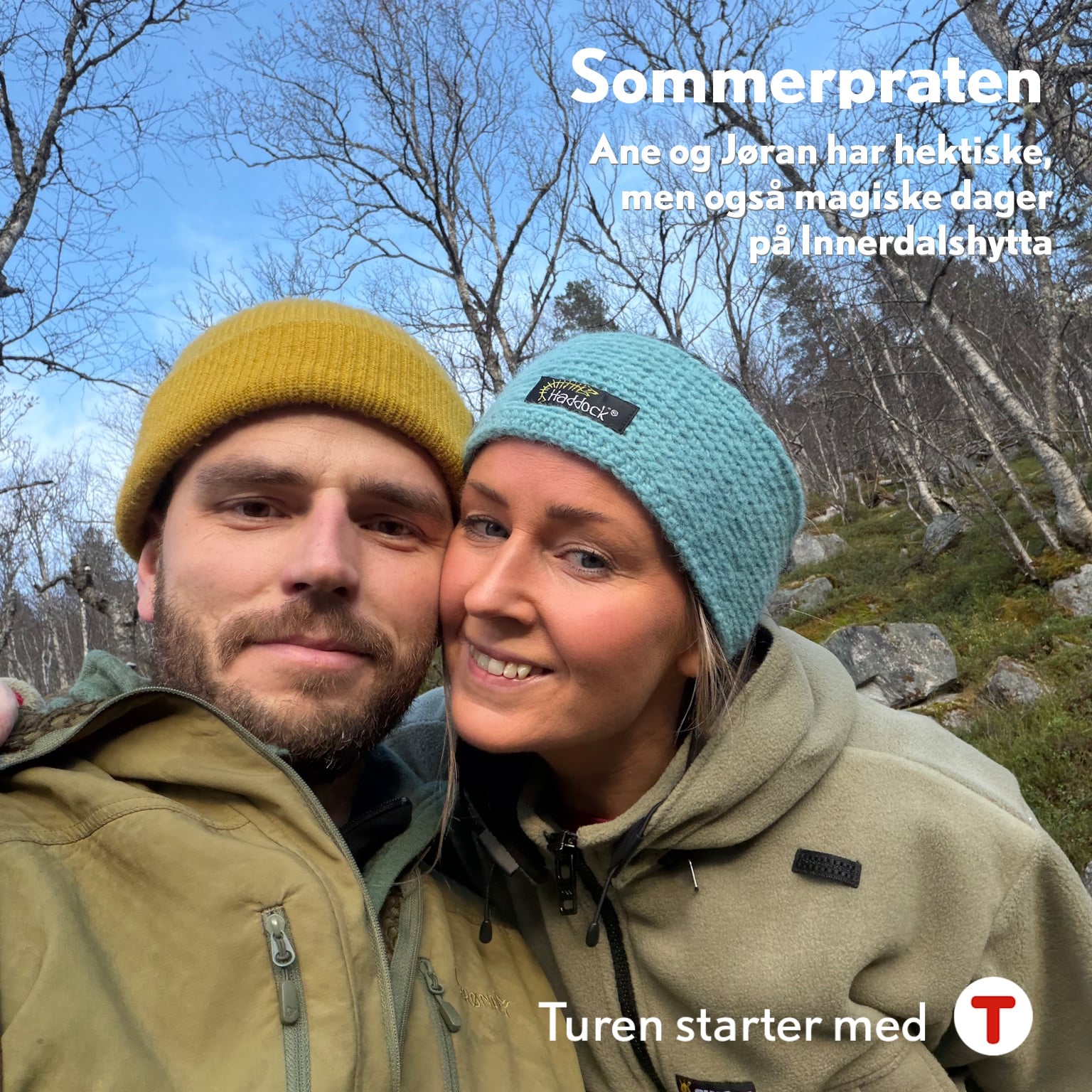
Ane og Jøran Nerdal tok i år over som drivere av Innerdalshytta. Vi er kjempefornøyd med dette og har trua på at de får til en god drift av denne populære hytta i "Norges vakreste dal". Vi har tatt en sommerprat med Ane for å høre hvordan sesongen har vært til nå, og for å bli litt bedre kjent med dette engasjerte paret.
Kan dere si noen ord om dere selv? Vi er en over snittet aktiv familie som liker å ha mange baller i lufta. Vi har tre småtasser med på laget, Mali (7), Lina (5) og Lars (2). Vi flyttet hjem og tok over familiegården min høsten 2020. Siden har vi oppgradert og drevet «Innfallsporten til Innerdalen» i samarbeid med Sunndal kommune og verneområdet, renovert kiosken fra 1971 og drevet den selvbetjent, kjøpt oss geiter, og utarbeidet en reguleringsplan for området rundt gården med tanke på videre utvikling og tilrettelegging for turisme.
Hva gjorde at dere valgte å satse på å drive Innerdalshytta? Det som først og fremst gjorde at vi valgte å satse på å drive Innerdalshytta er fordi vi allerede på en måte har valgt denne livstilen. Vi tenkte at vi aldri har gjort dette før, men det klarer vi helt sikkert. Innerdalen betyr ekstremt mye for oss, så å få muligheten til å bidra til at gjester får oppleve dalen og Innerdalshytta på en god måte var en stor motivasjonsfaktor. Vi tenker at lokal forankring gir det lille ekstra, i tillegg til god mat, god service og god atmosfære.
Nå som en del av sesongen er ferdig, hvordan vil dere beskrive hverdagene på en turisthytte? Kort sagt: hektisk og magisk! Været styrer jo selvfølgelig hvor stort trykket er, men det er alltid noe å gjøre når man driver turisthytte. Hverdagene består av gode menneskemøter uansett vær, og det er det som er den aller beste betalinga. Folk er så blide og fornøyde. Og når man er så mye sammen med gjengen vi har ansatt, så blir vi på en måte en stor familie gjennom sesongen.
Hvordan har sesongen vært så langt? Starten av sesongen bar preg av litt ruskete Nordmørs-sommer-vær. Men vi har hatt bra belegg fra start, og sola har jo vært her innimellom, og da eksploderer det jo med folk - både dagsturister og overnattende. Så vi har fått prøvd litt av hvert. Det er jo veldig artig når det yrer av liv over alt rundt hytta.
Innerdalen er et flott sted for friluftsliv i mange former, hvordan er det med deres friluftsinteresser? Vi har mange friluftsinteresser! Livet er jo aller best ute. Både jeg og Jøran driver med jakt, og liker å høste av det naturen har å by på. Ungene er med og lærer hvor maten kommer fra. Fisking i elv og vann har ungene oppdaget for alvor i sommer. Vi er også ivrige på ski, både bortover, oppover og nedover. Noen begrensninger ble det jo etter hvert som ungene kom. Jøran har vært på jaktturer i både inn- og utland, og jeg var for eksempel på en skikkelig skiboms-tur i USA, Canada og Alaska i 2016. Nå går det aller mest i turer tilpasset ungene. Noen ganger går vi bare noen hundre meter fra husveggen og tenner bål og koser oss, mens andre ganger er målet litt mer ambisiøst. Om man har tid og tålmod er det utrolig hva ungene greier. Minstemann Lars for eksempel, gikk hele veien fra Nerdalen til Innerdalshytta, MED SEKK, og fortalte dette med stor begeistring og stolthet til alle han traff da vi kom fram. Det er mestring, det! Vi er heldige som har et eldorado av turmuligheter rett utafor døra.
KNT har hele 26 hytteanlegg, hvorav 4 betjente, har dere besøkt noen av de andre hyttene? Hehe, nei, vi har faktisk ikke det i særlig stor grad. Vi har vært på nydelige Vangshaugen, som også er et eldorado for unger. Dette må vi få på agendaen framover - kan være både nyttig og artig med litt erfaringsdeling mellom «kollegaer» på de andre hyttene.
Kjenner dere til andre deler av tilbudet til DNT/KNT? Nja, vi vet jo om de populære fellesturene som blir arrangert, barnas turlag og forskjellige aktiviteter. Dette tror vi er viktig arbeid for at friluftslivet skal være tilgjengelig for alle, uansett forutsetning.
Har dere en favoritt tur dere kan fortelle oss om? Favoritturen min om sommeren er Snøfjellet! Vanskelig å slå utsikten du får over Innerdalen og området rundt. Om vinteren holder jeg en knapp på Kongens krone, hvor du får oppleve ellevilt landskap og en fantastisk nedkjøring. Men det er viktig med kunnskap om rasfare på en slik tur. Jøran sin favorittur både sommer og vinter er Blåhø fra hytta på Nerskogen.
Og til slutt - har dere noe som bare må være med i sekken på tur?For min del er det fotoutstyr. Jeg ser motiver over alt når jeg ferdes i naturen, og synes det er verdifullt å ha i «minneboka». Jøran er nok mer praktisk enn meg, og liker at turene har et mål. Derfor har han alltid med noe jakt- eller fiskeutsyr, sånn i tilfelle.
Takk for praten og lykke til med resten av sesongen!
-----
31. Juli:
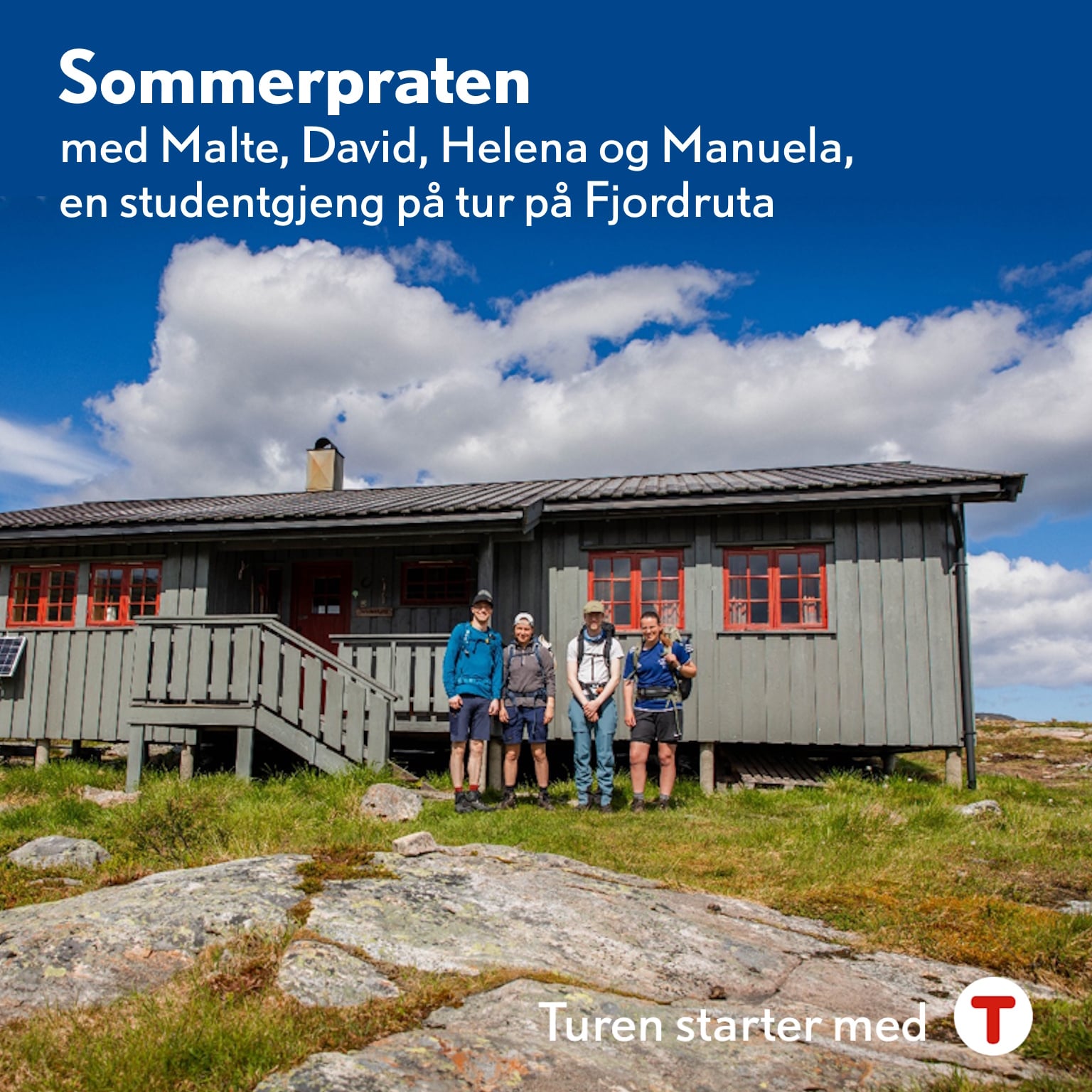
Møte med 4 studenter på Rovangen var trivelig, vi hadde et sommerintervju med dem etter fullført tur. På Facebook ligger en norsk utgave, vi publiserer den originale versjonen her.
First of all, we’d like to get to know you a little better. Could you tell us a bit about yourself? Hi there, we are Malte, David, Helena and Manuela. We met on our exchange to NTNU last semester. Malte comes from Switzerland and studies computer science, the rest of us are from Germany. Helena also studies computer science, David studies electrical engineering and Manuela renewable energies.
Since we met at a DNT cabin, I assume you have a fairly strong interest in outdoor life. How did that interest develop? Malte: I was doing shorter hikes as well as a lot of cycling and mountain biking since I was a kid. Most of those were one day only trips. When I started my exchange semester in Trondheim, I got invited to do a two night cabin trip to one of the NTNUI Cabins (NTNUI Koiene). That was super fun, and therefore I have made a few further cabin trips since, including a part of DNT’s Fjordruta. David: when growing up In a city I got to love the quietness, peacefulness paired with unforgettable adventures that you can experience in nature together with your friends or alone. Manuela: My parents took my brother and me hiking in the holidays as kids and I always loved how my brain turns quiet when all I have to focus on is walking and the nature. Helena: I grew up in a rural area, so spending time in nature was just a normal part of my childhood. My parents took my sister and me on hikes and we spent a lot of time outdoors. I really enjoy the quietness of nature and how it helps me forget the stress of everyday life.
Many of us enjoy spending several days hiking in the mountains, but we often have other outdoor interests as well. How about you? What other outdoor activities do you enjoy? Malte: For me, that would be cycling and mountain biking. Usually, me and my friend do smaller tours in my hometown and the surrounding villages and mountains. David: Besides hiking I love climbing and skiing, as long as I spent life outside, its good! Manuela: Hiking is definitely my favourite, but I am happy to try everything. Where I am from its mostly urban and very flat, but I like skating in the fields and open-water swimming in the summer if I get the chance. Helena: Hiking is my favourite outdoor activity, but I also enjoy mountain biking.
You hiked a longer section of Fjordruta – our DNT SignaTUR route between Kristiansund and Halsa. Could you tell us a bit about the trip? We started in Vinjeøra stayed at Sollia, Storfiskhytta and Rovangen and eventually ended our hike in Aure. On our way back we took the speedboat to Trondheim. A great ending of the hiking trip! The second day we had cold, wet and windy weather together with some harsh terrain, which made the hike quite hard that day. But the third day the weather, path and views were amazing and we all agree it was the most beautiful day. Highlights were definitely the short swims in the lakes and cozy morning coffees with an amazing view. We also met some hikers and had very nice conversations with them. We even got fresh caught fish which was super delicious!
What advice would you give to someone who is thinking about hiking all or part of the Fjordruta for the first time? Waterproof shoes are a good thing to have, otherwise make sure you have enough socks. And definitively bring swimwear! The Norwegian lakes are perfect for a cooldown after a long hike.
KNT’s cabins have been a key focus area for the association for many years. Now that youhave stayed in several of them, could you share your experience of using the cabins? Andhow did you find the trails between them? The cabins are really well maintained and nice to stay in. The running water at Sollia and the solar power feel like luxury compared to the NTNUI Koiene. The trails are mostly well marked and good to walk. Some areas are swampy in June and in those areas it is not always easy to spot the trail.
The Norwegian Trekking Association (DNT) offers fantastic opportunities all across Norway. Do you have any recommendations for other destinations? Perhaps a favourite DNT cabin or a particularly beautiful area that you would like to tell us about? Malte: For the trip we made my favourite cabin was Rovangen. The location by the lake was just amazing! Manuela: I was on a hiking trip in Breheimen with my brother in July and the mountains there are very different (much higher and rougher) then on the Fjordruta. It is definitely worth it to check out different areas of Norway! Helena: I have visited some other cabins along the Fjordruta, including Tverrlihytta, Hardbakkhytta and Grytbakksetra. I can highly recommend this trip, especially Hardbakkhytta, which has a beautiful location. If you are looking for a place with snow in May, this cabin is definitely worth checking out.
How did you first become familiar with DNT, and are you aware of any of the other activities and services the organisation offers? We heard about the DNT cabins from other exchange students in Trondheim. Helena and Manuela were on another part of the Fjordruta earlier in the semester with other people and enjoyed it a lot so we took David and Malte on a second part of it. None of us know other services from DNT.
Do you have any other plans for this summer? David: This summer I definitely want to explore more cabins in the german alps and hike more multiple day tours! Malte: No, nothing concrete. I do plan on doing some cycling and hiking in Switzerland. But those are going to be spontaneous trips without long planning beforehand. Manuela: I will spend two weeks on the german coast lifeguarding and some day trips hiking in the Eifel, which is a small mountain range close to my home. Helena: I don’t have any concrete plans yet, but I would like to do some multi-day hikes in the austrian alps this summer.
To round off our summer chat, we’d love to know: what is one special item you always bring with you on a hike? David: I always have my isolated mug with me which is a good thing to have when you want to enjoy hot coffee outside, especially in winter! Malte: Back in Trondheim David and I bought a three kilogramm bag of “Sure Epleringer”. Since then, I bring a small bag of them on every hike. Having some candy with you is a good way to get everyone motivated again on the harder parts of the hike :) Manuela: I always like to have my headphones for when the hike gets hard and I bring a light scarf no matter how warm it is.
-----
24. Juli:
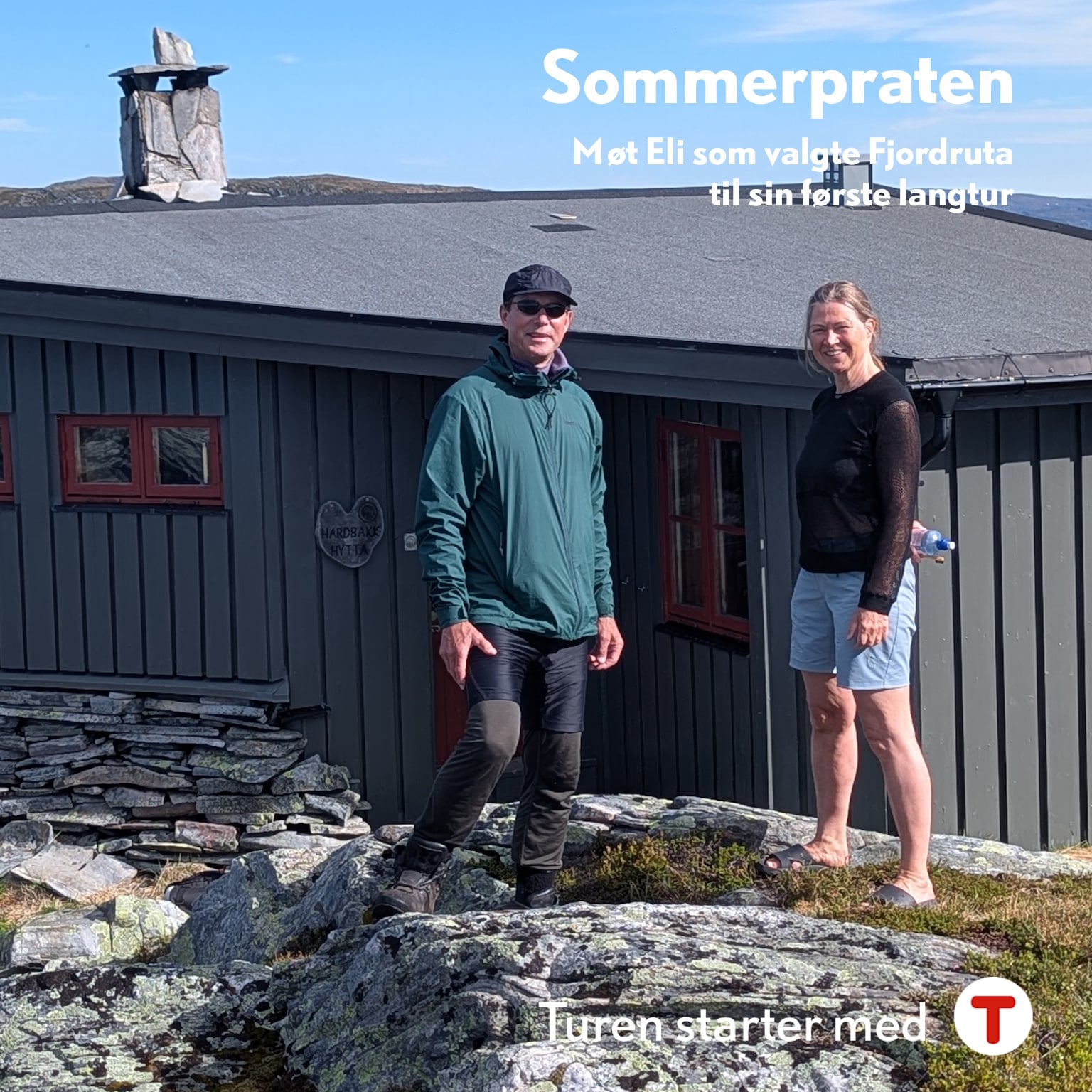
Eli Svardal gikk deler av Fjordruta i år og vi traff henne på Hardbakkhytta. Vi tok praten med henne etter at turen var ferdig og fikk høre hvordan hun hadde hatt det.
Aller først vil vi gjerne bli litt bedre kjent. Kan du si litt om deg selv? Jeg bor på Ranheim, har nettopp blitt 59 år. Jeg har 2 barn, datter på 25 år og sønn på 22 år. Har de siste 19 årene jobbet i BN Bank med tall og rapporteringer. Spiller tennis på fritiden og tok våtkort på kajakk i fjor. Er også med i andelslag som dyrker grønnsaker til selvbruk. Når jeg har ferie søker jeg mot fjell og fjord.
Siden vi treftes på ei DNT-hytte, så regner jeg med at du har en forholdvis stor friluftsinteresse. Hvordan har denne blitt til? Jeg har vokst opp med fjell og fjord rundt meg i Florø. Dragning mot fjelltopper kom etter at jeg gikk Hornelen i Bremanger i 1994.
Å vandre i fjellet i flere dager er jo noe mange av oss synes er flott, men vi har gjerne andre interesser knyttet til friluftsliv også. Hvordan er det med deg? Søker litt mot opplevelser fra sjøsiden igjen med kajakk. Dykket litt før barna kom, men lagt det litt på «is». Litt ski på vinteren, var med på tapasturen til Vakkerstøylen med DNT Sunnmøre i vinter. Den anbefales.
Vårt møtested var Hardbakkhytta, men du gikk en lengre del av Fjordruta – vår «DNT SignaTUR» som går imellom Kristiansund og Halsa. Kan du fortelle litt om turen? Vi startet med Trollstua og avsluttet på Tverrlihytta. Overnatta på alle hyttene på ruta unntatt Sollia. Hadde 11 dager til rådighet på turen, og la inn en hviledag på Storfiskhytta, så kom til Valsøybotten. Har lenge ønsket å bruke minst en uke i fjellet, og såg KNT hadde Fjordruta som arrangert tur i fjor, men den ble avlyst. Jeg kjøpte kartet og satte den på tur-lista. Mange som skrøt av området. Å gå turen i starten av juni er flott, hyggelig å høre på gjøken og lite insekter.
Hyttene til KNT har vært et fokusområde for foreningen «i alle år». Nå som du har bodd på flere kan du si litt om hvordan opplevelsen av å bruke hyttene er? Og hvordan er rutene imellom hyttene? Alle hyttene hadde sin sjarm, de var godt vedlikeholdte og rene hytter å komme fram til. Stabburet på Nersetra gav gode barndomsminner, Grytbakksetra og Hardbakkhytta låg vakkert til. Luksus å finne godt utvalg med mat på alle hyttene. Rutene var godt merket, og gav god trygghet når vi møtte regn, vind og tåke mot Rovangen.
DNT har jo et veldig godt tilbud rundt om i Norge, har du noen reiseanbefalinger til andre steder? Har du kanskje en favoritt DNT-hytte, eller et spesielt vakkert område som du kan fortelle oss litt om? Innerdalen er spesiell med Innerdalstårnet og de grønne og frodige omgivelsene. Ellers var jeg på Skåla, Loen og overnattet i DNT hytta der i august i fjor. Den turen gikk inn som en av topp 3! Nevner også tur til Slogen med overnatting i Patchellhytta.
Hvordan ble du kjent med DNT, og kjenner du andre tilbud som organisasjonen driver med? Ble kjent med DNT når jeg flytta til Trondheim i 1995 og søkte turopplevelser sammen med nye kollegaer i Deloitte, rundt Trollheimen og Sylane.
Har du noen nye turplaner på gang? Neste langtur er en uke med kajakk-tur til Skåtøy utenfor Kragerø i august, sammen med Trondhjem kajakklubb. Ellers blir det "på sparket tur" etter vær. Søker gjerne mot Møre igjen.
Kjekt å høre, Møre har mye å by på! Som avslutning på sommerpraten vil gjerne vite en spesiell ting som har du alltid med i sekken på tur? Har alltid med meg kompasset- ellers pakker jeg lettest mulig . Små bokser med ansiktskrem og fotkrem gir litt luksusfølelse.
-----
16. Juli:
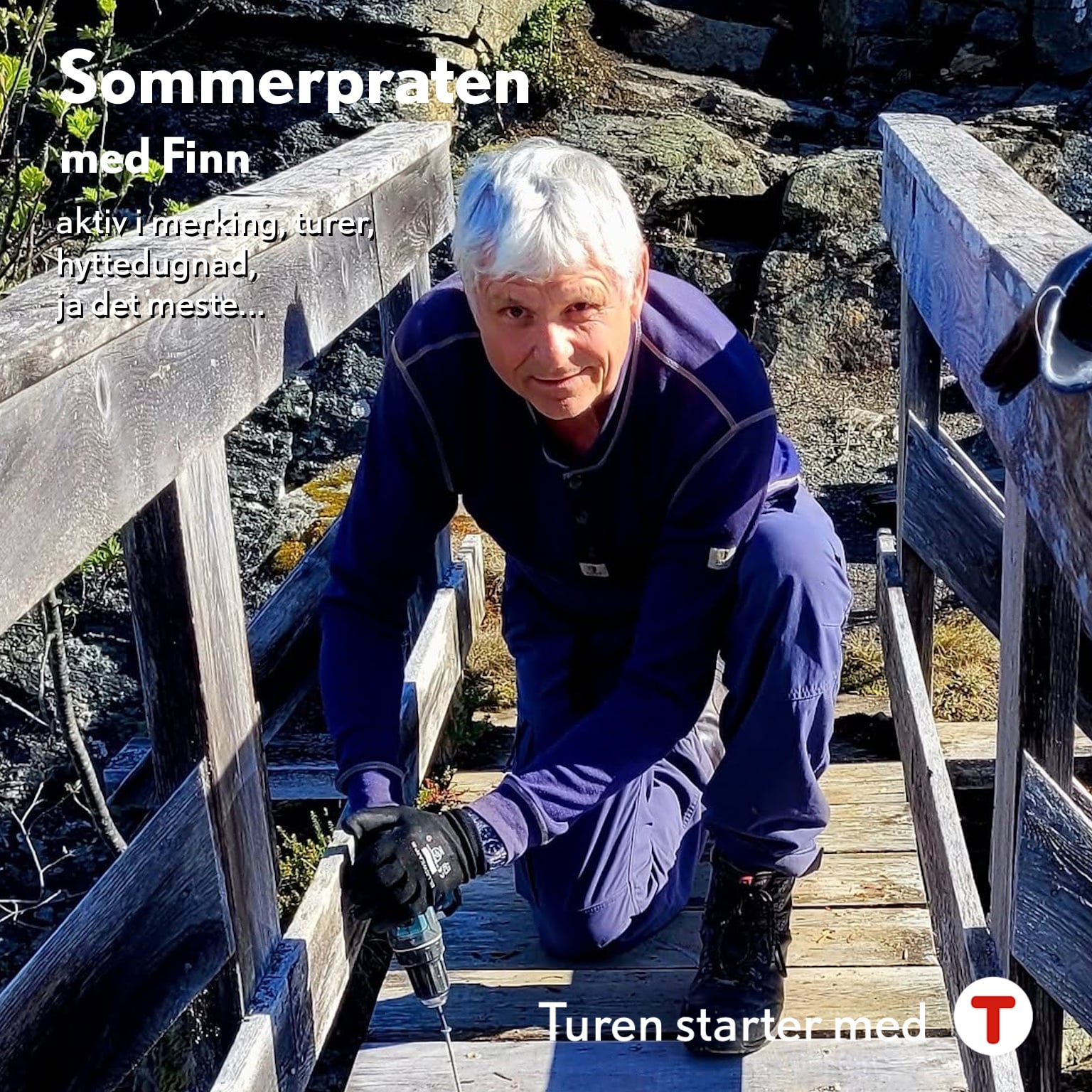
I denne sommerpraten får du treffe Finn Nikolaisen, en av våre aktive frivillige. Om det foregår dugnad innen merking, hyttevedlikehold eller annet, så skal du ikke bli overrasket om du møter Finn!
Aller først ønsker vi å bli litt kjent med deg. Kan du fortelle litt om hvem du er? Hei, jeg er født og oppvokst i Kristiansund, 67 år og gikk over i pensjonisttilværelsen like før jul 2024. Jeg ble uteksaminert ved Atlanten videregående skole i 1978, studerte deretter skips- og marinteknikk ved Trondheim ingeniørhøgskole 1981-1984. Hovedsakelig har jeg jobbet som skipsingeniør ved Umoe Sterkoder og etter hvert i skipskonsulentselskapet Møre Maritime i Kristiansund. Friluftsliv og fjellturer er den store interessen samt turpadling med havkajakk. KNT har på dugnadsbasis bygd 2 flotte naust for oppbevaring av kajakker ved småbåthavna i Dunkarsundet, denne lokasjonen er også utgangspunkt for mange fine padleturer. Kommunens høyeste fjelltopp Freikollen besøkes også jevnlig, varierte løyper opp dit som gir fine turer gjennom året og en holder seg i form. Sykkelturer innenlands/utenlands og vandreturer på sørkysten av Kreta er heller ikke å forakte. Med mor fra Grip er jeg også deleier i et hus på fiskeværet, så en dose kystkultur i sommersesongen hører med, da er det fiske i høysetet samt nødvendig vedlikehold av hus.
Siden du er frivillig i turistforeningen, antar vi at du har en grunnleggende interesse for friluftsliv. Kan du si noe om hva som har skapt din interesse for friluftsliv? Min interesse for friluftsliv startet nok i barndommen, med far som tur og fjellinteressert var søndag ofte turdag med familien i nærområdene som Frei, Osmarka, Fursetfjellet etc. Senere i livet, da jeg fikk ansettelse ved Umoe Sterkoder, ble det mer omfattende fjellturer bl.a. med kollegene Svein Waagbø og Nils Bøe, da ble jeg også kjent med løypenettet til KNT og hyttene.
Hvordan ble du involvert i KNT? Jeg meldte meg inn i KNT i forbindelse med en skitur sammen med kollega Lars Løbersli påska 1987 fra Kårvatn til Trollheimshytta og retur. Tidligere nevnte Nils Bøe var allerede involvert i dugnadsarbeid og det var via han jeg etter hvert ble introdusert for KNT-kulturen. Jeg vil spesielt nevne dugnadene på Gammelsetra i regi av Arnfinn Unhjem, dette ledet også til deltagelse i merkekomiteen som på denne tid ble ledet av Arnfinn. Min første merketur var i 1995 langs Aursjøen til Naustvika, siden har det blitt mange flere merkeoppdrag.
Hvilke frivilligoppgaver gjør du, og hva er det beste med å være frivillig i turistforeningen? Jeg deltar fast på dugnad på flere av KNT’s hytter, er også medlem i merkekomiteen og det blir noen merketurer i løpet av året. Å delta på dugnad er en sosial greie med likesinnede og det er kjekt å få bidra med å holde den etter hvert så store bygningsmassen i hevd, å få jobbe med noe praktisk er tilfredsstillende. Dessuten får man som regel en fin tur til og fra hyttene i den flotte naturen som Nordmøre har å by på. Merkearbeid er også en trivelig aktivitet som gir mye uteaktivitet i den samme naturen. Alt dette bidrar til at hyttene og løypene ligger der klare til å ta i mot glade vandrere og gjester. Vi regner med at det har vært mange opplevelser gjennom årene som frivillig. Har du et spesielt minne eller en opplevelse du vil trekke frem? Byggingen av hytta Imarbu i 2003-2004 var et interessant prosjekt å delta på, kombinasjon av nybygg og gjenbruk av et gammelt fjøs. Det ble mange dugnadshelger på det prosjektet, resultatet ble ei flott hytte med idyllisk beliggenhet i Imarsundet og eneste hytte ved sjøen.
Hva vil du si til noen som vurderer å bli frivillig? Hvis noen skulle fatte interesse for å bli frivillig i KNT er det bare å trå til. Ta kontakt med administrasjonen, det er alltid et eller annet på gang!
Som frivillig har du jo vært innom flere av hyttene på dugnad. Har du også besøkt KNTs hytter som vanlige gjest? Vi er en turgjeng som har flere turprosjekter i løpet av året både til fots og ski, da tar vi som regel utgangspunkt i overnatting på en eller flere av KNT’s hytter, da som ordinære gjester. Kan spesielt nevne skitur Vinjeøra – Storlisetra – Grytbakksetra og retur som et helgeprosjekt, den har blitt gjennomført flere ganger. Flott tur ved brukbare snøforhold.
Er det en DNT-hytte eller et område du er spesielt glad i? Åmotdalshytta og området ved foten av Snøhetta er det alltid spesielt å komme til. Det har for min del også sammenheng med at jeg i en årrekke deltok på dugnader der i regi av Ola Sæterbø og Marie Botten, det minnes jeg med glede. For ikke å glemme en fellestur på ski med 20 deltakere rundt 1. mai i år 2000 med utgangspunkt i Åmotdalshytta. Snøhetta og Storskrymten ble besøkt, en uforglemmelig opplevelse i maks vær. For øvrig er Åmotdalshytta i disse dager gjenstand for en større etterlengtet renovering.
DNT har jo, foruten hytter og ruter, også andre tilbud. Kjenner du til disse, og har du deltatt i andre aktiviteter? Det må være diverse fellesturer jeg har deltatt på i årenes løp
Har du noen turtips du vil dele med leserne? Ta turen over til Tustna og Stabblandet, kortreist i alle fall for oss på ytre Nordmøre. Knubben, Jurtind, Skarven, Storøra, Innerbergsalen med flere ligger der klare til å bestiges, spektakulære turer.
Som avslutning på sommerpraten vil gjerne vite en spesiell ting som du alltid har med i sekken på tur? Jeg har nok ikke noe revolusjonerende å komme med her, det er det vanlige og obligatoriske som anbefales å ta med i sekken på større fjellturer.
----------
9. Juli:
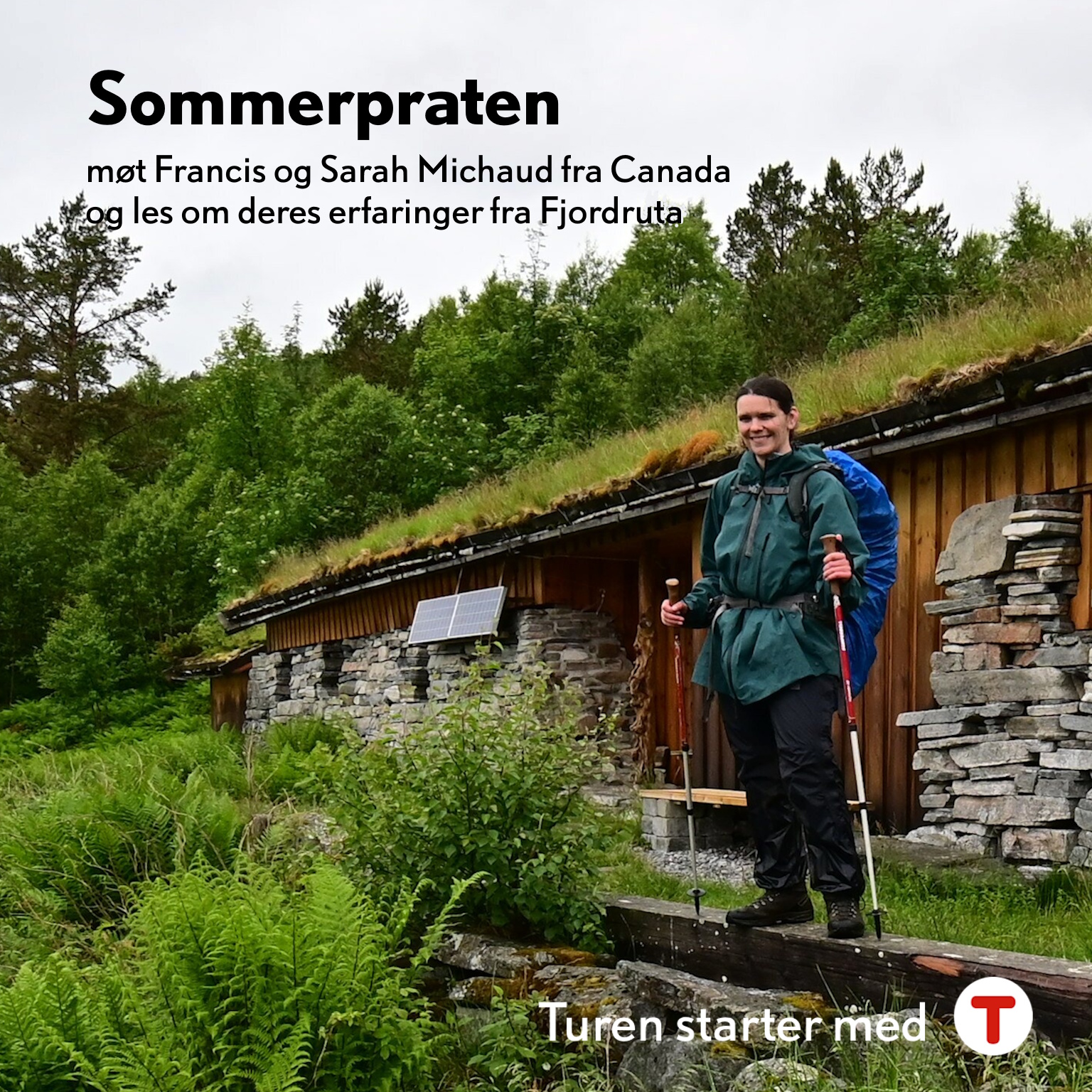
Vårt andre intervju er med Sarah og Francis Michaud fra Canada, deres tur til Fjordruta var høydepunktet med deres ferietur til Norge. Vi treftes på Storfiskhytta i juni, intervjuet ble gjort på e-post etter at turen deres var ferdig. Det ble publisert på norsk på Facebook, her kommer originalen.
First of all, we’d like to get to know you a little better. Could you tell us a bit about yourself?
Hi, we are Francis Michaud and Sarah Michaud. We are from Victoria, BC, Canada. British-Columbia (BC) is in many ways quite similar to Norway, lots of mountains by the sea. We enjoy a lot of different outdoors activities: hiking, camping, cycling, sailing etc. Francis is an instructor of economics and mathematics at Pearson College UWC (United World College). Sarah is a scientist and project manager who currently works for the provincial government of British-Columbia. Outside of outdoor activities, we also enjoy crafting and playing board games.
Since we met at a DNT cabin, I assume you have a fairly strong interest in outdoor life. How did that interest develop?
In my case, Francis, my outdoor interest just developed when I was in my late teens. A friend invited me for a 3 day hiking and camping trip in the mountains in Quebec. I really enjoyed the meditative state that hiking provides. The worries of everyday life disappear and you concentrate on the next objective: climbing to that ridge, getting to the next fork in the trail etc. After that, I decided to travel in Canada (Canada is a big country) and lived in the Rocky Mountains where I got to experience the various challenges of high mountains. Sarah was always interested in outdoor activities, but she only started hiking at around 25 years old, when we met. She just didn't know many people who were interested in outdoor activities and found it daunting to go alone. Furthermore, she used to live in Canada's breadbasket (Saskatchewan). Where outdoors activities are less easy to access.
Many of us enjoy spending several days hiking in the mountains, but we often have other outdoor interests as well. How about you? What other outdoor activities do you enjoy?
The answers above already address this quite a bit. We love cycling, that's probably our most common outdoor activity. I also enjoy sailing a lot. At Pearson College, where I work, I also participate in the sailing program. Twice a week I get on the water and learn with the kids how to sail. I hope to someday have my own accreditations so I can be a sailing instructor. I used to rock climb a lot, but my shoulders don't allow me to climb anymore. One of Sarah's favourite activity is to forage for either food (mushrooms) or crafting supplies (making dye for sewing etc.).
You hiked a longer section of Fjordruta – our DNT SignaTUR route between Kristiansund and Halsa. Could you tell us a bit about the trip?
We started the route by flying to Kristiansund from Bergen. The flight was interesting, and probably said a lot about the nature of labour in Kristiansund: Sarah was the only woman on the flight. We spent one day in Kristiansund exploring the city and the parks. We went to Lille, a small bistro, it was our last meal before multiple days of hiking, and we wanted to make sure we had a nice meal. We highly recommend you visit the restaurant, it was our favourite culinary experience in Norway (better than any restaurants in Bergen or Trondheim). The next day, we took a bus to the airport and walked to the Seivika-Tommervag ferry terminal. We took the ferry and hiked from the ferry to Trollstua. Sarah only ever got to camp in Canada, and she was extremely impressed by the quality, cleanliness and beauty of the hut. On day 2, we climbed up Jurtinden and down the mountain pass to Gullsteinvollen. It was now our second day of hiking, and we only met another group of 3 hikers. There was a little bit of rain, but the day was overall quite nice. On day three, we hiked to Imarbu. This hike was quite uneventful as quite a bit of the day is spent on or near roads.
On day four, we hiked from Imarbu to Nersetra. The hike is more difficult than it first appears because of all the marshes and muddy terrain. The day was very warm, so I chose to wear shorts. It turned out to be a bad decision as we found a lot of ticks on me at the end of the day. I wore pants for the rest of our hike! Nersetra was my favourite hut, I really like how small the kitchen is. It feels cozy. There was also big chocolate bars in the pantry. We bought one and proceeded to eat all of it in minutes. On day five, we hiked up Vardfjellet and enjoyed the view a little bit. Since Jurtinden we hadn't had many views from the top of a mountain and it was nice to enjoy the sceneries of Norway from this vantage point. There is a long (5km) section of the trail on the road a bit before Aure. This was probably our most disliked part of the trail. I would recommend that anyone doing the Fjordruta tries to take a bus to avoid this section. We understand the need to use the road to connect the trails, but we didn't feel safe walking in the tunnels on a road with fast traffic. We then finished our day hiking to Rovangen once we made it back on the trail. This section of the trail was beautiful. Although it was very hot, we were glad that there was plenty of water along the way. This was the hardest day of our hike and we were very glad when we arrived at Rovangen. It was also a great hut right beside a lake. This is where we met the next group of hikers on the trail, a German couple with their kid. We were very disappointed that there wasn't any pasta in the pantry so we couldn't make Spaghetti, which we had been talking about all day. The next day we hiked from Rovangen to Storfiskhytta. This was the most beautiful day on the portion of the Fjordruta that we did. We highly recommend that section. Storfiskhytta was also a great hut for how remote and desolate it feels. This was probably due to the weather and the wind, but we really felt far from everything. This was also the busiest night as 4 groups were sharing the hut. The next day we went to Solliahytta and it was quite rainy. We were soaked and got quite cold on the plateau near Snorfjellet. It was a great day anyways, especially since we knew that we would be in a warm cabin when we arrived at the cabin and we could dry our gear with a nice fire. I was also glad to experience some Norway rain. For our day 8, our last day, we simply hiked out to Vinjeora and took a bus to Trondheim.
What advice would you give to someone who is thinking about hiking all or part of the Fjordruta for the first time?
I would advise you to wear long pants if you dislike ticks. Despite getting many on one day, we didn't find a single tick on days where we wore long clothing. I would also advise to have great waterproof footwear. My boots were old and I spent every single day of the hike with wet feet. Fortunately, I could dry my feet and boots in the cabin, but it didn't take long before getting wet again. I think the most surprising thing to me was just how much water the soil retains in the section of the Fjordruta that we did. You are at relatively high altitude, and the soil is still full of water. Bring good waterproof boots! I would also recommend not to carry too much food. We carried 5 days of food but the pantries are quite well stocked. I would just carry 2 days of food in case the pantries are running low or I don't like the food at a cabin. In Canada, when you hike there is never any food anywhere that you can get/buy. You have to be self-sufficient when you go in the backcountry. Norway is a lot more forgiving in that way, there will be food, fishing equipment etc. at the huts you visit. Finally, take some time at some of the huts for day hikes. We only traverse the whole thing, but the huts are very comfortable and there are some nice hikes around them that you can easily do in a day and have a bit of a rest. For example, I really wish I got to hike up Skarven, a mountain near Gullsteinvollen. There were other hikes that looked nice but that we had to avoid because we hike through every day.
KNT’s cabins have been a key focus area for the association for many years. Now that you have stayed in several of them, could you share your experience of using the cabins? And how did you find the trails between them?
The cabins are definitely a highlight for someone coming from Canada/North America. Most of the time when we hike or go in the backcountry we have to carry everything that we need. That includes a tent (there are no cabins to sleep in), all of our food, toilet paper etc. The cabins made the hiking quite enjoyable and reduced a lot of the stress linked to hiking in the rain/cold. In Canada, if your tent/sleeping bags get cold while you are in the backcountry, you will have a miserable time. With the cabins in Norway, you can just enjoy the day knowing that you can make a fire and dry everything during the night. The cabins are also very well maintained, clean and comfortable. One recommendation would be to have cleared prices for the pantry. Many times we were just guessing at the price of some items. We felt bad when we thought we might be buying less than the cost of an item. The app helped a lot with that, but we didn't always have connection at the cabins. A hard copy of the current price list would be nice. Even better would be a price written directly on the boxes. This could be easy to implement for some of the items that come in big boxes and would reduce uncertainty when paying. This is compounded by the fact that the items you have in Norway are often quite different from the items in Canada.
The trails between the cabins were very nice. The section on the roads can get long/annoying at times. However, we understand the need for these sections. I would just recommend that people use public transportation to avoid the longest sections on road. I would prefer to go to a fun short hike in the wood when I get to a cabin rather than spending too much time on the road.
The Norwegian Trekking Association (DNT) offers fantastic opportunities all across Norway. Do you have any recommendations for other destinations?
The Fjordruta was our only longer hike in Norway. We went up Ulriken in Bergen and that was really nice also, but it doesn't compare.
How did you first become familiar with DNT, and are you aware of any of the other activities and services the organisation offers?
We just looked online honestly. We also have 2 friends from Norway that helped us with some of the planning and the school I work with has students from 100 different countries (200 students total). Some of the students from Norway were really happy to help me navigate any questions I had.
Do you have any other plans for this summer?
We are now back in Canada and have many plans for shorter hikes around where we live in British-Columbia. We want to hike 60-40, flower ridge and we are considering doing the Juan De Fuca trail, the Kludahk trail or the Sunshine Coast trail. If you want to visit Canada, you should take a look at these trails or the West Coast Trail. They are great trails and the Sunshine Coast trail even has small cabins (a shack compared to Norway's cabins). You will experience something different from Norway, a real feeling of isolation and remoteness as some of these trails like the West Coast Trail take you very far from any human settlements (you can be multiple days away from the closest human settlement). Unfortunately, the trails are so popular that you better plan your trip very well in advance as the number of permits are quite limited.
To round off our summer chat, we’d love to know: what is one special item you always bring with you on a hike?
I'm the wrong person to ask! I try to travel as lite as possible. My wife thinks it's a flaw! My wife always carries her very heavy camera with her. I also always carry a water pump with me. You never know when you will run out of water and it's amazing to be able to make perfect drinking water out of any puddle. We really enjoyed our water pump on our way to Rovangen this time around as we ran out of water about half way through the day (it was very warm).
-------
4. Juli:
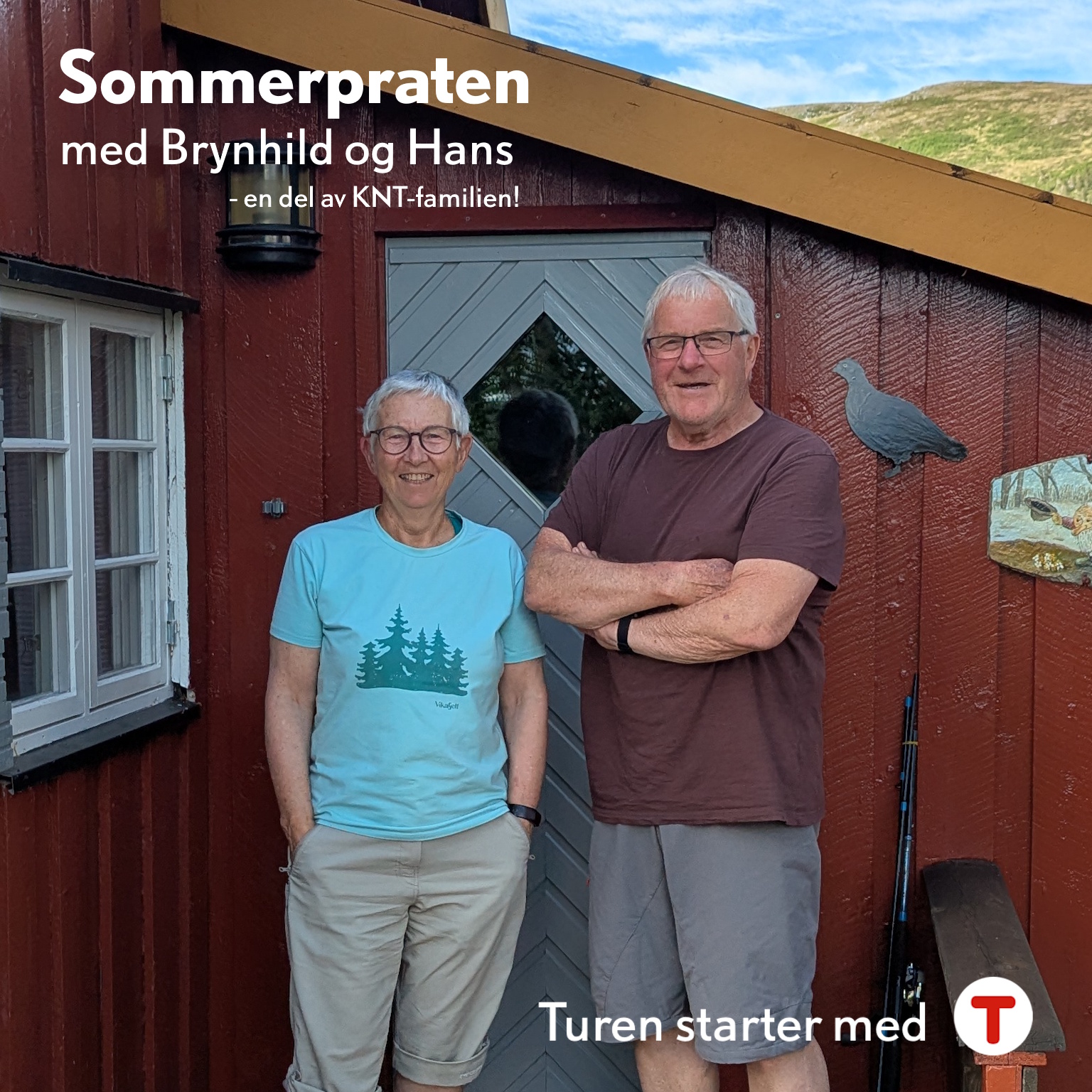
Først ute i sommerpraten 2026 er to av våre ildsjeler i foreningen, Brynhild og Hans Gujord. Vi møttes på hytta deres som ligger 150 meter unna Fjordruta-stien, og en halvtimes gange fra Grytbakksetra som de har et svært nært forhold til.
Brynhild og Hans - dere er kjente navn for mange av oss frivillige, men nå vil vi gjerne la flere bli litt kjent med dere. Kan dere gi en liten presentasjon av dere selv?
Vi er et ektepar i slutten av 70 åra som bor på Halsanaustan. Der har vi bodd siden 1974 da vi flyttet fra Kristiansund. Hans er fra Kristiansund og Brynhild er fra Halsa. Der har vi drevet en bensinstasjon og hatt drosjeløyve etter Brynhilds foreldre. Etter hvert ble det slutt på drosjekjøring og Brynhild fikk jobb i bank og med regnskap. Bensinstasjonen ble også etter hvert oppløst og Hans fikk jobb i et mekanisk firma.
Som aktive i turistforeningen, så regner vi med at dere har en grunnleggende interesse for friluftsliv. Hva har skapt denne interessen hos dere?
Vi har bestandig vært friluftsmennesker og det ble en ny tidsperiode når vi kom inn i normal arbeidstid. Foreldrene til Hans var friluftsfolk og hadde hytte i Bæverdalen, hvor de tilbrakte store deler av sommerferien. Hytta ligg en times gange fra Grytbakksetra der Hans lærte seg å svømme i badekulpen som liten gutt.
Hvordan ble dere involvert i KNT?
Når Fjordruta ble en realitet ble Hans med i en gruppe for indre del av Fjordruta. Vi deltok i arbeidet med bygging av hytter og etablering av stier. Det ble også naturlig at vi tok jobben som tilsyn på Grytbakksetra. Hans har også vært styremedlem i foreningen i mange år.
Hvilke frivilligoppgaver gjør dere, og hva er det beste med å være frivillige i turistforeningen?
Foruten å være tilsyn på Grytbakksetra, med oppgavene der, så har vi deltatt på flere dugnader på andre hytter, vi synes det er et givende arbeid der vi treffer mange nye hyggelige mennesker. Vi er blitt en del av KNT-familien.
Vi regner med at det har vært mange opplevelser gjennom årene som frivillige. Har dere et spesielt minne eller en opplevelse dere vil trekke frem?
En artig opplevelse på Grytbakksetra var da vi var der for å tømme doet. Til stede var det to søstre fra Nederland som snakket om drømmen om å være tilsyn på en turisthytte. Men når Hans kom trillende ned trappa med dodunken da vart det brått slutt på drømmen 😂
Det er ikke alle oppgaver som er like artig som frivillig med andre ord, men dere har holdt på med dette i en årrekke - så vi regner med at det er mye positivt som har gjort at dere har stått på slik. Hva vil dere si til noen som vurderer å bli frivillig?
Frivillig arbeid er svært givende og anbefales på det sterkeste!
Dere nevner at dere har besøkt flere av hyttene på dugnad. Har dere også besøkt KNTs hytter som "vanlige gjester"?
Brynhild har vært som gjest på alle hyttene i Fjordruta i lag med 6 damer som kaller seg for fjelldamene. De har brukt flere år på å gjennomføre alle turene, hvert år har 2 hytter blitt besøkt. Alle er imponerte over standaren på hyttene og turene har gitt gode minner for livet.
Er det en DNT-hytte eller et område dere er spesielt glade i?
Skal vi prioritere et område som vi er spesielt glad i så kan vi ikke gå forbi Bæverdalsfjella med Skjortfjellet, Dyrstolen og Varfjellet. På vinterstid så er det et eldorado for den som liker å gå på ski.
Som avslutning på sommerpraten vil gjerne vite en spesiell ting som dere alltid har med i sekken på tur?
Vi har alltid førstehjelpspakke og vannflaske i sekken. I Brynhilds sin sekk så ligger det bestandig flere plastikkposer i tilfelle vi er så heldig å finne molter. Det er utenkelig å finne bær og ikke ha noe å plukke i.
Takk for en hyggelig prat og fortsatt god sommer! 😊