Are you dreaming of a cabin-to-cabin adventure in the mountains but not sure where to start? This guide provides all the tips and advice you need to plan your journey.
A cabin-to-cabin trek is a fantastic way to experience the Norwegian mountains. By staying in DNT cabins along the way, you can leave the tent and heavy camping gear at home.
However, it is vital to be prepared for rapidly changing weather and snow conditions, especially in the high mountains. You will need a proper backpack with the right clothing and equipment, and you must prepare thoroughly before setting off.
How do I plan my hike?
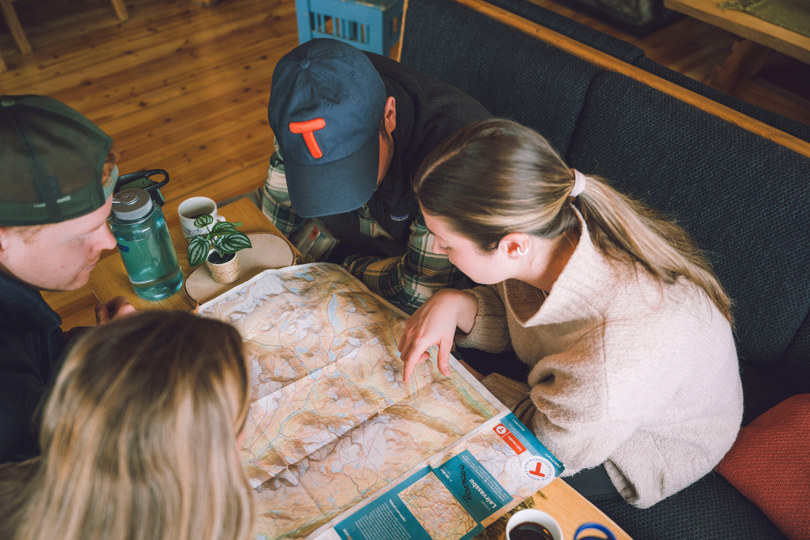
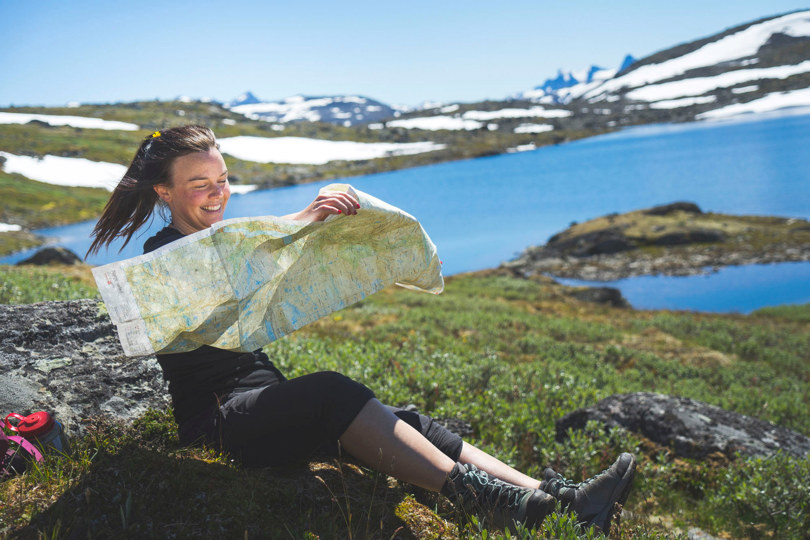
When hiking in the mountains, you should always have a map of the area you're traveling to, and know how to read it. Photo: Marius Dalseg.
Proper planning is essential. You’ve already made a great start by visiting our website! We recommend using UT.no to find hiking areas, route suggestions, and cabins that suit your interests. Remember to always carry a physical map and compass of the area, and make sure you have the standard DNT key.
On hyttebestilling.dnt.no you can get a quick overview of which cabins have available beds for your chosen dates.
Which trip is right for me?
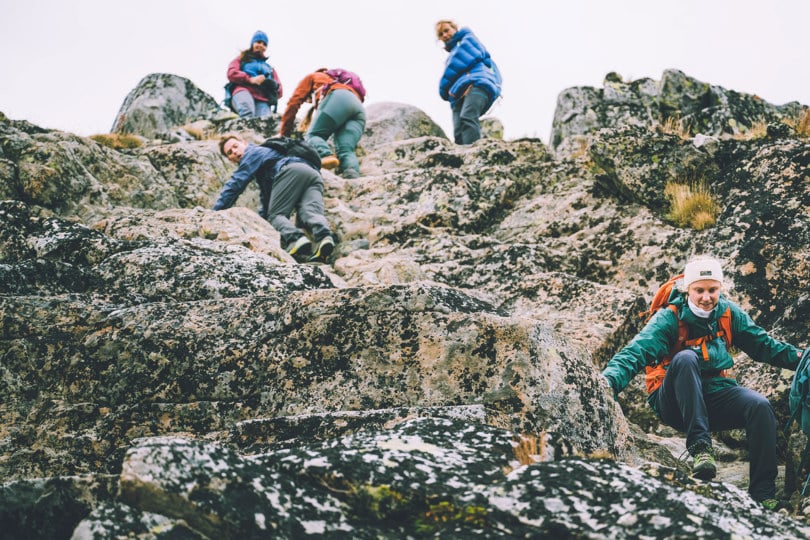
It is important to find a trip that suits your fitness and experience. Beginners should not go on the most demanding hikes. Photo: Marius Dalseg
It is important to choose a route that matches your fitness level and experience. Beginners should avoid the most demanding hikes. On UT.no, you can filter trips by difficulty and length.
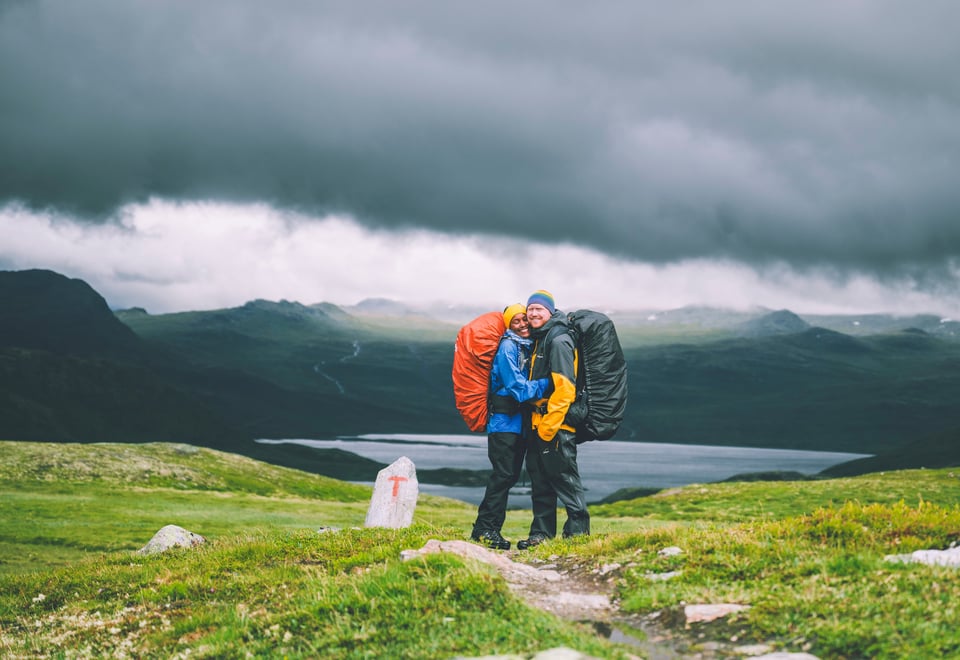
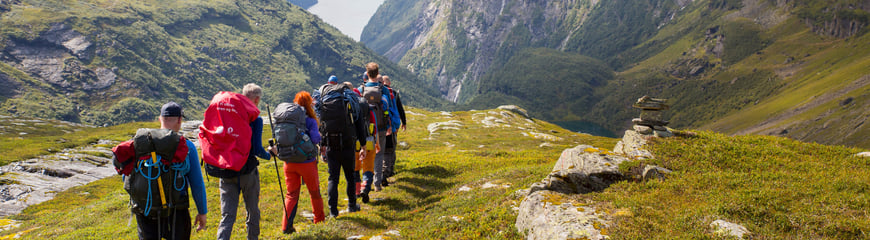
Most mountain routes are marked with small stone cairns. Along DNT trails, these are marked with a red "T", which remains visible even in fog or grey weather. In forested areas and along the coast, you will often find blue painted stripes on trees or poles instead.
A windproof jacket is absolutely necessary on a mountain hike.
The weather in the mountains can change in an instant, and you must be prepared for storms. Always follow The Norwegian Mountain Code and check the weather and avalanche forecasts on Yr.no and Varsom.no before starting your day.
Dress in layers so you can easily adjust to the temperature. We recommend a wool base layer even in summer; if it’s warm, a lightweight wool T-shirt works perfectly. You must have an outer layer that protects you from wind and rain.
Here is a suggestion for clothes and equipment you should have with you when you go from cabin to cabin in the summer mountains. With this in mind, you have good conditions for having a safe and nice trip.
If you have questions about specific routes or current trail conditions, feel free to contact the local DNT member association in the area. We also recommend keeping a close eye on our lokal weather forecasts.
How do I choose the right backpack and shoes?
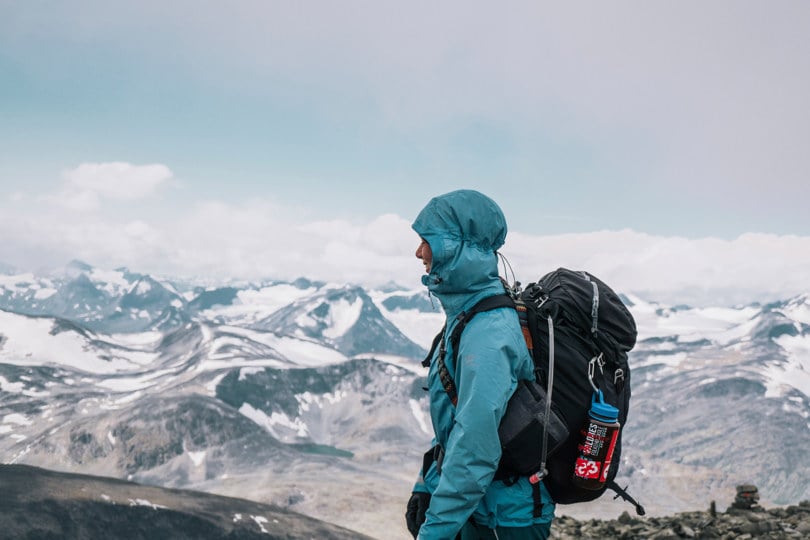
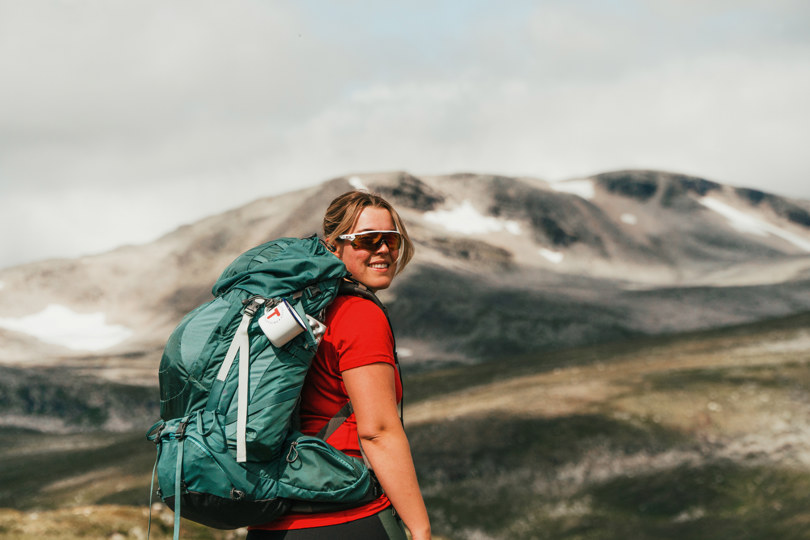
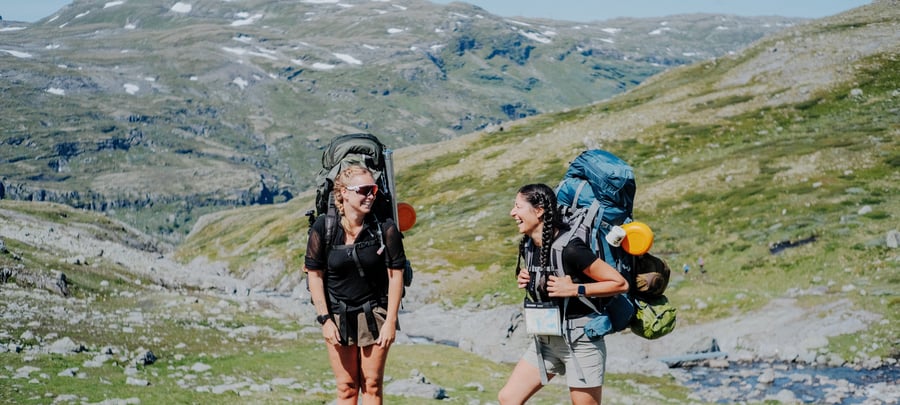
Carry the necessary clothes and equipment in your backpack, but don't pack too much. Photo: Marius Dalseg.
Ensure your backpack and boots fit properly before your trip! A poorly fitted backpack that digs into your shoulders and boots that cause blisters can ruin an otherwise pleasant trip. Choose a backpack that fits your torso length and body size. Don't buy a backpack that is too big – then you may want to pack more than you need. A backpack for cabin to cabin-hikes in the mountains should weigh no more than 8-12 kg.
How to pack your backpack?
Your backpack should contain everything you need, but avoid overpacking. For a cabin-to-cabin hike, your pack should ideally weigh between 8–12 kg. Ensure the backpack fits your torso length; a pack that is too large often leads to packing unnecessary items.
Break in your hiking boots before your trip
Never start a long trek in brand-new boots. Wear them in beforehand to prevent blisters. When hiking, tighten your laces to lock your heel in place. We also recommend bringing blister kits (like Compeed) and sports tape just in case.
You never know if you have power or coverage on your phone, learn a map and compass.
You cannot count on having battery life or mobile coverage in the mountains. You must carry a physical map and compass and know how to use them. As a backup, you can download offline maps in the UT app.
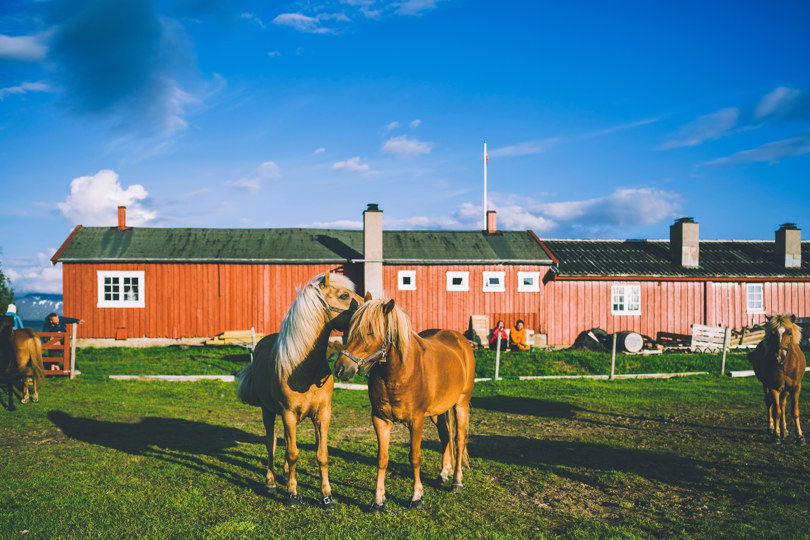
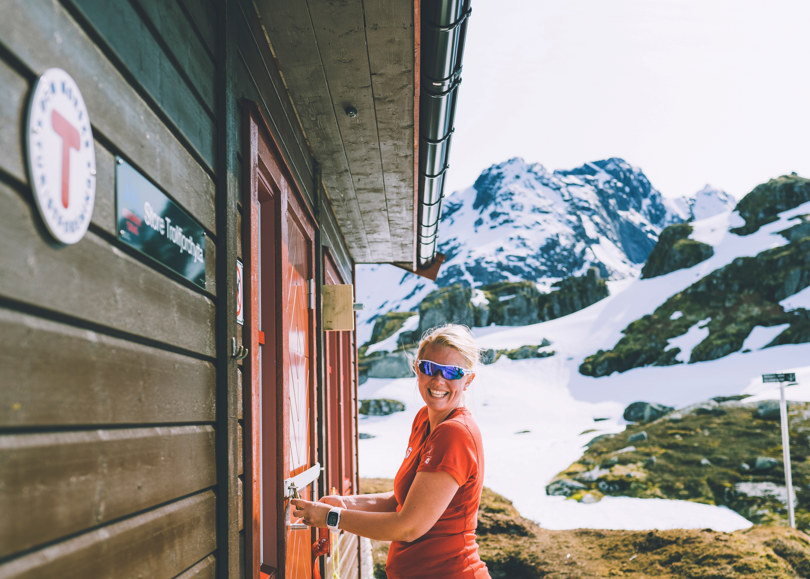
All cabins are open in the summer. Photo: Marius Dalseg.
Opening hours vary. Staffed cabins generally open from late June until early September, though some open earlier or stay open through the autumn holidays.
You can find specific opening dates for every cabin by searching on UT.no or hyttebestilling.dnt.no.
Summer bridges
Some bridges are only put in place during the summer season, typically from July 1st to October 1st. Always check if these bridges are operational before you rely on them for your route. On maps, these are marked with an "S" (Summer), while year-round bridges are marked with an "H".
How do I book a stay at DNT cabins?
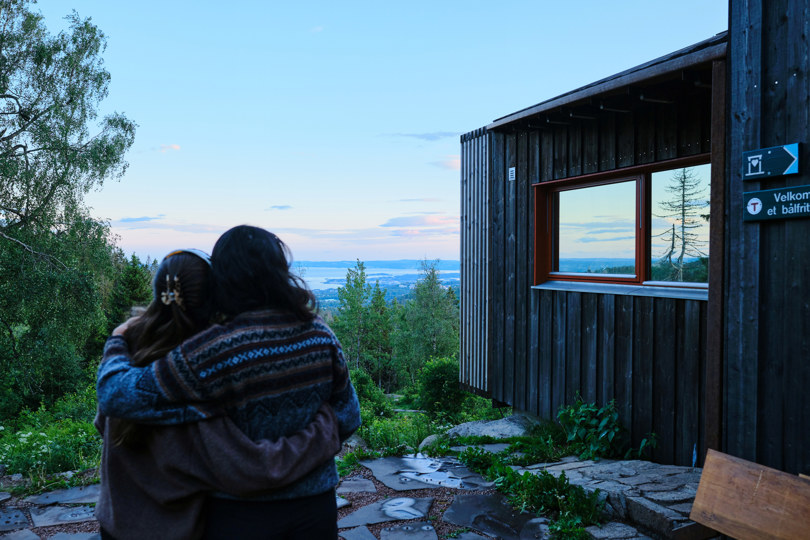
Some cabins must be booked in advance, such as the forest cabins near Oslo.
DNT has over 600 cabins you can stay at, and they are known for their cozy atmosphere. The cabins can be un-service, self-service with food pantry), and staffed cabins with a host and food service.
While we recommend booking in advance to guarantee a bed, you can still hike the "old-fashioned way." Most DNT cabins set aside a portion of their beds for guests who arrive without a reservation.
DNT has a long-standing tradition of never turning anyone away. Most cabins offer a "space guarantee," meaning we will find a place for everyone to sleep, even if it’s on a mattress on the floor in a common area. Note that some local variations may occur.
Some DNT cabins can be booked in full, these do not have a space guarantee. Most cabins in the mountains have bed reservations, you can see this on the cabin's website on UT.no.
Always have the DNT key with you when you go on a trip from cabin to cabin.
Most unstaffed and self-service cabins require a DNT key, but some DNT cabins are unlocked all year round. The staffed cabins have their own staff who welcome you during the cabin's opening hours.
Outside the staffed cabins' opening hours, many of the staffed cabins have a unstaffed and self-service part you can spend the night in. More about this and how to book a place can be found on the cabin's website on UT.no.
How can I travel by public transport to the mountains?
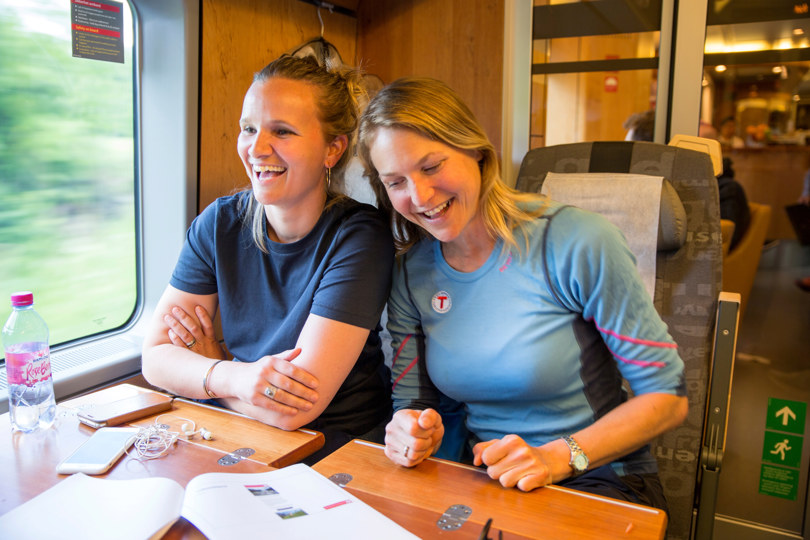
If you take public transport to the mountains, you can relax and enjoy the view from the time you leave home. Photo: Marius Dalseg.
There's a special freedom i leaving the car at home and letting trains or buses transport you to the mountains. Here are our best tips on how to start your holiday by bus, train or boat. The possibilities are many!
Where are you heading? On this page, our experts share their best recommendations for cabin-to-cabin treks. Check out our hiking articles and get inspired for your next adventure!
Historical Hiking Routes (Historiske vandreruter) is a collaboration between DNT (The Norwegian Trekking Association) and the Directorate for Cultural Heritage (Riksantikvaren), aimed at bringing ancient paths and historic trails back to life. These carefully selected routes offer a perfect blend of magnificent outdoor experiences and unique cultural heritage.
DNT SignaTur features some of Norway's most spectacular treks. These journeys last from five days to three weeks, crossing breathtaking natural and cultural landscapes. Through SignaTur, DNT makes it easier for everyone to experience Norway's premier mountain ranges and hiking routes.