For many mountain hikers, the biggest challenge is crossing rivers without bridges or footbridges. How can you get across the stream without risking life and health? Here are some tips!
Raging rivers and streams are not to be taken lightly. You can usually cross them without issue along the DNT trails. But if you're unsure, it's best to turn back.
Five rules for wading
Find a safe crossing point. Always wade diagonally, facing upstream.
Never wade in water deeper than knee-high.
Never wade barefoot.
Use poles or a stick for better balance.
Put on dry socks and shoes after wading, and walk to warm up again.
How do I cross safely?
The first rule is to find a good wading spot. Early in the season, bridges and footbridges may not be in place yet. Don't try to cross where the bridge normally is, as that's usually the deepest part of the river.
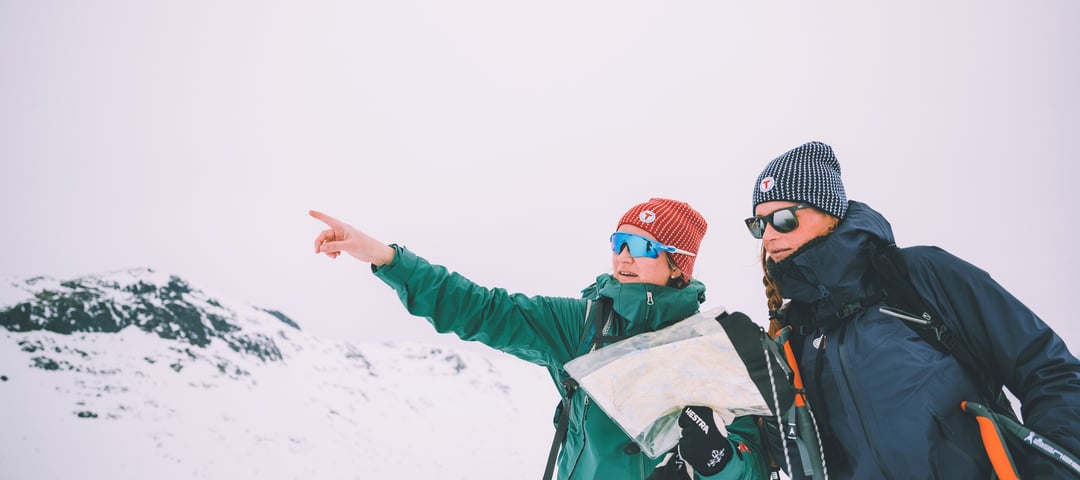
Look upstream or downstream for better locations, ideally where the river has split into multiple channels. Look for flat areas, check the map, and assess the terrain. It's better to wade safely through calmer sections than to hop from stone to stone in rapids.
Does it matter how deep the water is?
We don't recommend wading if the water reaches higher than your knees. If the current is strong, it doesn't take much to lose your footing.
What should I wear on my feet?
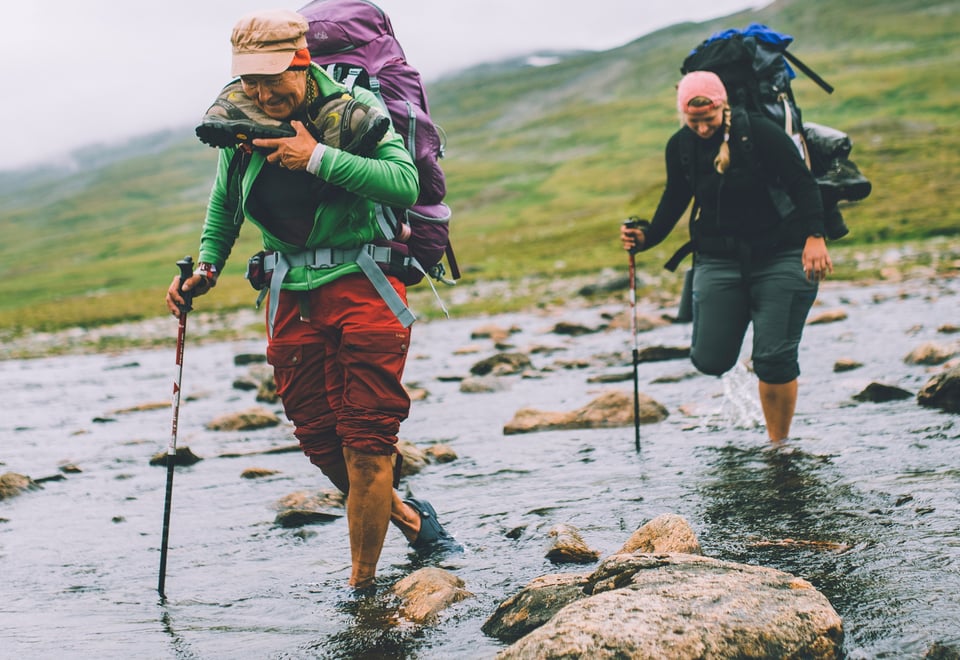
You must never wade barefoot. The water in the mountains is usually ice-cold. Wear wool socks, wading shoes, or hiking sandals. If the riverbed is rocky and uneven, it's best to wade in boots.
Pull your gaiters over the boots or tuck your rain pants well down over the shoes, and secure with a cord or duct tape. Feel your way carefully with your feet to find secure footing, and don't take any chances.
How do I maintain balance?
Some trails have wading poles provided. Hiking poles, a stick, or a rope can serve the same purpose. Another option is to have the group link arms and support each other across.
It's important to dry your feet immediately after wading, put on dry socks, and start walking again.
As long as you use good judgment and follow these guidelines, wading can be done safely. But remember, the same rule applies as The Norwegian Mountain Code - there's no shame in turning back. If the river is in flood and there are no safe crossing points, the only thing to do is head back the way you came.
We're spending more time outdoors, and using it in increasingly diverse ways. The Norwegian Mountain Codehelps you plan and complete a safe, enjoyable trip – which is also safe.