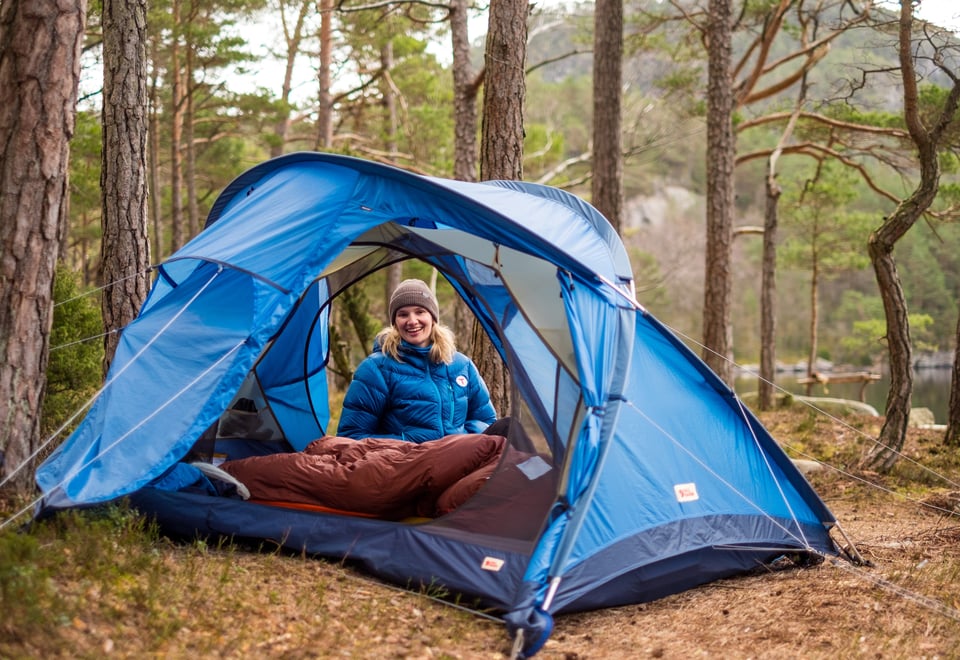
Want to spend a night outdoors in a tent? Here are the most important tips for a successful camping trip in summer and autumn.
Keep it simple
You don’t need to travel far to have a great camping experience. Use UT.no to find hiking destinations near you. Forest areas are often less exposed to wind and weather than the mountains, making them a good choice for beginners.
If you have a garden, you can even start by testing a night in a tent at home. It’s a great way to practice before heading out on a longer trip.
Choose a good campsite
Sleeping on uneven ground or over large rocks can be uncomfortable, so take a little time to find a good campsite.
Look for a place that is:
Flat and comfortable to lie on
Fairly dry
Sheltered from wind if possible
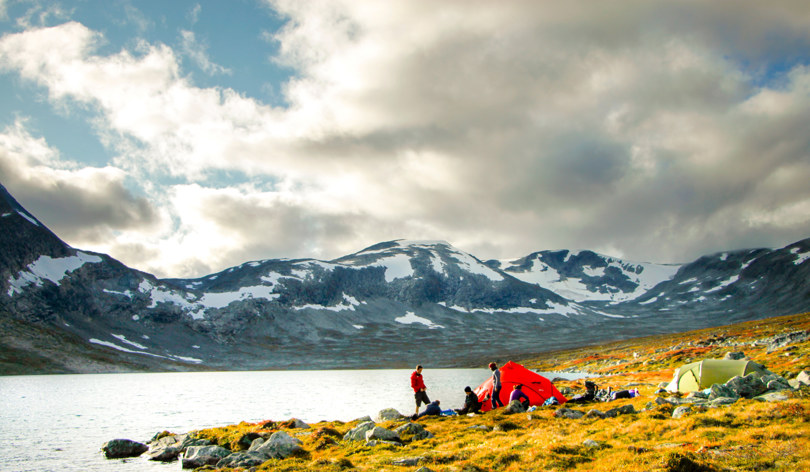
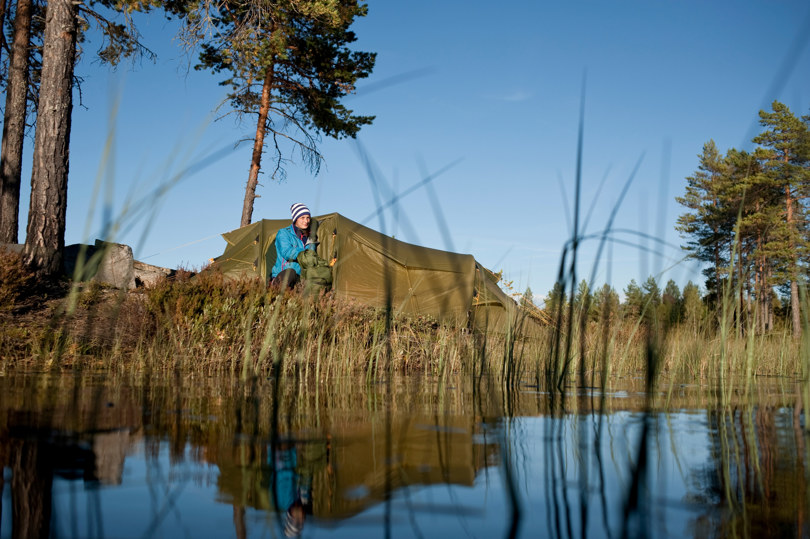
A campsite with a nice view can make the experience even better. It is also practical to camp near a water source for drinking and cooking.
Where are you allowed to pitch a tent or hammock in Norway?
In Norway, nature is for everyone. The traditional Right to Roam, known as Allemannsretten, gives you the freedom to explore vast areas of the outdoors, regardless of land ownership.
Camping in the countryside
As long as you stay at least 150 meters from the nearest inhabited house or cabin, you can pitch your tent almost anywhere in nature. However, be considerate and avoid disturbing residents.
You can leave your tent or hammock in the same place for up to two nights. If you want to stay longer, you must get permission from the landowner.
In remote mountain areas or places far from settlements, the two-night rule does not apply.
Camping on cultivated land
You may only camp on cultivated land (such as farmland, gardens, or private yards) if you have permission from the landowner or the person using the property.
If you are not hiking very far, it can be worth carrying a little extra weight to prepare a good meal. Cooking outdoors is often one of the highlights of a camping trip.
How warm your sleeping gear needs to be depends on the season. In late autumn, temperatures can drop quickly during the night.
Staying warm is often the most important factor for a successful camping trip.
What should I consider when choosing a sleeping pad?
The sleeping pad is essential because it insulates you from the cold ground.
You do not need the most expensive option, but you should choose a pad that provides enough comfort and insulation for your trip. If you plan to hike long distances, weight will also be an important factor.
A good solution for colder seasons is an insulated inflatable sleeping pad combined with a thin foam sleeping pad. This combination can work well well into autumn and even winter.
Don't go to bed with all your clothes on in your sleeping bag. Then it gets too hot.
Which sleeping bag should I choose?
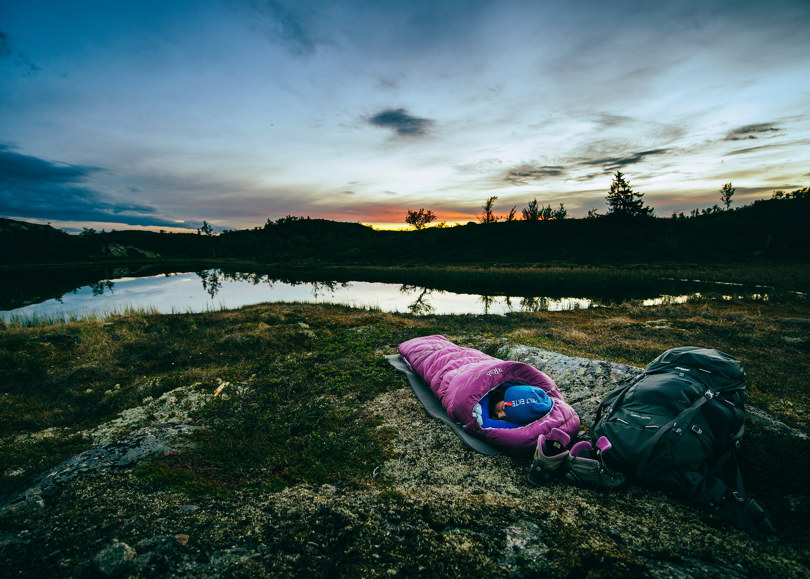
It is important to bring a sleeping bag that is warm enough for the conditions.
Sleeping bags are usually divided into three main categories:
Summer bags: These are light and compact, but they may be too cold for many summer nights in Norway.
Winter bags: Designed for winter camping and can handle temperatures down to around –30°C.
3-Season sleeping bags: For most people, this is the best choice. They work well for spring, summer, and early autumn.
Check this when buying a sleeping bag
Length of the sleeping bag: You should be able to crawl well into the sleeping bag without your toes rubbing at the bottom. If the sleeping bag is too long (e.g. for children), you can use an elastic band, strap or rope to tie the bag to a suitable length.
Comfort temperature: Minimum and maximum temperature where the sleeping bag provides the best comfort. Here there are variations between genders, find out what suits you best.
Material: Sleeping bags are filled with either synthetic filling or down. Down is lighter and can be packed more tightly, but requires more maintenance and is more expensive.
Three tips for keeping warm on a camping trip
A sleeping bag with a comfort temperature between –5°C and –10°C is often suitable for autumn camping. You can also combine two lighter sleeping bags, as long as they are not too tight. Remember that air provides insulation, so avoid compressing the insulation.
A sleeping bag liner can also increase warmth and comfort.
A simple trick is to use a water bottle as a hot water bottle. Fill a Nalgene bottle or similar with warm water and place in the sleeping bag. Thread a thick wool sock around the bottle makes it even more comfortable.
By the way, the hot water bottle works great for drying wet socks, but it's best to do it outside the sleeping bag to avoid moisture.
Make sure you are warm and well fed before going to sleep. If you need to go to the bathroom, do it before getting into the sleeping bag. Wear dry wool underwear, warm socks, and a hat if needed, but avoid wearing too many layers. Too much clothing can reduce the insulating air layer inside the sleeping bag.
Always go to bed in dry clothes, and tighten the sleeping bag hood and collar to reduce heat loss.
How to pitch a tent
Before going on a trip, it is a good idea to practice pitching your tent in your garden or nearby. This helps you become familiar with the equipment and setup process.
Make sure you bring tent poles and pegs, in addition to the tent itself.
What do you need to set up a tent?
Tent pegs: Small metal stakes used to secure the tent to the ground. The loops along the edge of the tent are attached to the pegs. Push them firmly into the ground, especially in windy conditions.
Guy lines: The cords attached to the outside of the tent. These should be tightened and secured with pegs or attached to nearby trees. Guy lines help stabilize the tent in windy weather.
Tent poles: These are the long poles you need to put together before threading them into the sewn channels of the tent. The tent poles create the shape of the tent and hold the roof up. Look for colour coding on poles and in the channel of the tent.
There are many different types of tents and all have different variations of how they should be set up. Some tips:
Lay the tent flat on the ground where you want to pitch it, with the groundsheet facing down.
Position the tent so that the entrance faces the direction you prefer.
Assemble the tent poles and check the colour coding.
Thread the poles through the correct sleeves.
Secure the corners with tent pegs.
Tighten the guy lines.
Adjust and tighten everything for the final setup.
Different tents may have slightly different setups, so always follow the instructions for your specific model.
Lighting and evening comfort
Bring a camping lantern or headlamp for light after dark. A small string of lights can also create a cozy atmosphere inside the tent.
Entertainment such as a book, card game, or small activity can make the evening even more enjoyable.
If you prefer to spend time outside the tent, you can relax around a campfire. Just make sure the fire is placed far enough away from the tent, and be careful that wind does not carry sparks toward the tent fabric.
Buy used or borrow equipment
There is no hiding the fact that you need some equipment when you go camping, but you don't have to buy new ones! Maybe you know someone you can borrow from?
The second-hand market also offers many good options at reasonable prices. Websites such as Tise or finn.no often have outdoor gear for sale. Some stores also offer equipment rentals, and at BUA, children and young people can borrow equipment for free.
Join a guided trip or beginner course
DNT organizes group trips with tent camping throughout the year. These trips provide good company and a safe way to gain experience.