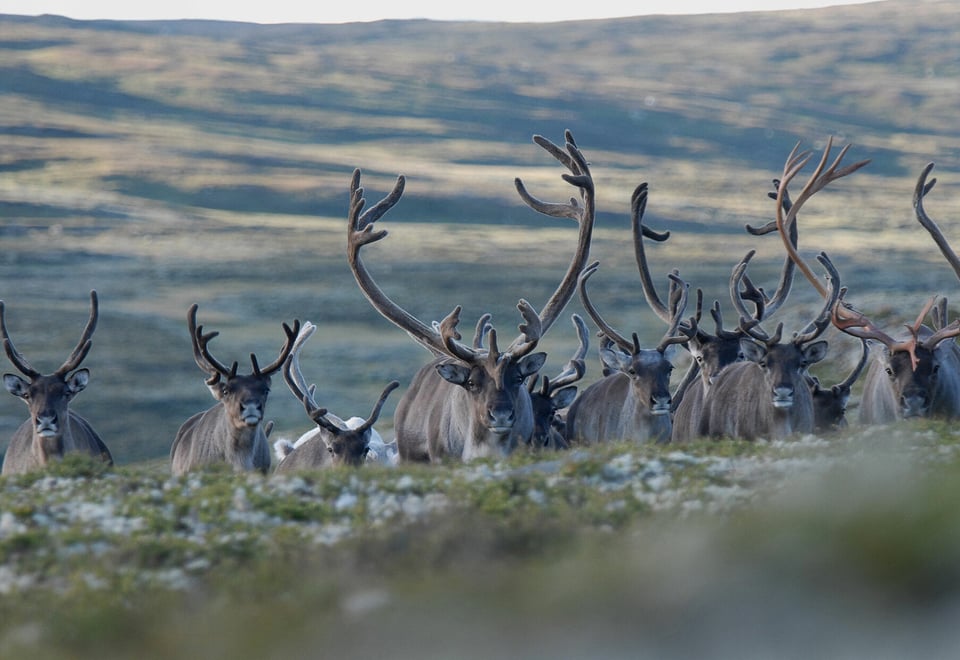
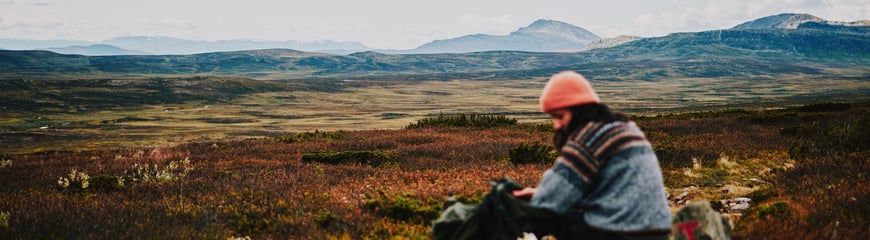
The natural habitats of Europe’s wild reindeer are facing unprecedented fragmentation. As a hiker, understanding how to minimize your impact is essential when traveling through these vulnerable alpine ecosystems.
Wild reindeer populations are increasingly confined due to infrastructure development, such as hydroelectric power plants, roads, and recreational cabins. These physical barriers disrupt traditional seasonal migration routes, shrinking the areas where the animals can feed and roam.
Furthermore, wild reindeer are exceptionally sensitive to human disturbance. Even quiet foot traffic can trigger a flight response. Because their survival instincts are highly developed, a herd will often detect human presence through scent or sight long before the hiker is even aware of the animals.
Show Consideration for the Wild Reindeer:
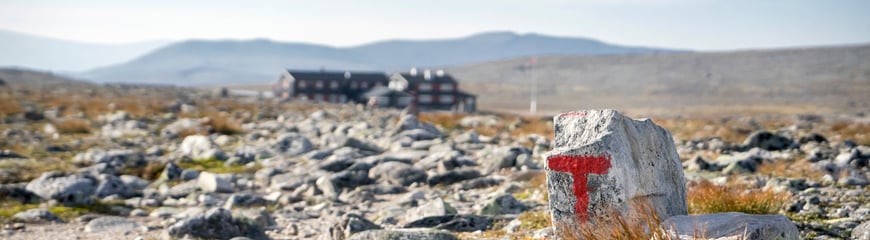
Follow marked trails
Remain calm if you encounter reindeer, allowing them to retreat undisturbed
Use binoculars and maintain a safe distance to the animals
Stay low to the ground and move in a way that carries your scent away from the animals on the wind
Keep your dog under control and adhere to leash restrictions
While these measures are vital throughout the year, they are critical during the spring calving season (mid-April to mid-June) and throughout the winter months when energy conservation is a matter of survival. Through mindful navigation, sustainable outdoor recreation can coexist with wildlife conservation.
Wild Reindeer Management Areas in Norway
Norway holds a global responsibility for these animals, hosting the last viable wild reindeer populations in Europe. Today, alpine wild reindeer are managed across 24 designated areas in southern Norway.
The wild reindeer of Norway have evolved to survive in barren, high-alpine environments with minimal shelter and scarce winter forage. Unlike other deer species, they rely on herd dynamics as a primary defense mechanism against apex predators.
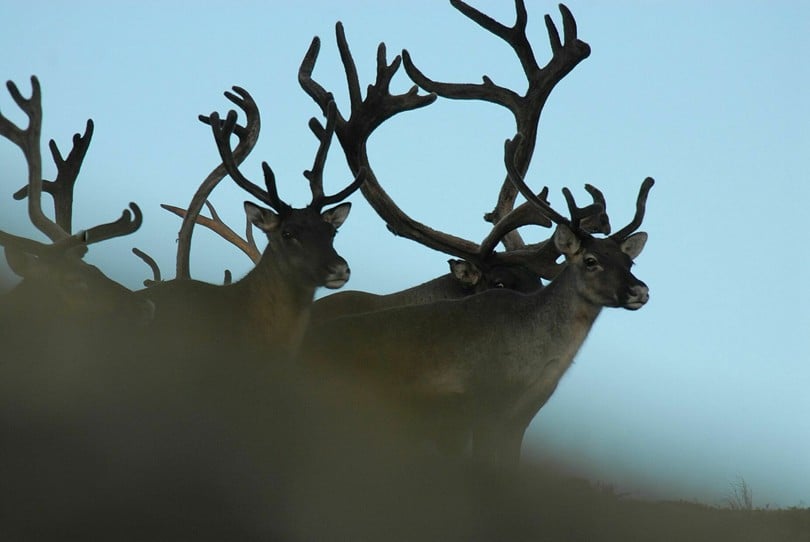
Photo: Olav Strand/NINA
Because large herds deplete grazing areas quickly, they require vast territories to survive. Their movement is dictated by seasonal changes in climate, snow depth, and vegetation. During summer, they seek out lush pastures near receding snow patches, whereas winter survival depends on windswept ridges where lichen is accessible beneath thin snow cover. This constant rotation amplifies their need for expansive, uninterrupted landscapes.
Conservation Initiatives by DNT
The Norwegian Trekking Association (DNT) is actively committed to reducing the ecological footprint of mountain tourism. To safeguard critical reindeer habitats, DNT continuously evaluates its infrastructure. Actions include relocating historical trail networks, moving or closing certain cabins, and enforcing temporary closures of specific lodges during the vulnerable spring calving period.
Visually, wild and semi-domesticated reindeer are nearly identical, as many wild herds share ancestral roots with domestic stock. The most reliable indicator is geographic location. If you are within one of the ten designated wild reindeer areas, the animals are wild. In contrast, other regions feature semi-domesticated herds managed by local caribou or Sami husbandry operations. Regardless of classification, all reindeer are highly sensitive to stress, and hikers should maintain an identical level of caution and distance around any herd.
The Right to Roam and Trackless Travel
The Norwegian right to roam (allemannsretten) grants the public the freedom to traverse, rest, and harvest resources on uncultivated land. However, this legal freedom is fundamentally tethered to a duty of care toward landowners, fellow hikers, and the environment. Practicing trackless travel means leaving the landscape in such a pristine state that no visual or ecological trace remains after your departure.
When a herd isdisturbed by humans, the animals flee across long distances. This flight response reduces vital fat reserves and disrupt critical foraging time. The consequences are particularly severe if pregnant females or newborns are displaced from sheltered calving grounds or prime grazing pastures. Extensive behavioral studies confirm that wild reindeer actively avoid corridors with high human traffic, meaning a heavily used hiking trail can effectively function as an invisible barrier, permanently dividing an already fragile habitat.