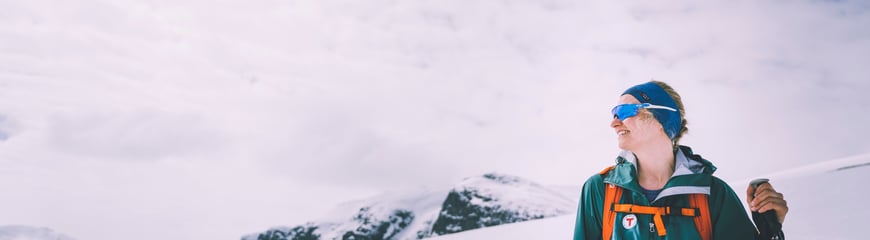
Planning a winter trip in the mountains and wondering what to pack in your backpack? Here is a suggested list of clothing and equipment for skiing from cabin to cabin in the winter mountains.
Weather conditions in the mountains can change quickly and become very demanding, so you must be prepared for extreme situations.
The equipment listed below (excluding skis, boots, poles, food, and drink) typically weighs 10–14 kg. With some of the clothing worn on your body, the backpack itself will usually weigh around 8 kg.
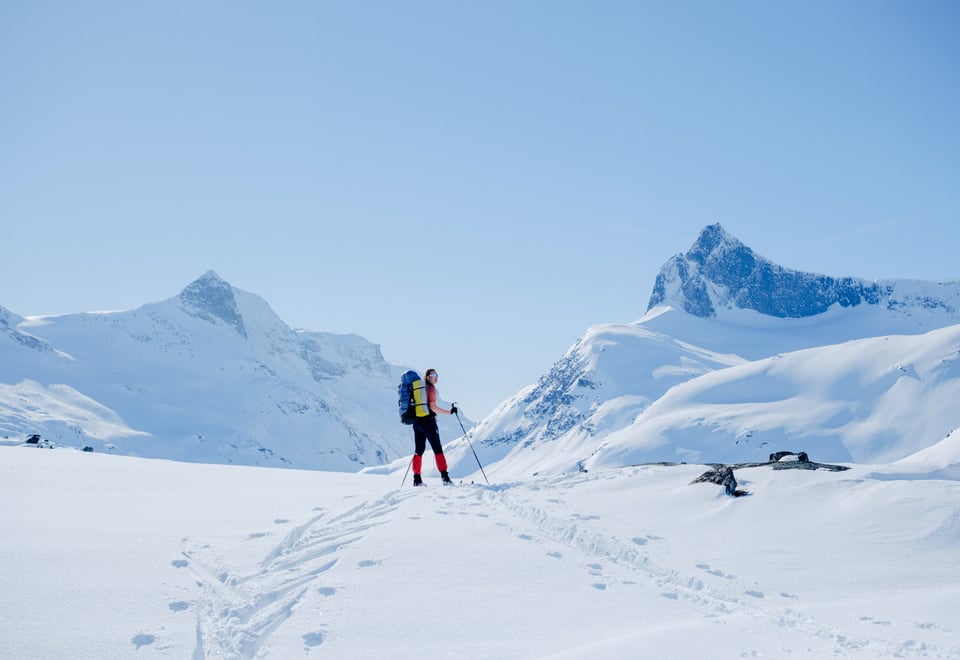
This is what you wear on your winter trip:
Warm and windproof clothing is essential for winter travel. Necessary safety equipment and extra clothing should always be carried in your backpack.
Recommended clothing:
Wool base layers (underwear, long underwear, socks)
Wool sweater or fleece mid-layer
Windproof jacket and trousers
Hat, neck gaiter/buff
Gloves or windproof mittens with wool mittens inside
Ski boots
Gaiters
Backcountry skis with steel edges
Ski poles with large baskets
Backpack with a suitable capacity (55–70 liters)
This is what you have in your backpack:
Clothing
Extra hat, neck gaiter, mittens, and wool socks
One extra set of wool base layers
Optional light indoor clothing for the cabin
Light indoor shoes or slippers
Thick wool sweater or down jacket
Rain gear if your outerwear is not waterproof
Equipment
Waterproof stuff sack for your backpack contents
Windsack / emergency bivouac shelter
Shovel and probe (and avalanche transceiver in avalanche terrain)
Warm sleeping bag and sheet bag or bed linen for cabin use
Sleeping pad
First aid kit (including blister treatment and sports tape)
Toiletries and a lightweight towel
Toilet paper in a plastic bag
Ski goggles
Sunglasses and sunscreen
Map, compass, and map case (GPS optional)
Multi-tool with steel wire or duct tape for repairs
Bring two sets of wool base layers. Use one while skiing and keep the other dry for the cabin. If necessary, wash the used set in the evening and hang it in the drying room
Light indoor clothing can be simple items such as thin pants worn over your base layers.
Down or insulated bivouac shoes work well as lightweight indoor footwear and are useful if your ski boots freeze to the bindings.
An insulated jacket provides quick warmth during breaks and can be worn over your shell jacket in dry weather.
Windproof cotton or microfiber outerwear often breathes better than fully waterproof shells, but if you choose this option, you should pack rain gear in case of mild or wet weather.
Avalanche safety equipment (transceiver, shovel, and probe) is recommended when traveling in avalanche-prone terrain. Make sure you practice using it before your trip.
In addition to searching for avalanches, a probe can also be useful for checking the stability of snow cornices.
A bivvy vag, warm sleeping bag, and sleeping pad should always be included. These items save lives every winter.
Do not leave your mobile phone at home. Even when there is no signal, it remains an important part of your safety equipment and can sometimes be located by rescue services. Save battery power during the trip and bring a power bank or spare battery.
Always carry a reflective vest in case of emergencies or rescue situations.
Tips for packing your backpack
Everything should be packed in the backpack, with the exception of light items (such as sleeping pad).
Place heavy items close to your back for better balance.
Put the sleeping bag at the bottom of the pack.
Keep items you may need during the day (food, rain gear, extra clothing) easily accessible in the top lid or side pockets.
Keep your map and compass in a pocket or map case where they are easy to access.
Use plastic bags or waterproof packing sacks to keep equipment dry.
Make sure the weight is evenly distributed on both sides of the pack.
Keep snacks in your jacket pocket and water within easy reach.
Develop a consistent packing system so you always know where your gear is.
Packing lists
Whether you are going on a summer trip, winter trip, summit trip or day trip, it can be useful to have tips on what you should bring in your backpack. Here you will find all our recommended packing lists.