Skiing from cabin to cabin in the mountains - How to do it
Are you dreaming of a cabin to cabin trip in the winter mountains, but are unsure how to do it? Here's some useful tips and advice for planning and carrying out the trip.
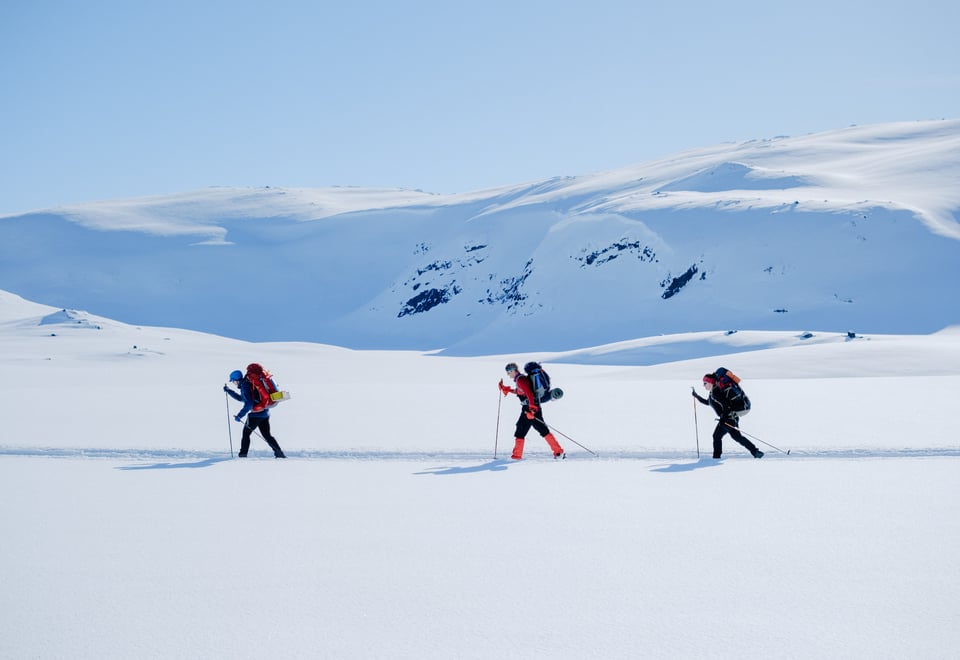
A ski tour from cabin to cabin is a unique way to experience the mountains in winter. You spend the nights in DNT cabins along the route, which means you don’t need to carry a tent or full camping equipment.
However, winter conditions in the mountains can change quickly — especially in high alpine areas. It is essential to bring the right clothing and equipment, and to prepare thoroughly before setting out.
Planning
Good planning is key to a successful trip — and you’re already off to a great start.
Next, visit UT.no to find a suitable hiking area, route suggestions, and cabins that match your interests.
Once you have chosen your destination, take time to gather detailed information about the area and the cabins. On UT, you will find:
Route descriptions and suggested itineraries
Difficulty grading
Information about trail conditions
Cabin details and availability
You can also check DNT’s cabin booking system to see which cabins have available beds during your travel period.
Once you know where the trip is going, the next step is to get information about the hiking area and the cabins in question. At UT you can read more about route choice, grading, dormer status, as well as other conditions — in addition, you get an overview and information about the cabins.
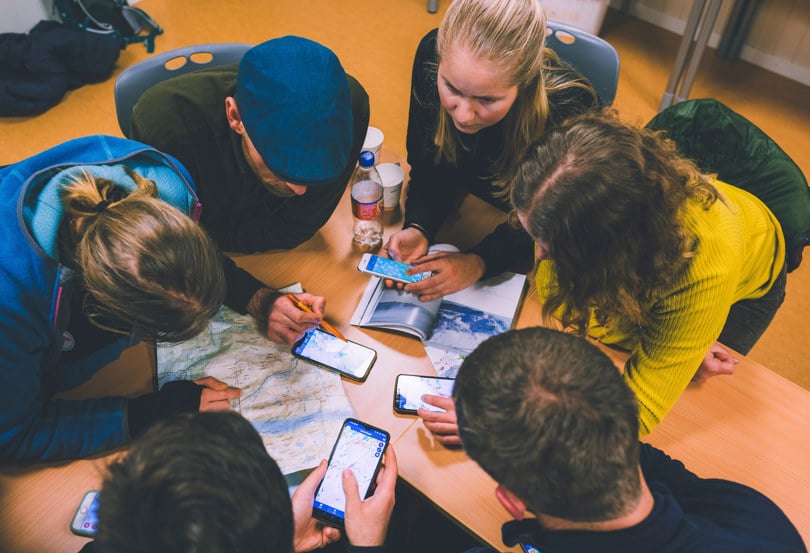
Are you going on a trip with others? Then it may be a good idea to talk about the different prerequisites you have in the group.
Choose a trip according to ability and conditions
If you plan to go on summit tours or travel outside marked routes, you will need additional knowledge and experience in winter mountain travel.
It is also important to check weather forecasts and snow conditions — both during planning and throughout your trip. Consider when the conditions are best for your planned route.
TIPS: DNT's member associations arrange avalanche courses regularly. Maybe this is also the year to take an avalanche course? Avalanche course
Winter mountain travel places high demands on your equipment.
For multi-day trips between cabins, we recommend:
Backcountry skis with steel edges
Sturdy mountain ski boots
You should also consider whether to use skins or ski wax, depending on terrain and conditions.
We do not recommend using narrow cross-country skis for cabin-to-cabin trips in the high mountains.
Trails, ski tracks and limbing
A winter route is not necessarily a groomed ski track.
Many routes are not prepared for cross-country skiing
Some may be marked but not groomed
Others may be completely unprepared
Between DNT cabins in the high mountains, ski tracks are usually not groomed. Instead, the most common winter routes are marked with birch twigs (“limbing”).
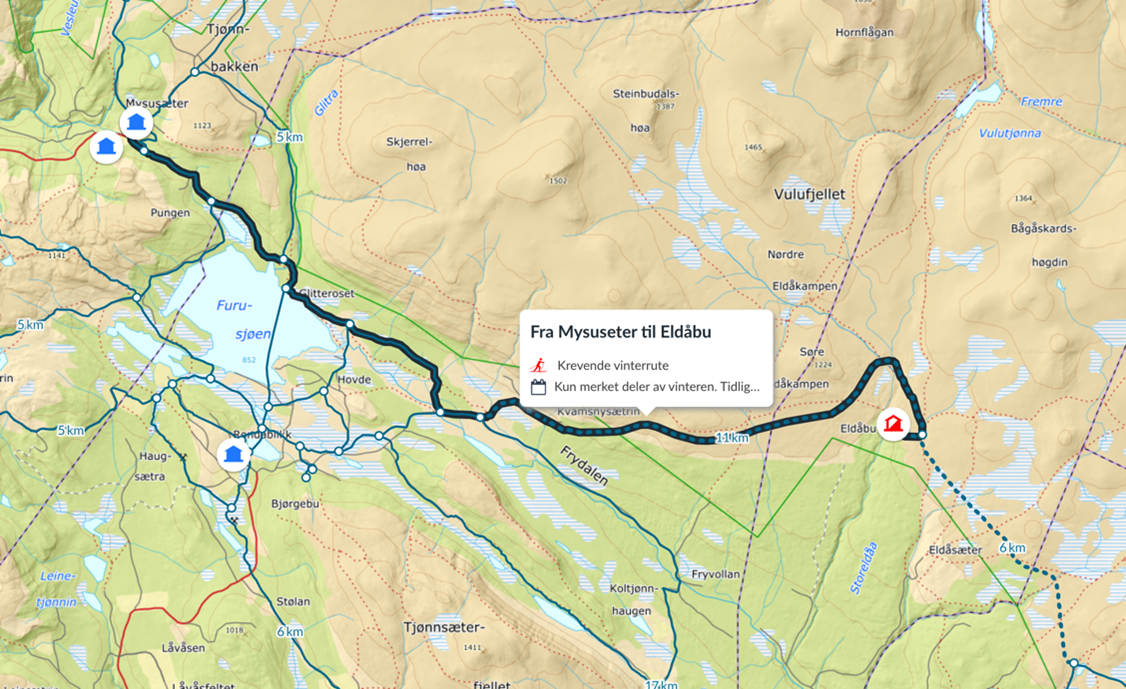
You can find information about when routes are marked on UT.no/kart by filtering for ski routes. Click on the relevant course you want information about.
Marked winter trail on UT.no with route information.
TIPS: Use UT to learn more about the different winter trails — check if the trail is limbed, plowed, marked, etc. Several of the trails also include a route description as in the example above.
TIPS: Use skisporet.no or similar services to check if the trail is prepared for cross-country skiing.
Limbing in the mountains
Limbing is done by experienced mountain people who know where the safest defiance is between the cabins. For example, the most commonly used winter routes in the mountains are marked with twigs during the winter season, some are delimbed around the winter holidays. Most are twigged at Easter.
Some of the twigs remain until they fall due to snow melting or the like. Some twig routes are taken down immediately after Easter is over. Sometimes there are conditions in the mountain that cause the twig route to be changed compared to what is drawn on the map, or postponed for a few days.
Everyone can use DNT's cabins. At self-service and unserviced cabins, you must have the unique DNT key that you can dispose of if you are a member. Therefore, at least one person in the entourage must be a member.
Opening hours
Opening hours for staffed cabins vary depending on the season and location. You can find updated information on UT.no or on the cabin’s own website. This applies to Jotunheimen, Breheimen, Skarvheimen, Femundsmarka and Hardangervidda, among others.
Many cabins are located in protected areas, where special consideration must be given to wildlife, such as wild reindeer.
Key and access to the DNT cabins
Most self-service and no-service cabins are locked with the DNT key, which is available to members. At least one person in your group must therefore be a DNT member.
Some cabins are unlocked year-round, while a few use special keys or code locks.
Staffed cabins are open during their operating season and do not require a key.
Information about key/lock can be found on the cabin's page on UT.no.
TIPS: You can get the DNT key at DNT's shops and tour centers, or at dntbutikken.no.
Using public transport is often a convenient and environmentally friendly option.
You can plan your journey on entur.no to find transport.
Popular access points include:
The Bergen Railway (e.g. Finse, Haugastøl, Hallingskeid) for trips in Hallingskarvet, Hardangervidda and Skarvheimen
Hjerkinn for access to Rondane
Kongsvold for the Dovre mountains
Bus connections to Tyin, Fondsbu, and Haukeliseter
Other tips and tricks
Beginners may benefit from starting later in the season, when temperatures are milder and daylight hours are longer. Many routes are also marked closer to Easter.
Always follow the Norwegian Mountain Code, which is especially important in winter conditions. Read up here: The Norwegian Mountain Code
Digital courses in winter outdoor life
Want to learn more? We have created some digital outdoor courses you can take for a nice, safe and exciting outdoor experience.
How to plan your winter trip
Winter outdoor life can offer great nature experiences both in the high mountains and in the local countryside as long as you are well prepared. Take this free course on travel in the winter mountains: Planning and safety on a winter trip
The only way to become good at making a fire is to practice! Here we teach you how. You also get knowledge about different burners, and suggestions for food on a winter trip. Learn more about campfires and food on a winter trip.
Sleep (well) outside in winter
This course deals with choosing and rigging a campsite, camping in the winter, safety and good tips on how to stay warm through the night. Learn more about spending the night outside in winter.