Few people have spent as many nights in a hammock as sisters Hege and Stine Schultz Heireng. Here, they share their best tips for a comfortable and memorable night beneath the treetops.
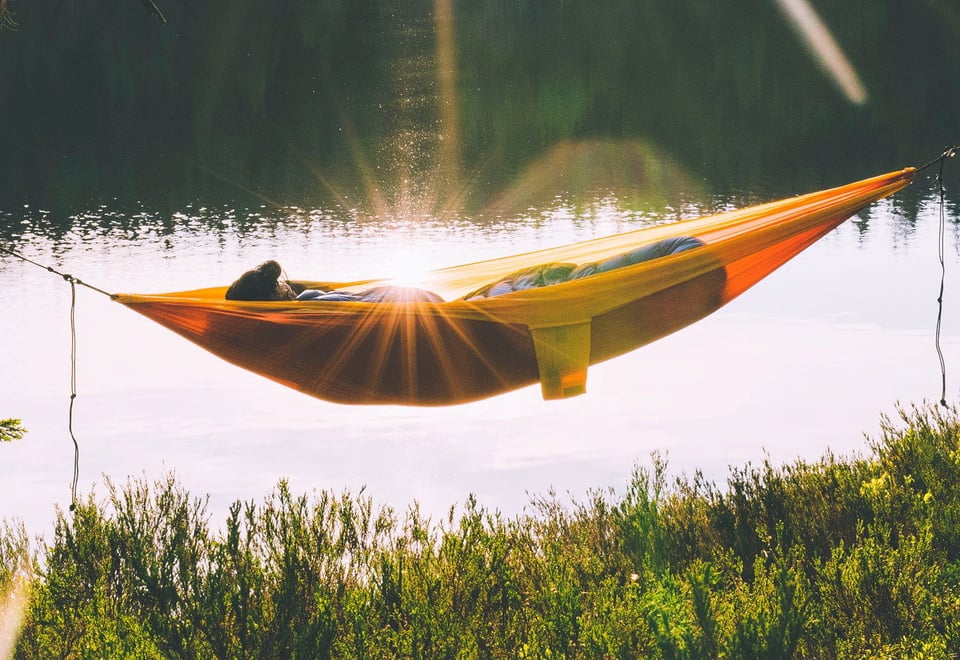
"Everyone should experience a night in a hammock under the stars. Waking up with a cool nose, feeling the warmth of the morning sun, hearing birdsong, and watching the mist settle across the forest floor—it’s pure magic," say the hiking sisters.
Hiking sisters
Sisters Hege and Stine Schultz Heireng first became known for the hiking project "52 overnight trips in 52 weeks". In 2018, they carried out over 100 short-distance trips near Norway's 15 largest cities, which became the book "Kortreist". The sisters were "Wilderness of the Year" in 2017 and awarded the "Outdoor Award" the same year.
There is no doubt that hammocks have become increasingly popular in recent years, and Hege and Stine believe they are here to stay.
"The hammock is the new sit pad. We always bring one with us, and it has added a whole new dimension to our outdoor adventures."
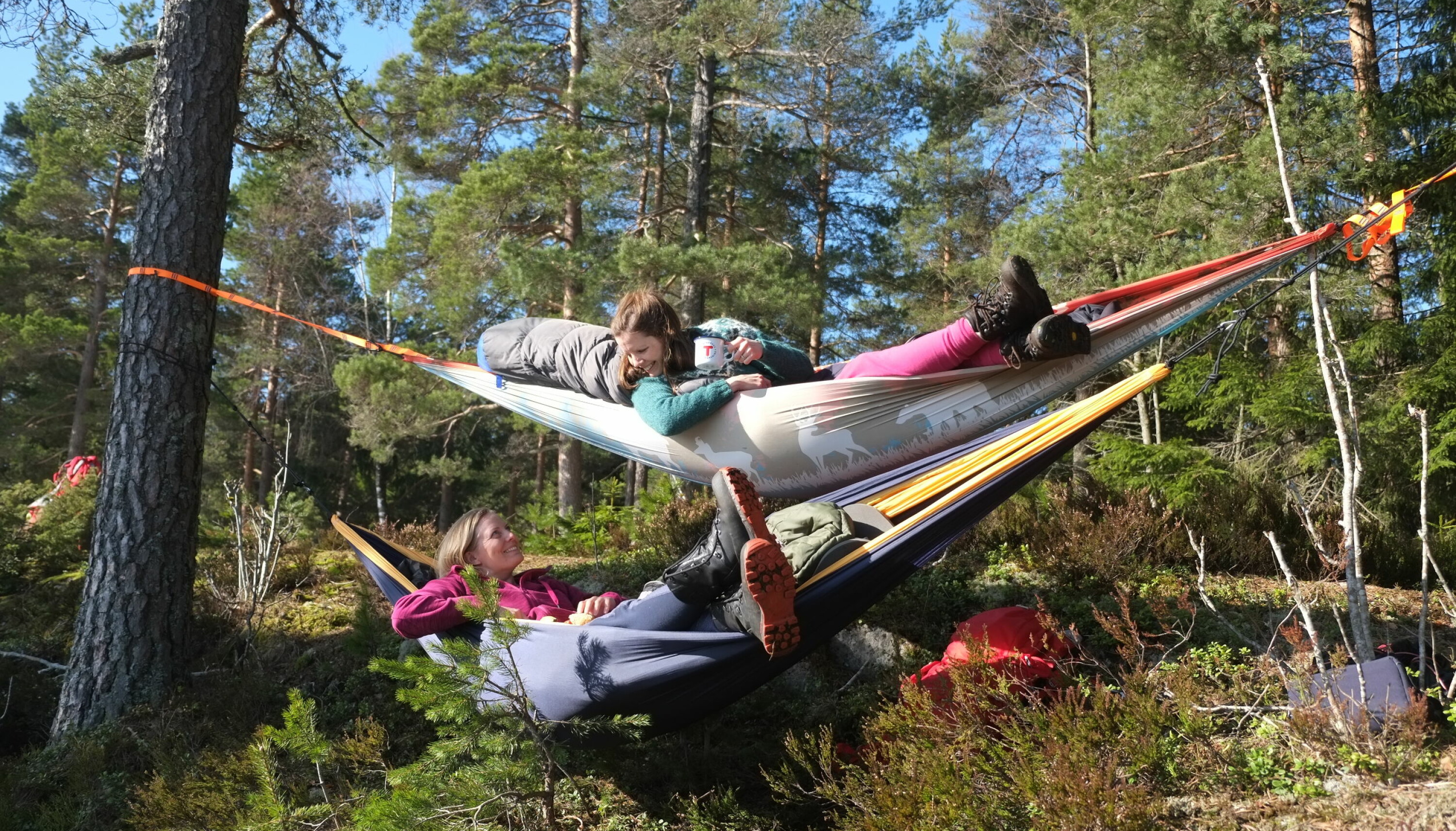
Hiking sisters Hege and Stine Schultz Heireng always bring a hammock on a trip - even if they are not going to spend the night Photo: Hiking Sisters
Closer to nature
For the sisters, the greatest advantage of sleeping in a hammock is the feeling of being immersed in nature.
"Whenever I sleep outdoors, I wake up at some point during the night. Opening my eyes and seeing the treetops and the stars above me is a special feeling. I can feel the cool air on my face and truly experience nature around me. You don’t get that same connection inside a tent," says Hege.
One of the most important factors for a good night's sleep in a hammock is insulation underneath your body.
"You need something to insulate you from below. We often use foam sleeping pads, but inflatable sleeping pads can work as well. If you have a wide hammock, you can also use sheepskins or blankets, preferably combined with a sleeping pad. Cold spots often occur around your shoulders and hips, so don’t be afraid to use extra clothing for insulation. A wool sweater wrapped around your shoulders can make a big difference. Use what you already have."
The sisters encourage everyone to explore the nature right outside their doorstep.
"Go on a mini-expedition behind your house, visit a new hill or a nearby lake, and spend the night somewhere you've only visited during the day before. Nature feels different when you stay overnight. You become more connected to the place and more disconnected from everyday life. You don't have to travel far to have a memorable outdoor experience."
And remember—a hammock trip doesn't have to include an overnight stay.
"Sometimes it's enough to bring a hammock, a thermos of coffee, and a blanket. Find two trees, hang up the hammock, and relax for a few hours."
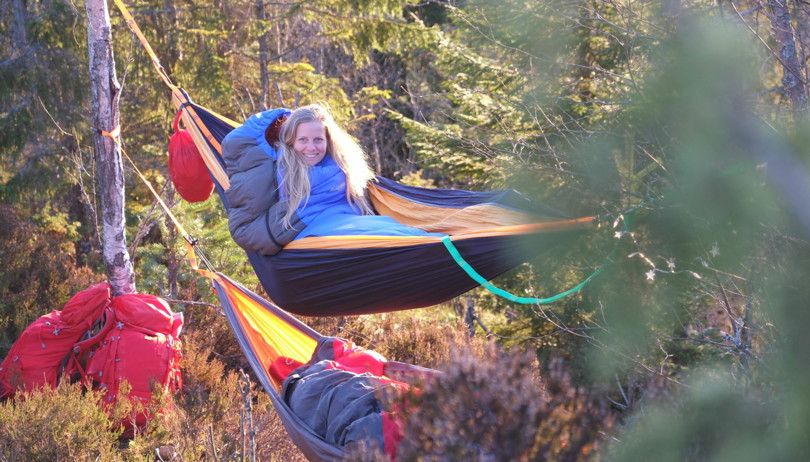
Hammock trip to Grosetkollen in Oslo. Photo: Hiking Sisters
Get started with accommodation in a hammock - here are seven good tips
Below are seven good hammock tips that we have been allowed to reproduce from Tursøstre's website, and remember the most important things:
"Bring your hammock, find two trees, and give it a try. The most important thing is simply getting outside and enjoying nature."
1. What kind of hammock?
The hammocks from Ticket to the Moon work well both on day trips and overnight trips. They are easy to attach, light in weight, comfortable and affordable in price.
If you want to take the hammock experience one step further, we recommend you try out hammocks that allow for diagonal sleeping. Then you lie more directly in the bunk. In our book "Kortreist" we write more about different hammock types.
2. Single or double hammock?
We prefer the double hammock. It has a little more fabric in the sides, which provides more stability and more space. In addition, these are better suited for diagonal sleeping. It's also useful to have a little extra space for a thick sleeping bag and extra insulation when it's cold outside.
3. Don't forget suspension straps
Hanging straps are not always included with the hammock.
Choose tree-friendly straps, which are wider and reduce damage to tree bark. If you already have climbing slings, they can also work well.
Make sure the hammock hangs high enough. It will stretch slightly during the night, so aim for at least half a metre of clearance from the ground when you're lying in it.
4. Find strong trees
The hammock often needs more space than you think.
Choose two sturdy trees approximately 4–5 metres apart.
If the trees are too close together, the hammock will sag too much and become uncomfortable. If they are too far apart, the hammock may become unstable and difficult to lie in.
Also pay attention to tree size. Thin trees can sway in the wind, causing unnecessary movement and making any tarp above the hammock flap noisily.
5. Stay warm
Remember that when you spend the night in a hammock, you sleep under the open sky. It can quickly get cold if the temperature drops during the night, especially from below when the cold creeps through a flattened sleeping bag.
Because the sleeping bag is compressed beneath your body, insulation from below is essential. A foam sleeping pad often works best, as it conforms well to the hammock.
You can also use:
Wool blankets
Sheepskins
Special hammock underquilts
Choose a sleeping bag suitable for the season, wear wool clothing, and consider bringing a hot water bottle or a heat-safe water bottle filled with warm water for extra comfort.
6. Hammock for all seasons
Hammocks can be used year-round, including in winter.
However, colder temperatures require:
A warmer sleeping bag
Additional insulation underneath
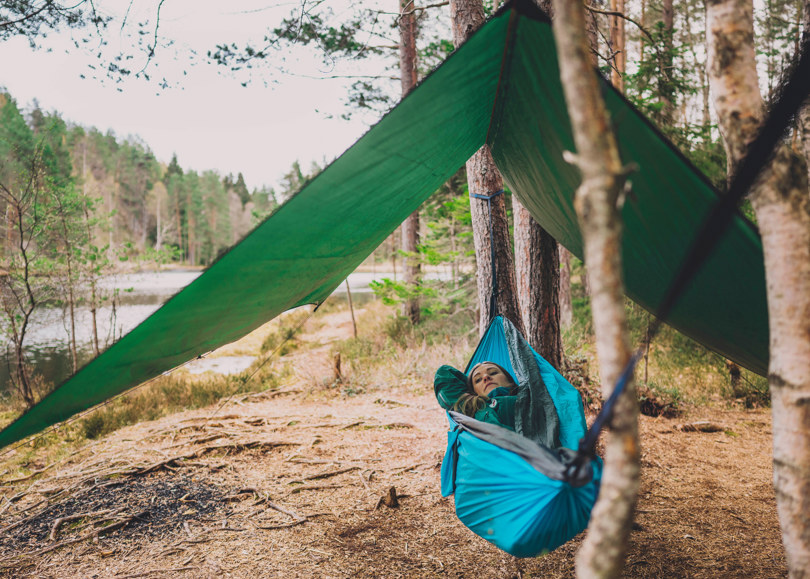
A tarp for shelter from wind, snow, or rain
A properly tensioned tarp also provides protection from bad weather, although it can be noisy in strong winds. Earplugs can help on blustery nights.
During summer, a mosquito net is highly recommended in areas with insects. Special hammock mosquito nets are available, but even a lightweight net designed for a stroller can work in a pinch.
Tarp is nice to have if there is rain. Photo: Marius Dalseg
7. Think about wind and sun
Wind can make a hammock less comfortable by increasing movement and reducing warmth.
Look for a sheltered campsite whenever possible.
Early in the season, mornings can be chilly, so consider positioning your hammock where it will catch the first rays of sunlight. Waking up to the morning sun can make all the difference after a cool night outdoors.