The Historical Hiking Route across the Folgefonna Glacier
Folgefonna is situated between two fjord arms in the Hardanger region, and has been an attractive tourist destination for over 200 years. This area features a unique cultural heritage site: The Historical Hiking Route across the Folgefonna Glacier.
In the Footsteps of the Early Tourists
The first cruise tourists arrived in Norway toward the end of the 19th century, visiting the Maurangerfjord and the Bondhusbreen glacier. Tourism was highly organized, featuring pre-arranged packages that included boat travel, horse transport, overnight stays, and meals. While some visitors preferred viewing Folgefonna from the fjord, many wished to ascend onto the ice. Consequently, bridle paths were constructed up to the edge of the glacier on both sides.
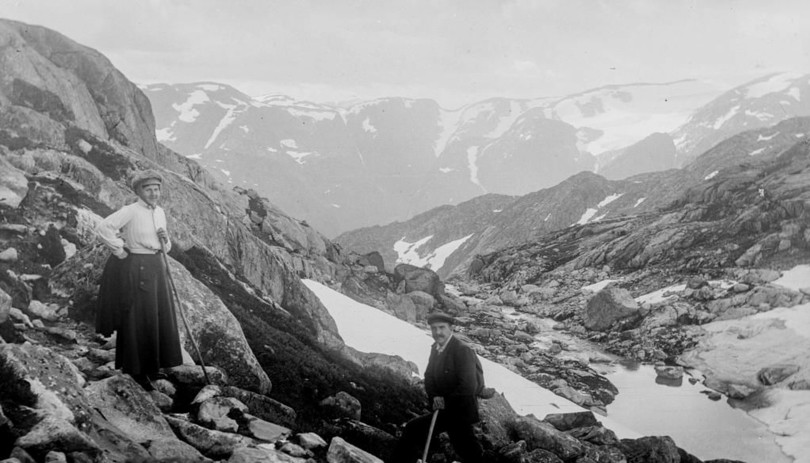
Hike by the Folgefonna glacier photographed in 1905. Photo: Lauritz Johan Bekker Larsen, Marcus, Special Collections at the University Library of Bergen.
Tourists would disembark in Sunndal, travel by horseback into the Bondhusdalen valley, and continue up to Folgefonna. From the edge, they were pulled across the glacier in sleds. On the other side, new horses transported them down to Tokheim near Odda, where their cruise ships had sailed around to pick them up.
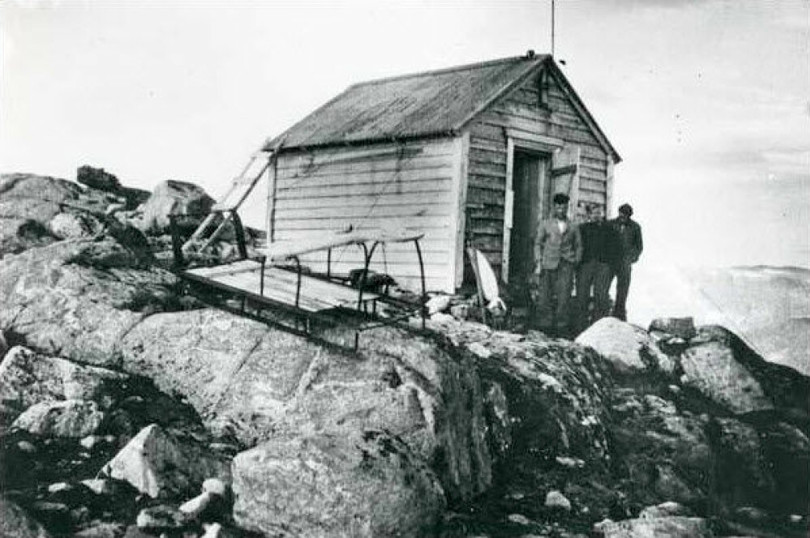
In 1893, what is said to be Norway's first self-service tourist cabin was built on the edge of the glacier: a small shed called Breidablikk, where beer and wine were ready for those who were going over the glacier.
Breidablik photographed in 1941, built in 1893 as a self-service tourist cabin on the edge of the glacier. Photo: Kvinnherad municipality
A Historical Hiking Route
The 30-kilometer route across the Folgefonna Glacier is an officially designated Historical Hiking Route (Historisk vandrerute). Following the trail into Bondhusdalen past the turquoise Lake Bondhusvatnet offers insight into why early travelers were drawn to this landscape.
In addition to the natural scenery, the route features numerous cultural heritage sites on both sides of the glacier. The landscape contains remnants of traditional farming, war memorials, industrial heritage, archaeological sites, and local folklore. Notable features include old pointed sleds preserved at the Fonnabu and Breidablikk cabins, and mysterious markings in the rock at Fonnabu, which have sparked debates over whether they are natural glacial striations or ancient Semitic characters.
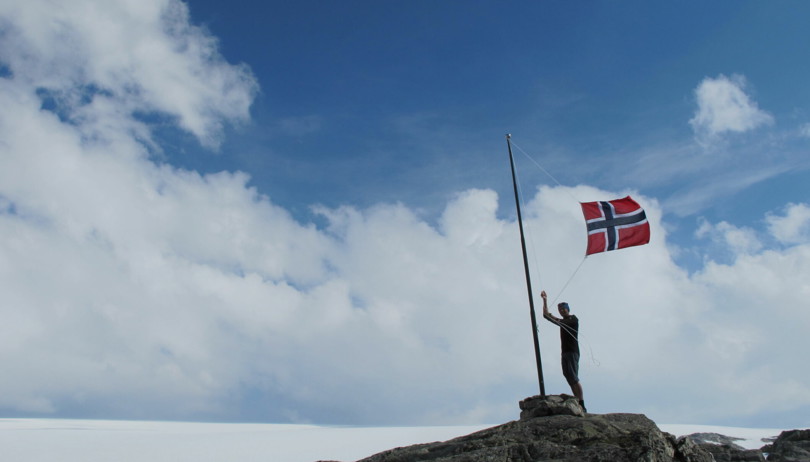
What could be more natural than celebrating a glacier trip with flying Norwegian flags. Photo: Helene Ødven
Information boards along the trail and digital platforms allow modern hikers to learn about the historical relationship between the local population, tourists, and the landscape.
Route Planning and Accommodation
The hike is typically completed as a two- or three-day trip, with accommodation available at Breidablikk or Fonnabu on the western side of the glacier, and the DNT cabin Holmaskjær on the eastern side.
Important Safety Note:
Crossing the glacier between Fonnabu and Holmaskjær requires booking a certified glacier guide, unless you are participating in a guided group tour organized by DNT.
About Historical Hiking Routes
Historical Hiking Routes are established trails that follow old paths and transport roads. The selected routes combine outdoor recreation with cultural heritage.
The trails and cabins in the network are maintained by local DNT member associations.
Maps and technical details for all historical hiking routes are available on UT.no