Tips for hiking in the norwegian mountains with a dog
Many hikers bring their loyal four-legged companions into the beautiful mountains. This is something both owner and dog value and the joy of having your best friend with you on a trip creates many magical moments.
Leash and grazing animals
Always follow leash requirements. In many mountain areas there are grazing animals that need peace and quiet at all times and as little disturbance as possible.
There is a general leash requirement in Norway from from April 1 to August 20, but in many municipalities with grazing animals, there is an extended leash requirement. Therefore, check where you plan to hike for local leash enforcement rules.
Useful tips before taking your dog on a hiking trip
All hikers must prepare well for the trip. This applies just as much to our four-legged friends as it does to us humans. The Norwegian Food Safety Authority has made ten important mountain safety rules that may be important to take note of.
1. Watch out for snow blindness
Dogs can also become snow blind if they are exposed to strong sun and UV radiation – especially up in the mountains. Snow blindness often manifests itself as the eyes begin to water, become red and irritated.
A snowblind dog will often squint its eyes and seek a darker place to avoid light. Sunglasses for the dog can be an effective protection if you are going to be out in the mountains for many hours.
2. Watch out for sunburn
Your dog may also get sunburned. Ears, nose, and body parts without hair and pigments are particularly vulnerable. Dog breeds with thin fur are more susceptible than others. To avoid sunburn, you can cover up the areas that are exposed or use a sunscreen that's gentle enough for your dog.
3. Watch out for sore paws
On long walks, you should always check your paws regularly for wounds and injuries. Bring paw socks in your hiking backpack, so you can relieve the paws if they get sore. A paw ointment can also prevent snow and ice lumps from getting stuck between the paws. By trimming the fur tufts and making sure that the dog has well-groomed claws, you can avoid both, wounds and broken claws.
4. Use the right equipment
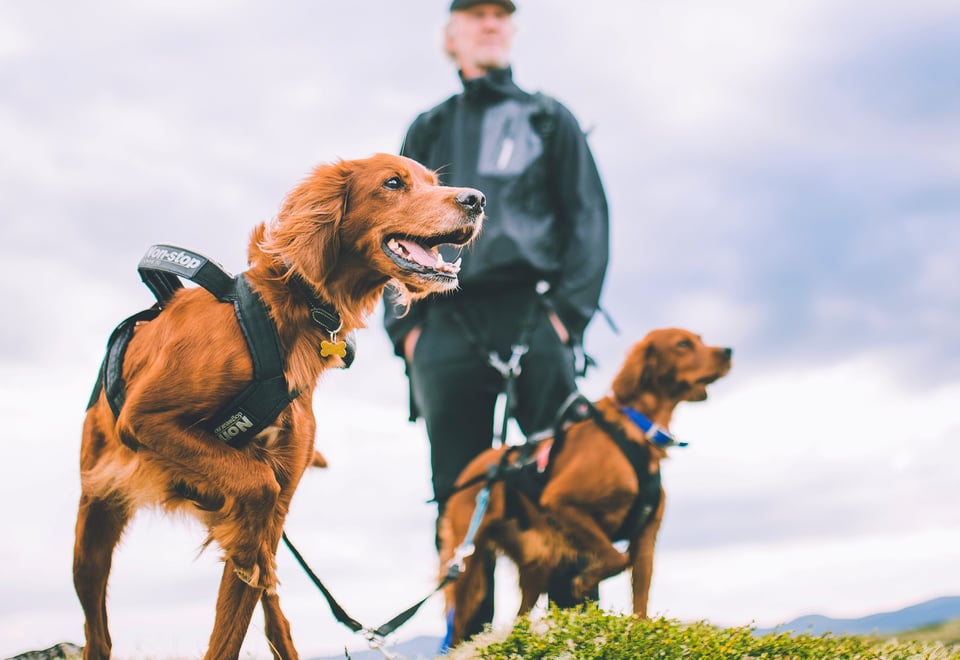
New equipment should always be "broken in" before embarking on longer trips. To avoid chafing and injuries, you should adapt the equipment such as harness or collar to the dog and needs.
5. Train your dog
Train your dog well before heading out on longer walks with your dog. Remember that you move faster than usual when skiing, and it is difficult for the dog to walk in loose snow and at the same time pull a sled. Adjust the speed and length of the walk according to how trained the dog is.
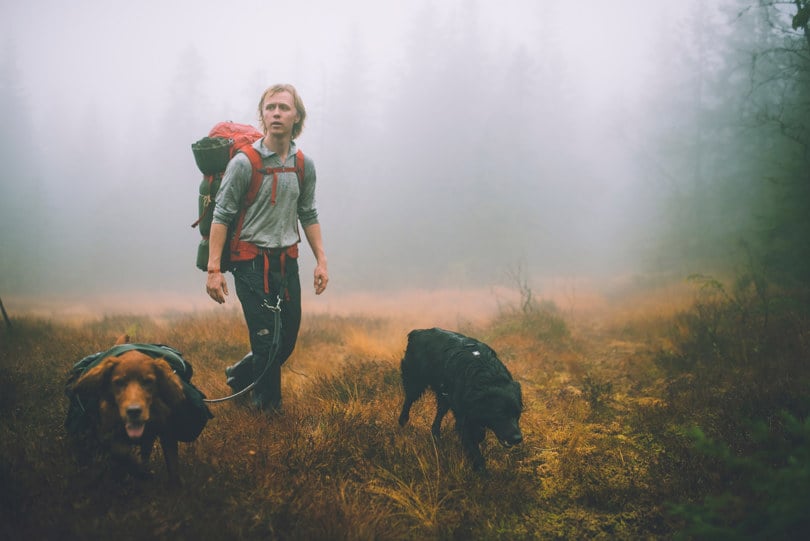
Make sure the dog is used to the collar and equipment before the long trip. Photo: Marius Dalseg
6. Be prepared for mishaps
Bring a first aid kit for both yourself and your dog. Simple first aid equipment such as bandages, paw socks, paw ointment, sports tape and wound ointment are good to have with you in case of an accident. Feel free to check with your veterinarian before you travel to the mountains.
7. Watch out for frostbite
Your dog can also get frostbite if they are exposed to the cold over time. Some areas are more exposed than others, such as the ears, paws, tail, and genitals. Should an accident occur, by all means do not rub the affected area to warm it up - this can damage the skin. Frostbite should be treated by a veterinarian. If your dog is thin-furred, bring a heating blanket or a mat for the breaks.
8. Be aware of puppies in the cold
Puppies do not have the same ability to regulate its body temperature as an adult dog, and is therefore more prone to low temperatures. The same applies to dog breeds with thinner or little fur. Be considerate of young dogs and feel free to bring a heating blanket or insulated mat.
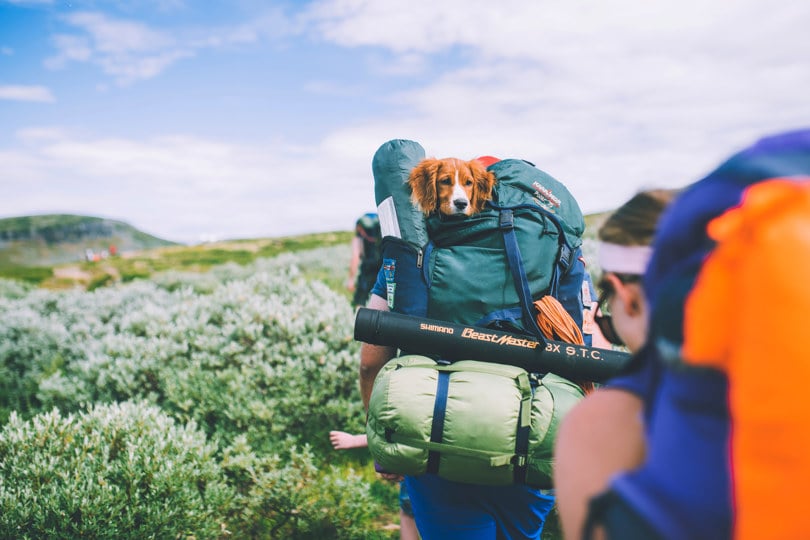
If you teach the dog to sit in a backpack as a puppy, you also get a dog that can be carried out as an adult if an accident should occur. Photo: Marius Dalseg
9. Remember extra food
The dog uses more energy when it is active, and more in the cold to keep its body temperature up. For longer trips, it may be a good idea to give a little extra food, or larger or more frequent meals. You can also add extra fat to your food to make it more caloric. The dog will also get thirsty during the trip - remember to bring water and a drinking bowl.
10. Don't give your dog chocolate
Holidays often come with extra treats – often in the form of candy. Dogs cannot tolerate the substance theobromine, which is found in coffee, tea, cola, cocoa and chocolate products. The darker the chocolate, the more dangerous it is for your dog. Remember dog-safe treats for your four-legged – also at Easter!
With this, we hope that you as a dog owner have a fantastic trip out in the mountains with your best friend. Those of us who work at the cabins will do our best to ensure that both you and your dog have as good an experience as possible.