We're spending more time outdoors, and using it in increasingly diverse ways. The Norwegian Mountain Codehelps you plan and complete a safe, enjoyable trip – which is also safe.
The Norwegian Mountain Code
Plan your trip and report where you are going.
Customize the trip according to ability and conditions.
Pay attention to weather and avalanche forecasts.
Be prepared for inclement weather and cold, even on short trips.
Bring the necessary equipment to be able to help yourself and others.
Make safe choices. Recognize avalanche-prone terrain and unsafe ice.
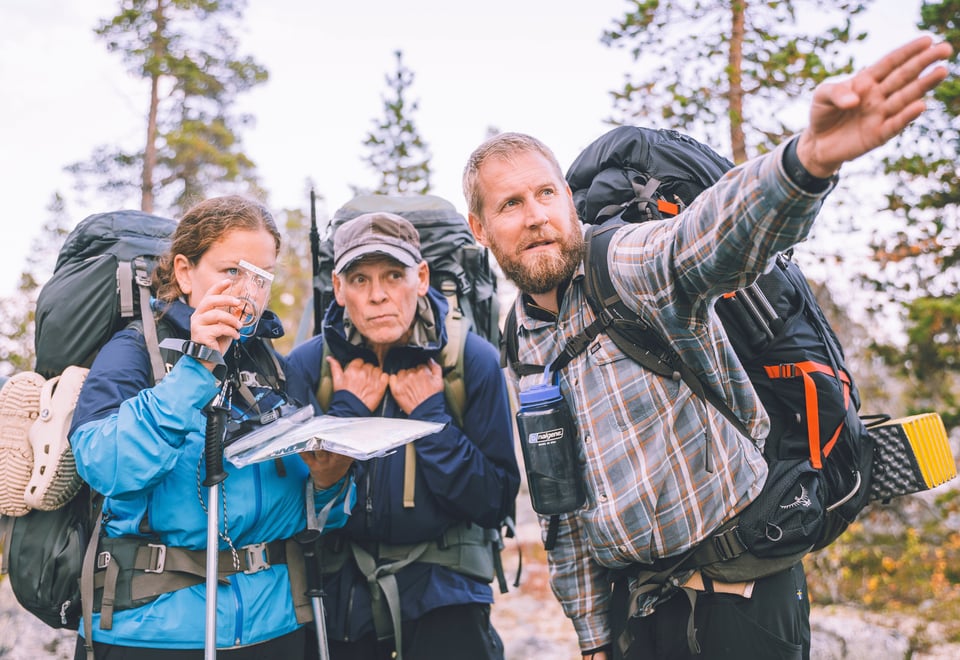
Use a map and compass. Always know where you are.
Turn around in time, there's no shame in turning around.
Conserve your strength and seek shelter if necessary.
Download and print a poster with the Norwegian mountain code:
Plan your trip based on your group's abilities, and always have several options.
Make sure you have information about the hiking area and the conditions you'll encounter.
Seek advice from experienced mountaineers.
Make sure you have the knowledge and skills required for the trip in question.
Be considerate of nature. With good planning, you won't leave a trace behind.
Tell someone where you're going and when you expect to return, regardless of whether you'll have mobile coverage.
2. Adapt the trip according to ability and conditions
Continuously assess conditions, and adapt your plans accordingly.
Show respect for the weather!
Hiking with others provides increased safety, and someone to share the experiences with. If you're hiking alone, be extra careful.
Do not embark on a long trip without experience, you must be able to take care of yourself and the others in the group.
Show consideration for other hikers.
Understand your rights under the Right of Public Access (Allemannsretten) and the obligations that come with it, and ensure open communication within your group.
3. Pay attention to weather and avalanche forecasts
Always check weather and avalanche forecasts, and understand what they mean for your specific route you are going.
Follow the recommendations in the current forecast and choose easier terrain when conditions are demanding.
4. Be prepared for inclement weather and cold, even on short trips
Dress according to the weather and conditions. Remember that the weather changes quickly in the mountains.
Bring extra clothing and equipment that the trip and the terrain requires.
Extra food and drink can help both you and others, if you take longer than planned or have to wait for help.
5. Bring the necessary equipment to help yourself and others
For winter trips, bring a wind shelter, sleeping mat, sleeping bag and shovelto survive an unplanned night outdoors. A wind shelter can save lives.
Bring items like a reflective vest or headlamp to help rescuers locate you if an accident occurs.
Bring a first aid kit. It allows you to help both yourself and others.
Always carry an avalanche transceiver, and bring a probe and shovel if you are going to travel in avalanche-prone terrain.
Pack smart! Packing lists for different trips can be found on dnt.no.
A mobile phone can be a useful aid, but remember that coverage may not be available everywhere.
If an accident occurs, notify the police on 112, go for help or try to notify in some other way.
6. Make safe choices. Recognize avalanche-prone terrain and unsafe ice
Careful route selection is the best way to avoid avalanches.
Be aware that avalanches can occur in slopes that are higher than 5 meters, and steeper than 30 degrees.
Even if you're on flat terrain, you can trigger an avalanche on the mountainside above you.
An avalanche can go three times as far as the height of the slope where it originates.
Avoid terrain traps, such as narrow stream valleys. Think about what happens if there is an avalanche.
Watch for unstable cornices when traveling along ridges.
Be aware of ice conditions when walking on regulated lakes, and areas near inlets and outlets.
7. Use a map and compass. Always know where you are
Use a map and compass, it always works.
Check your map regularly, even on marked trails.
The hiking experience will be richer if you follow the map along the way.
GPS and other electronic aids are useful, but remember to bring spare batteries.
8. Turn around in time, there's no shame in turning around
Continuously reassess your plans, and choose plan B long before you get exhausted.
Have conditions changed? Should you turn around?
Is anyone in your group struggling? Should the group turn around?
9. Conserve your strength and seek shelter if necessary
Match the pace of the slowest group member, and ensure everyone stays together.
Remember to eat and drink often. During exertion, your body needs more fluids than you might feel thirsty for.
Seek shelter before you're exhausted.
Strong winds increase fatigue. Use a wind shelter or dig a snow shelter before you're too tired.
Om Fjellvettreglene
Fjellvettreglene, som først ble kalt «Fjellreglene», ble innført etter en rekke ulykker og dødsfall i påsken 1950. Etter nok en ulykkespåske i 1967, lanserte Den Norske Turistforening og Røde Kors kampanjen «Velkommen til fjells, men ta ansvaret selv».
Fjellvettreglene har siden den gang blitt en del av den norske kulturarven.
Det er mye som er endret siden femtitallet. Vi går andre turer, har annet utstyr og kunnskapen i befolkningen har endret seg. Derfor har Røde Kors og DNT nå revidert fjellvettreglene. De oppdaterte fjellvettreglene er tilpasset alle sesonger, og er en god veiledning både i planleggingen og gjennomføringen av korte og lange turer.
Godt fjellvett handler ikke bare om hva du skal og hva du ikke skal, men om å ha et bevisst forhold til naturen, valgene du tar og handlingene du gjør.
Derfor er dagens fjellvettregler lagt opp som en læringssirkel: Fra planlegging, til møte med turgruppen og dagens forhold ute. Deretter justering av planene ut i fra det som møter oss på selve turen. Godt fjellvett handler om refleksjon.