How to behave when you meet sheep and cows on a hiking trip in Norway
Are you going on a hike in grazing areas? Here are the tips you need to make the trip safe and enjoyable for both two- and four-legged mountain trotters.
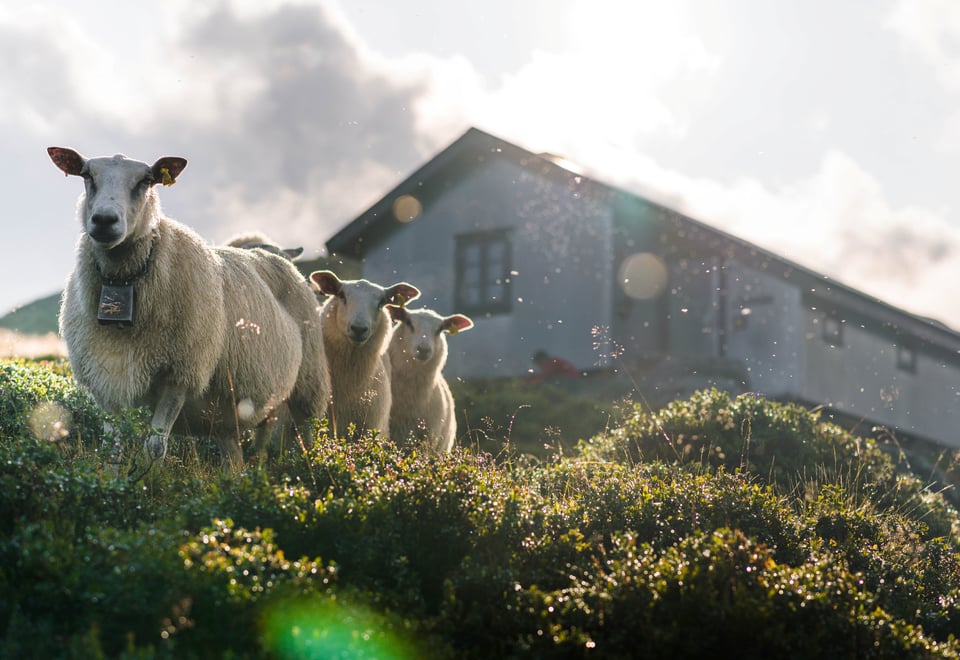
Many of our cabins and routes are located in areas where sheep and cows graze in the summer.
How should you actually behave when you meet these peaceful, grazing animals out in the wild?
We asked an expert on sheep and heath grazing. Bianca Wathne Gelink is a grazing and outfield advisor at the Norwegian Sheep and Goat Association. He says that the most important thing is to leave the animals alone as much as possible and keep the dog on a leash.
Off-leash dogs are the biggest threat apart from people who travel in the mountains against the sheep. Every year, there are examples of off-leash dogs chasing and killing sheep in the past.
Always Keep Your Dog Leashed
The dog must be on a leash. There is a leash requirement in Norway from April 1 to August 20, this is for the sake of both game and livestock. After August 20, the municipalities often introduce extraordinary leashes due to grazing animals, Wathne Gelink explains.
In Sirdal municipality, for example, there is an extended leash requirement until November 1.
The dog must be on a leash. This means there must be a physical connection between the owner and the dog. This means that you cannot have the dog on a leash and drop the leash, says Wathne Gelink.
Learn the rules of animal safety
Although it is mostly sheep you meet in the mountains, there are also places where cattle roam freely. The organization Norsk Friluftsliv has together with the Farmers' Association, TYR, Tine, the Norwegian Farmers' and Smallholders' Association and Geno made rules for how to behave around cows, which are also good to remember when meeting sheep.
The cattle safety rules
Keep your distance from the animals and avoid the herd.
Do not walk between the animals. Cows can become aggressive and create unwanted situations.
Do not approach calves. The mother may attack to protect her young.
As a general rule, dogs should not be taken to grazing animals. Remember to keep a leash from 1 April to 20 August.
Cows are curious. If the herd of cows becomes persistent, put down what you're carrying and slowly back away. You can retrieve your belongings after.
If you open a gate, close it again too! Open gates allow the animals to enter areas they are not supposed to be, and which can be dangerous for them and others.
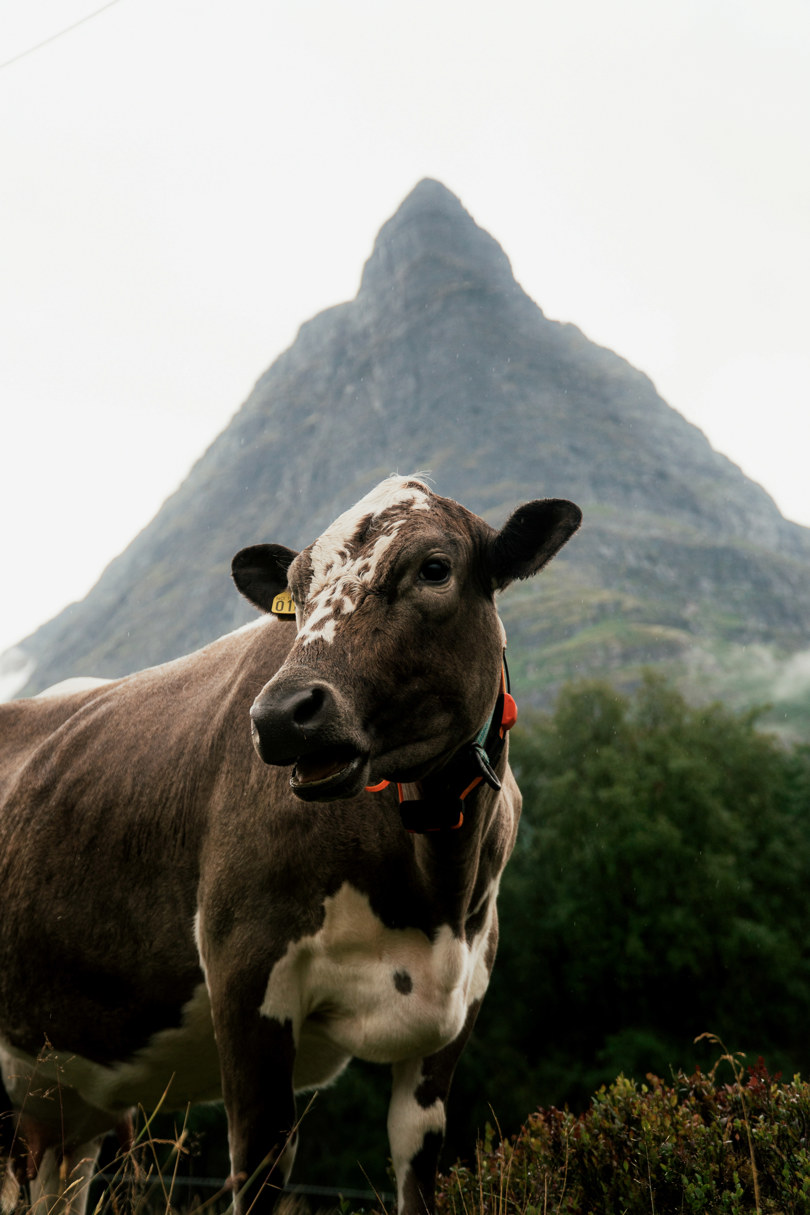
MAJESTIC LANDSCAPE: Cow grazing at the foot of Innerdalstårnet in Trollheimen. Photo: Veslemøy Odland
Sheep can be run to exhaustion
"Sheep are usually more peaceful than cows, but if you walk with a dog on a leash, you should be careful. A group of sheep can defend its young, and can attack a dog. A sheep weighing up to 100 kg is not very nice to be attacked by," says Wathne Gelink.
He has been working on collecting statistics on dog attacks in recent years, and sees that almost all dog breeds attack sheep. This also applies to the smallest breeds. Dogs can also run sheep to death, by overheating them through prolonged chasing.
– What should I do if I come walking with a dog on a leash on the path in a narrow valley, and have to walk past sheep on the path?
"Then I would walk normally and calmly. The person with the dog should walk at the back of your group, then the sheep will be interested in the people, not the dogs. Then they will normally pull away calmly when you are four to five meters away," says the grazing and outfield advisor.
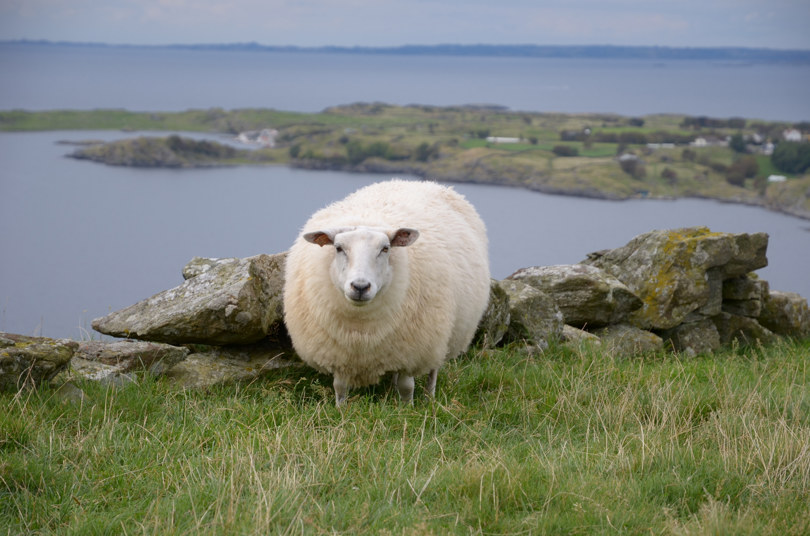
On Rennesøy and several of the other islands around Stavanger, the sheep are often out grazing for large parts of the year. Photo: Anne Katrine Lycke
Do not feed the sheep
The adviser has an extra rule that is particularly relevant around some tourist cabins. It is to avoid giving the sheep food, or petting the lambs. The latter can trigger the mother's protective instinct.
If you give the sheep food, you risk that they want more and follow you on your hike, and if you are at a cabin, you do not want them right up to the cabin. The sheep find food for themselves, and it is best that they get to choose the food they wants, Wathne Gelink states.
The sheep are experts at finding the best food at all times. In early summer, it usually starts at the bottom of the terrain where it is green, and follows the snow melting upwards. That way, they always find green and fresh food. In the summer, when the snow is gone, they moves downwards to where it started.
From August, mushrooms start to appear, then they migrate to the very top of the high mountains again, where there is apparently only moss and stones. You can often wonder what the sheep eats between the stones, but it's fungi, Wathne Gelink explains.
During this period, you can use the sheep as a weather forecaster.
"You can predict weather patterns by observing sheep behavior. They rarely spend the night in the high mountains if there is rain, but will stay if the weather is good. The sheep are not always right, but very often," says Wathne Gelink.