The habitats of wild reindeer are under increasing pressure. Here's how you can be mindful if you're in an area inhabited by wild reindeer.
Wild reindeer face threats from various developments, including power plants, roads, and cabin construction. They are constantly losing ground, as artificial barriers prevent them from using their natural migration routes.
They are also easily disturbed and displaced. Even casual visitors to the mountains can negatively impact these animals. Wild reindeer are extremely shy, and it doesn't take much to unsettle them. They will often detect humans long before they are seen.
Here's how you can be considerate of wild reindeer on your trips:
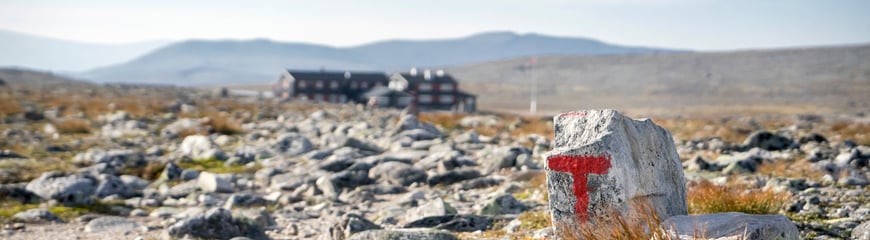
Stay on marked trails
Remain still if you see wild reindeer, allowing them to move away undisturbed
Use binoculars and keep your distance
Stay low in the terrain and approach downwind so they don't catch your scent
Keep your dog on a leash and follow the rules
This is important year-round, but especially in spring during calving season and winter when food is scarce. We won't stop using the mountains, but we can be mindful and do our part. DNT works to make it easy for hikers to coexist with wild reindeer.
Not sure if you should visit a wild reindeer area?
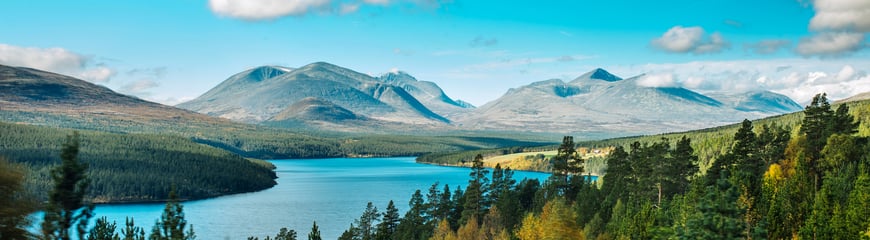
The wild reindeer live in mountainous areas all over southern Norway. There are ten national wild reindeer areas in Norway. These are:
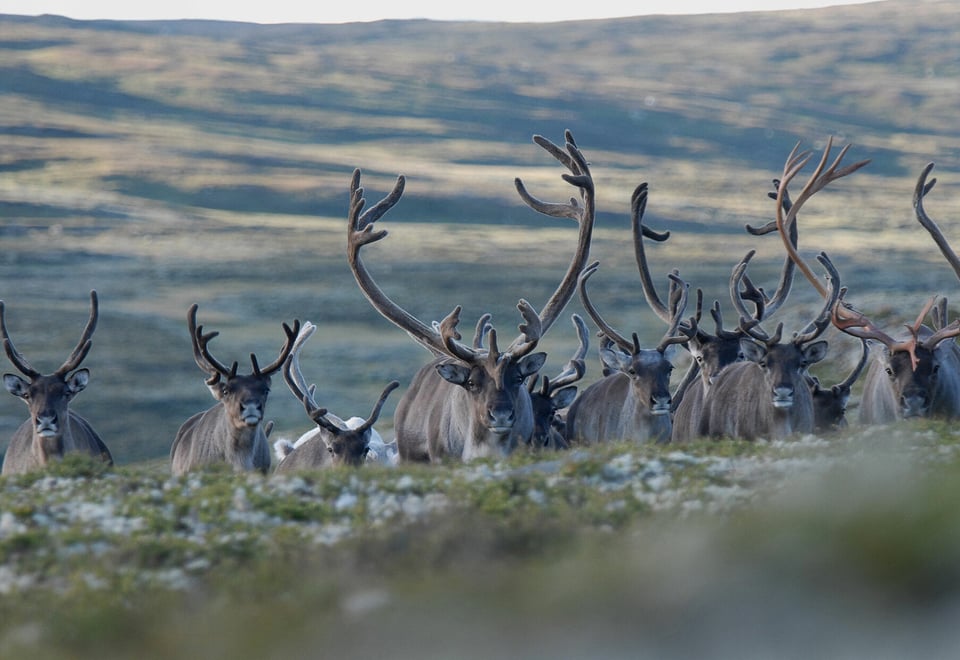
The wild reindeer herds in southern Norway's mountains are considered the last viable populations of this species in Europe. We have a special responsibility to protect the wild reindeer and their habitats. Yet they are extremely shy and vulnerable, while their natural way of life faces increasing pressures.
Photo: Olav Strand/NINA
Why do wild reindeer need so much space?
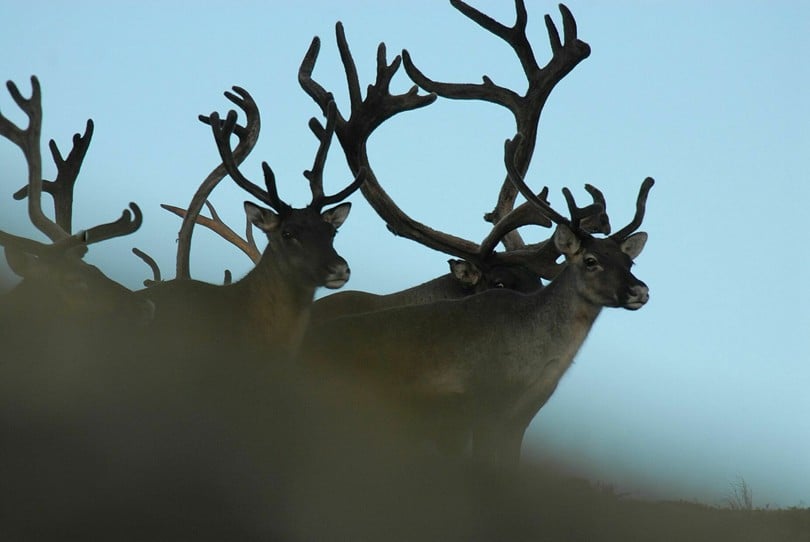
Norwegian wild reindeer are adapted to a mountain lifestyle, without the forest cover and with very marginal living conditions. Unlike other cervids, they live in herds, ranging from a few dozen to several hundred animals. Herding is primarily a defense against predators.
Because reindeer live in herds and food is scarce, they require large territories. Climate, vegetation, and terrain are crucial for accessing food seasonally. They prefer lush areas with early snowmelt for spring and summer grazing, and areas with little snow and lichen in winter.
The wild reindeer are constantly migrating between these areas. Their shyness and vulnerability to disturbance from grazing, calving, and resting only increases their need for vast, undisturbed space.
What is DNT doing?
DNT promotes outdoor recreation with the smallest possible footprint, and aims to improve conditions for wild reindeer. They've relocated trails and cabins to give reindeer more space, spread information about reindeer-friendly practices, and close some cabins during calving season.
More actions are planned going forward. You can learn more about DNT's work with wild reindeer on their website.
You can read more about how DNT works with wild reindeer here.
Habitat loss and fragmentation have led to a sharp decline and division of wild reindeer populations in Norway. As a result, the Norwegian wild reindeer are now split into several distinct geographic areas.
Wild or domesticated reindeer – what's the difference?
It can be difficult to visually distinguish between wild and domesticated reindeer, as the appearances are quite similar. Some wild reindeer populations have even been partially derived from domestic stock.
The easiest way to tell is by location - if you're in a designated wild reindeer area, then you're likely seeing wild reindeer.
If you're in an area with domesticated reindeer, then those will be semi-domesticated animals that are regularly herded and managed, though they still live a relatively wild life compared to other livestock.
In any case, both wild and domesticated reindeer are sensitive to disturbance, so it's best to treat all reindeer with the same level of caution and consideration.
Read more about trackless travel
The right to roam allows us to travel, breed and harvest in uncultivated land, but we also have a duty to take into account nature, each other and landowners. Trackless travel is about no one being able to see that you have been on a walk in nature when you leave it.
Reindeer have an exceptionally keen sense of smell and can detect humans from great distances. If startled, they will often flee far away, expending precious energy and missing out on critical feeding time. This can be especially problematic if they are displaced from important calving or grazing areas.
Reindeer are most vulnerable during the calving season from mid-April to mid-June, so they require extra peace and quiet during this period.
Studies show that wild reindeer tend to avoid areas with high levels of human traffic. A well-used hiking trail can effectively act as a barrier that the animals will not cross.
This doesn't mean people should stop hiking in the mountains. But by taking some extra care, avoiding the most sensitive areas and times, we can help make life a little easier for these vulnerable wild reindeer populations.