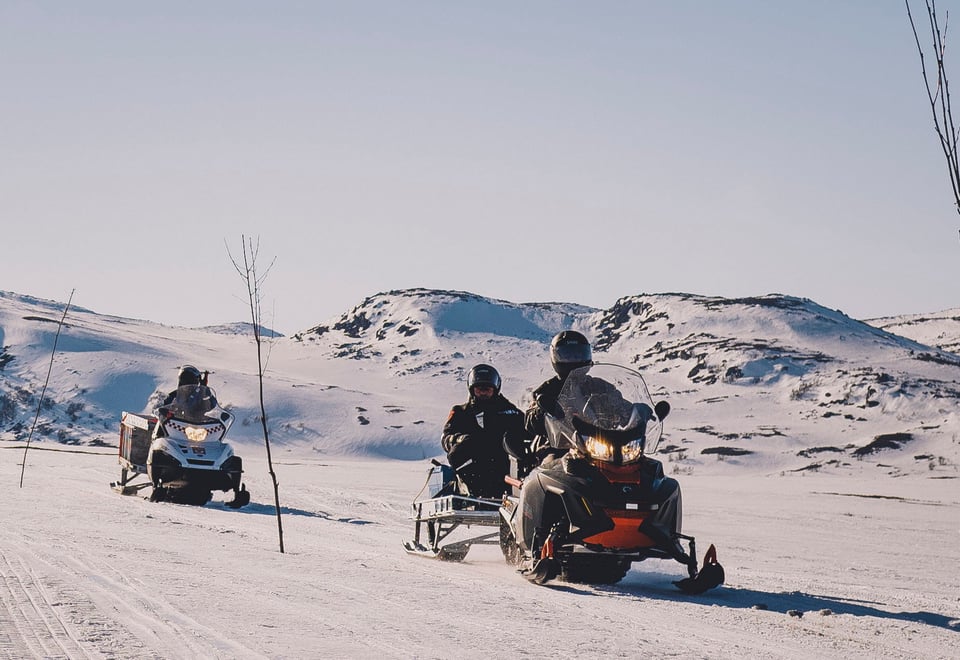
The opportunity to experience silence and tranquility is one of the primary reasons Norwegians engage in outdoor recreation. DNT works to reduce motorized traffic in uncultivated land and coastal areas to ensure that experiencing the quiet and peace of nature remains possible.
Historically, motorized traffic in uncultivated land (utmark) was only permitted for necessary commercial or utility purposes, as well as in specific exceptional cases. Over time, however, a liberalization of motorized traffic regulations has largely blurred the traditional distinction between utility and recreational driving, leading to increasing noise and disturbance in nature. Changes have also occurred at sea, with increased traffic from high-speed, noisy recreational watercraft, which poses a threat to simple outdoor activities along the coast. Additionally, drone usage in nature has grown noticeably in recent years. While drones can be positive for documenting nature and hiking destinations, they can also disturb both people and wildlife.
Electric vehicles are becoming more common and are classified as motorized traffic regardless of speed and performance. Electric bicycles, in particular, have contributed to making the boundary between traditional outdoor recreation and motorized traffic less clear. DNT supports the use of e-bikes with limited speed and power on established path networks in uncultivated land, provided it does not have negative consequences for nature and outdoor life. Today, e-bikes with limited speed and power are legally permitted in large parts of uncultivated areas.
DNT works to:
Highlight the value of nature free from noise and disturbances.
Reduce motorized traffic in uncultivated land, watercourses, and coastal waters.
Ensure that drone usage does not diminish the outdoor experience.
Motorized Traffic for the Operation and Maintenance of DNT’s Cabin and Trail Network (Utility Driving)
DNT’s member associations are responsible for approximately 600 cabins, over 22,000 kilometers of marked summer trails, and around 5,000 kilometers of winter routes marked with branches (kvistede løyper). Maintaining this network requires the use of motorized vehicles in uncultivated land to transport materials, supplies, firewood, and gas to cabins, as well as transporting trail markers and signs for route maintenance and development.
This is utility driving (nyttekjøring), which is legally permitted under current regulations. In most cases, however, permits must still be obtained from the local municipality and protected area boards if driving takes place within conservation zones, and landowner permission is always required. To make it easy to understand the applicable regulations, the central DNT organization (with support from member associations and the Norwegian Environment Agency) has developed a dedicated guide for its member associations.