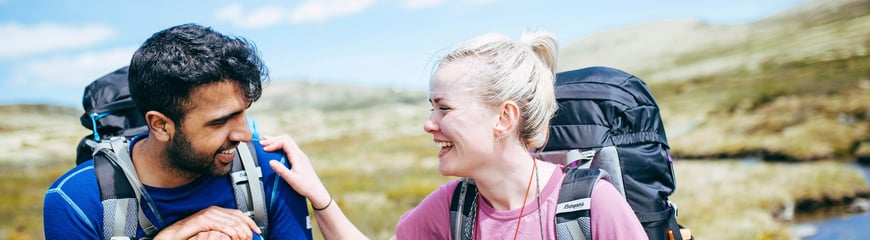
Most DNT cabins are self-service (with stocks of provisions) or no-service (no provisions stocked). Here’s a guide to staying at a cabin.
Published: February 21, 2024
DNT's offer
1. Planning
Planning is an essential part of any trip. You’re already on our website, which is a great start! Visit UT.no to find trekking areas, route suggestions, or cabin descriptions. Get a map of the area and obtain a DNT key. Pack your backpack and head out!
2. Key
Most self-service and unstaffed DNT cabins are locked with the standard DNT key. It’s always wise to bring one with you on a hike or ski tour. You can borrow or buy a key against a deposit of NOK 100 via our webshop, at local trekking associations, tourist offices, or partner shops.
3. Heating
It’s a good idea to fire up the wood stove as soon as you arrive. Place two split logs inside the stove with the split sides facing inward. Fill the gap between them with crumpled paper, birch bark, or kindling. Place small pieces of wood on top, followed by a larger log. This is the best way to get the fire going on the first try!
4. Drying
Clothes and boots are often wet after a day outdoors. Dry your gear by hanging it on the drying racks near the stove.
5. Cabin register
As the cabin warms up, enter your name, membership number, and other required details in the cabin register. Please register before claiming a bunk.
6. Lighting
Some cabins have solar panels or electricity for lighting. However, most rely on candles or kerosene lamps. Make sure candles stand firmly in their holders, and take care not to spill kerosene when refilling lamps.
7. Larder / Food store
Self-service cabins have a food store stocked with essentials, from crispbread and oatmeal to instant soups and canned goods. You pay for any food used in the same way you pay for your stay. No-service cabins do not have food stores, so you must bring your own provisions.
8. Water
Inside the cabin, you’ll find a notice indicating the location of the nearest water source. In winter, you may need to melt snow, preferably on the wood stove to conserve gas for cooking.
9. Cooking
Gas stoves are standard in most cabins. Before lighting the burner, open the main gas valve. Remember to turn off the valve when you are finished cooking.
10. Dinner
Dinner is the highlight of the evening, whether you’ve brought fresh venison or are making pancakes from the larder. Take your time to enjoy the meal, and don't forget a piece of chocolate for dessert!
11. Sleeping
Nothing beats going to bed after a long day in the mountains. Remember to bring a sheet sleeping bag (liner) or bed linen. Please show consideration for guests who want an early night, so everyone gets a good night's rest. A headlamp is useful if you want to read in bed.
12. Privy (Outhouse)
DNT cabins have outdoor toilets, often decorated with photos of the Royal Family and stocked with reading material. Remember to cover what you leave behind with bark or sawdust from the bag provided in the privy.
13. Payment
DNT Hyttebetaling (Phone app)
At self-service cabins, we strongly recommend paying for accommodation and food using the DNT hyttebetaling app. Download it before your trip (available for iOS and Android). The app works offline: register your stay, guest log entries, and provisions while at the cabin. As soon as you get cell coverage, you will receive a notification to complete the payment.
Most self-service cabins are supported in the app. If you cannot find your cabin in the app, you can pay by filling out a paper payment form at the cabin, and we will send you an invoice afterward. Please use the app whenever possible, as it significantly reduces administrative work.
14. Washing up
Before leaving, wash all cutlery, dishes, and countertops used, and sweep or mop the cabin floors. It’s DNT tradition to leave the cabin in even better condition than when you arrived.