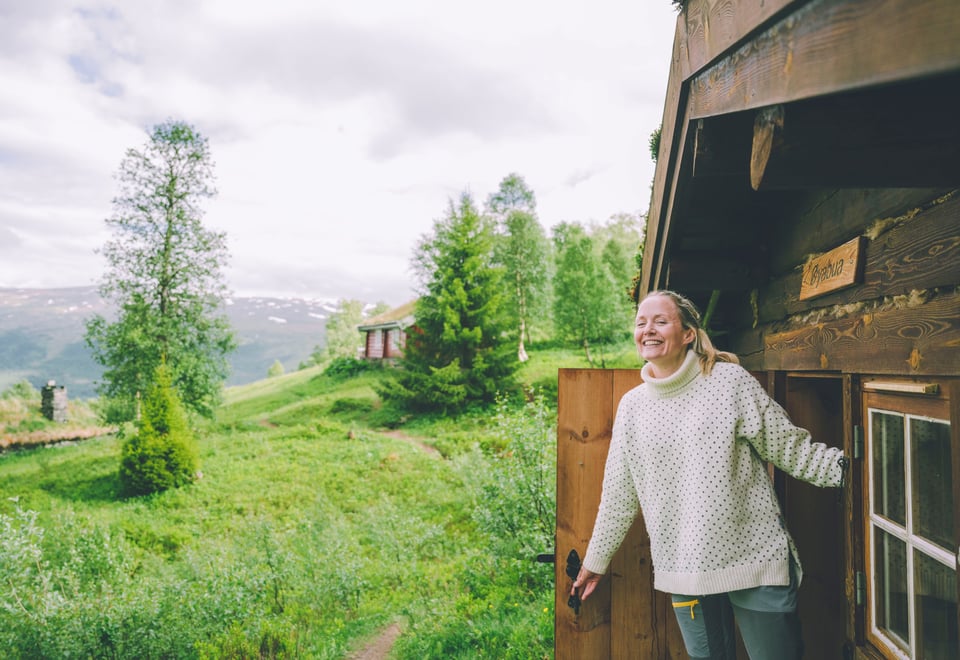
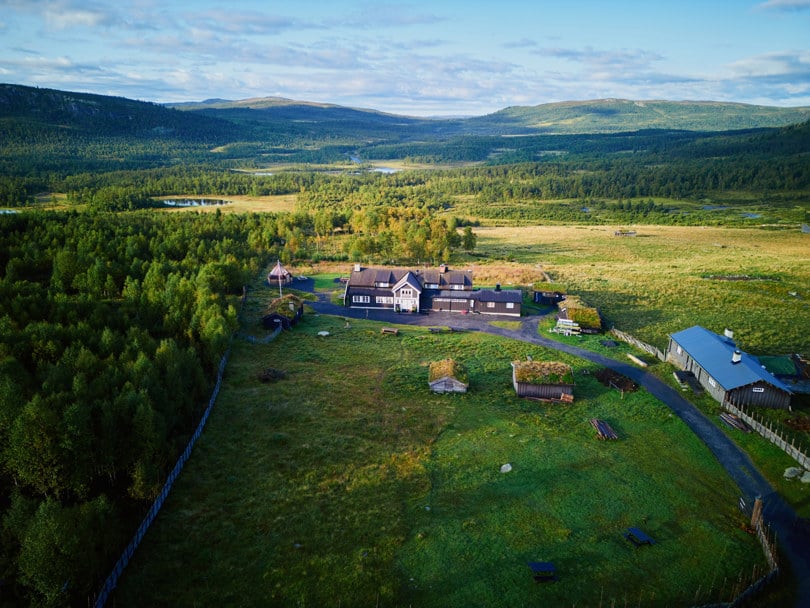
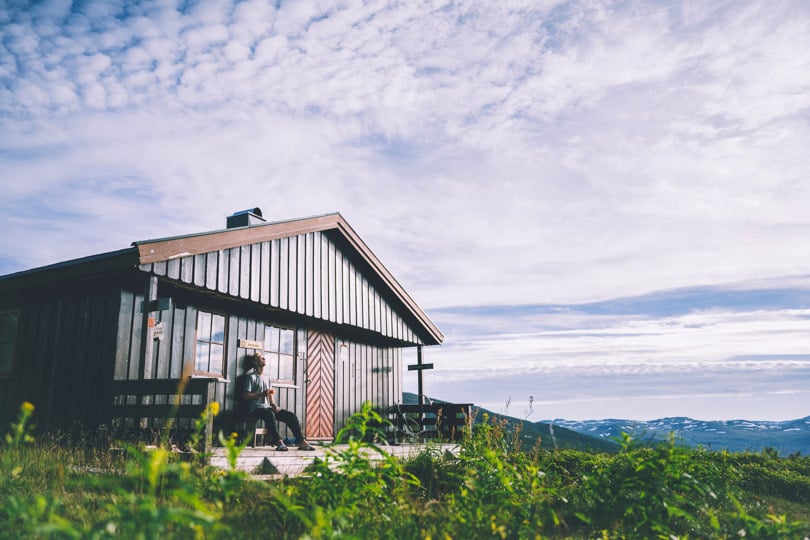
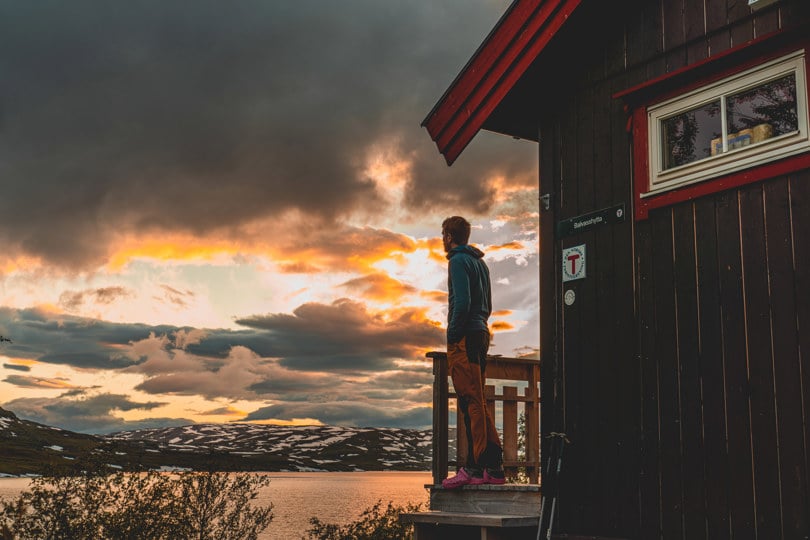
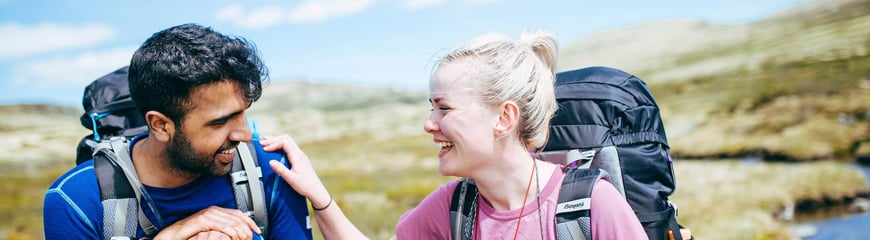
The local member associations operate 600 cabins across the country, mark routes and ski tracks. Together they maintain a network of about 22,000 km of marked foot trails and about 7000 km of branch-marked ski tracks.
DNT members are given discounts on accomodation at all cabins and on served meals at the staffed cabins. DNT activities are based on extensive volunteer work. Each year, volunteers work in total more than 800,000 hours.
About the DNT cabins
There are three types of cabins with accommodation: Staffed lodges, self-service cabins and no-service cabins. DNT members are given discounts on accommodation at all cabins and on served meals at the staffed lodges.
At the self-service cabins we strongly recommend to pay for accommodation and food using the app DNT hyttebetaling. Download the app before you begin your hike, availible on all devices. The app also works offline. At the cabin, register accommodation, protocol and provisions in the app. As soon as you get cell reception, you’ll be notified to activate the payment.
Most of the DNT selfservice cabins are available in the app. If you can not find your cabin it is possible to pay by filling out a payment-form in the cabin, and we will send you an invoice after your stay. We kindly ask you to use the app if possible, since this give us less administration.
Guide to your stay at a DNT cabin
Check out our guide to self-service and no-service cabins. If you stay at a staffed lodge, the cabin is warm when you arrive. Then you can enjoy your stay with no chores.
With our new booking site we have made it easy for you to plan and book your next stay at DNT cabins.
Accomodation cannot always be booked in advance, but everyone who comes to a cabin will have a place to sleep, either in a bunk or on a mattress on the floor.
DNT routes developed in part from older thoroughfares and local footpaths and in part in response to the needs of trekkers, as ensured by the public right of access. They serve both to guide trekkers, on foot or on skis, and to protect plant and animal life by serving as limited channels for most human foot traffic in the outdoors.